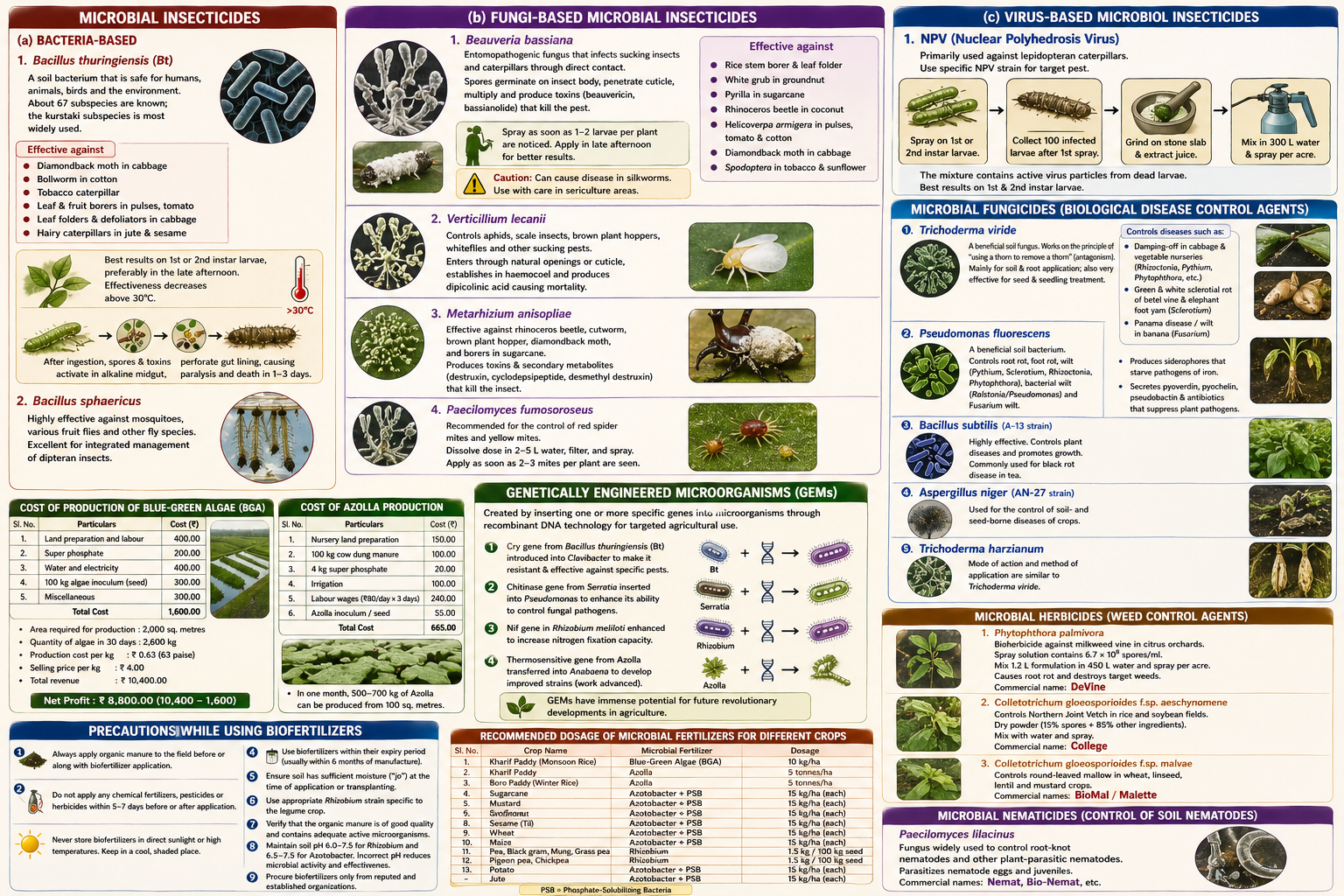
Nitrogen Fixation by Different Leguminous Crops in Soil
April 25, 2026 | by anisurrahaman235f@gmail.com
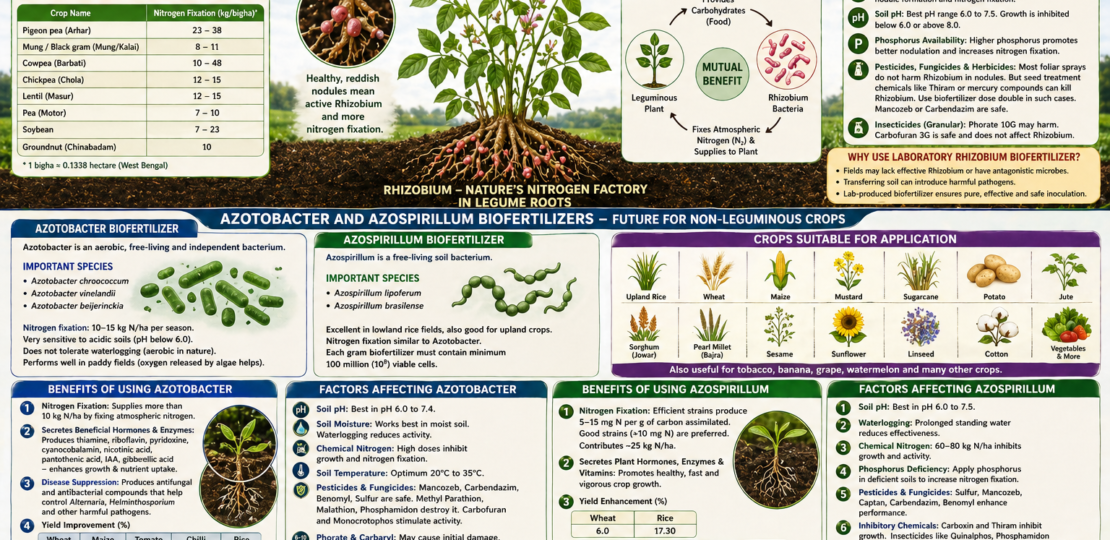
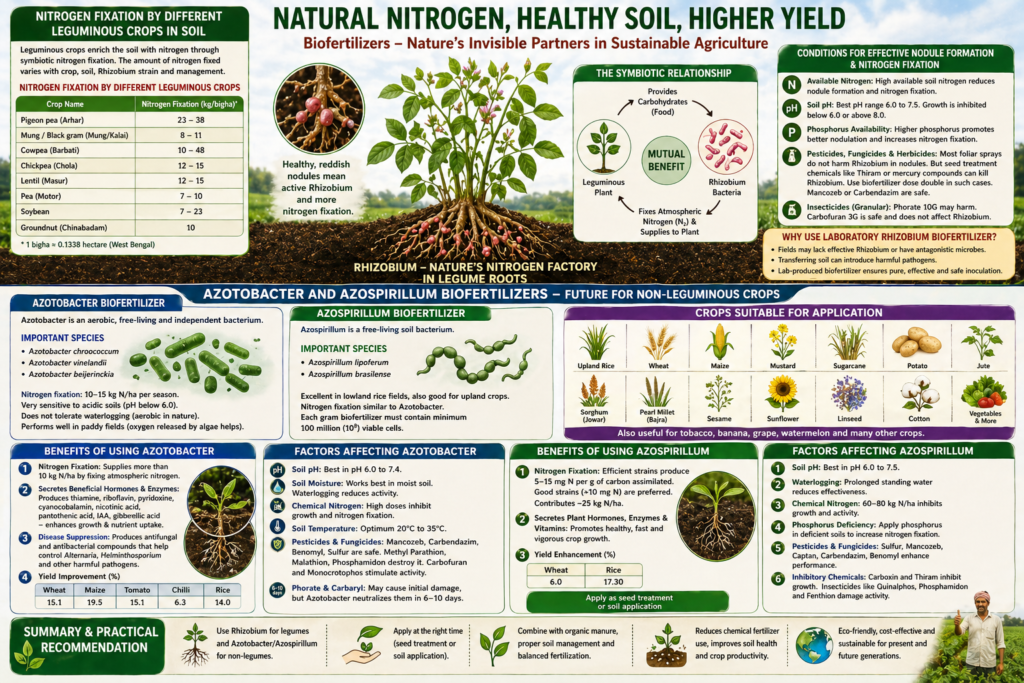
Leguminous crops play a vital role in naturally enriching the soil with nitrogen through symbiotic nitrogen fixation. The amount of nitrogen fixed varies depending on the crop, soil conditions, Rhizobium strain, and management practices. Below is the estimated nitrogen fixation capacity of major pulse crops (figures are approximate and expressed in kg per bigha, where 1 bigha ≈ 0.1338 hectare in West Bengal).
Nitrogen Fixation by Different Leguminous Crops
| Crop Name | Nitrogen Fixation (kg/bigha) |
|---|---|
| Pigeon pea (Arhar) | 23 – 38 |
| Mung / Black gram (Mung/Kalai) | 8 – 11 |
| Cowpea (Barbati) | 10 – 48 |
| Chickpea (Chola) | 12 – 15 |
| Lentil (Masur) | 12 – 15 |
| Pea (Motor) | 7 – 10 |
| Soybean | 7 – 23 |
| Groundnut (Chinabadam) | 10 |
Factors Influencing Higher Nitrogen Fixation
The capacity for higher nitrogen fixation largely depends on the formation of well-nourished, reddish-pink, and plump nodules (tubercles) on the roots of leguminous crops. Healthy, active nodules indicate efficient Rhizobium activity and greater nitrogen fixation.
However, in many fields where farmers plan to grow these crops, the required effective Rhizobium bacteria may either be absent or present in insufficient or ineffective numbers. In the past, farmers used to transfer soil from a field where similar leguminous crops had been successfully grown, hoping to introduce the beneficial bacteria. While this traditional method sometimes worked partially, it carried significant risks.
The main drawback is that the transferred soil might contain harmful pathogens or antagonistic microorganisms that could spread to the new field. These unwanted microbes may attack or destroy the beneficial Rhizobium, reducing nodulation and nitrogen fixation. Therefore, the scientifically recommended and safer method is to use laboratory-produced Rhizobium biofertilizer and apply it properly to the seeds or soil.
Conditions Required for Effective Nitrogen Fixation and Nodule Formation
Several soil and environmental factors influence successful nitrogen fixation and nodule formation by Rhizobium:
- Available Nitrogen in Soil — If the soil already contains high levels of readily available nitrogen, both nodule formation and nitrogen fixation are reduced. The bacteria tend to rely on existing nitrogen rather than fixing new nitrogen from the air.
- Soil pH — Rhizobium growth and nodule formation are adversely affected when soil pH is below 6.0 or above 8.0. The ideal pH range for most strains is 6.0 to 7.5.
- Phosphorus Availability — Higher availability of phosphorus in the soil promotes better nodule formation and increases nitrogen fixation. Applying phosphate-solubilizing microorganisms or phosphorus fertilizers can significantly improve results.
- Use of Pesticides, Fungicides, and Herbicides — Most foliar applications of these chemicals do not significantly harm Rhizobium inside the nodules. However, certain seed-treatment chemicals such as Thiram or mercury-based compounds can kill Rhizobium bacteria on the seed surface. In such cases, the dosage of Rhizobium biofertilizer should be doubled. Fungicides like Mancozeb or Carbendazim generally have no adverse effect.
Among granular insecticides, Phorate 10G may cause some damage to Rhizobium, whereas Carbofuran 3G is considered safe and does not harm the bacteria.
Azotobacter and Azospirillum Biofertilizers
For non-leguminous crops, Azotobacter and Azospirillum are excellent free-living (non-symbiotic) nitrogen-fixing microorganisms. These bacteria do not require a host plant to survive or fix nitrogen.
Azotobacter Biofertilizer
Azotobacter is an aerobic, free-living, and independent bacterium. Among its seven species, the three most important ones used in agriculture are:
- Azotobacter chroococcum
- Azotobacter vinelandii
- Azotobacter beijerinckia
In one season, Azotobacter can fix approximately 10 to 15 kg of nitrogen per hectare. It is highly sensitive to acidic soils (pH below 6.0) and does not tolerate waterlogging because it is aerobic. However, it performs well in paddy fields, possibly because algae present in the water release oxygen that supports its survival.
Azospirillum Biofertilizer
Like Azotobacter, Azospirillum is a free-living soil bacterium. The two most important species are:
- Azospirillum lipoferum
- Azospirillum brasilense
It is particularly effective in lowland rice fields but is also recommended for upland crops. Its nitrogen-fixing capacity is similar to that of Azotobacter. In commercial products, each gram of biofertilizer must contain a minimum of 100 million (10⁸) viable microbial cells.
Both Azotobacter and Azospirillum can be applied either as root dip treatment for seedlings or directly to the soil.
Crops Suitable for Application
These biofertilizers are recommended for a wide range of non-leguminous crops, including:
- Upland rice, wheat, sorghum (jowar), pearl millet (bajra), maize, mustard, sesame, sunflower, linseed, safflower, sugarcane, potato, cotton, tobacco, jute, banana, grape, watermelon, and various vegetables.
Benefits of Using Azotobacter
- Nitrogen Fixation — Azotobacter can supply more than 10 kg of nitrogen per hectare by fixing atmospheric nitrogen.
- Secretion of Beneficial Hormones and Enzymes — Azotobacter chroococcum produces important growth-promoting substances such as thiamine, riboflavin, pyridoxine, cyanocobalamin, nicotinic acid, pantothenic acid, indole acetic acid (IAA), and gibberellic acid. These compounds enhance crop growth and nutrient uptake.
- Disease Suppression — This bacterium produces antifungal and antibacterial compounds that help control harmful fungi such as Alternaria and Helminthosporium, thereby protecting crops from certain diseases.
- Yield Improvement — Field studies have shown notable yield increases with Azotobacter application:
- Wheat: 15.1%
- Maize: 19.5%
- Tomato: 15.1%
- Chilli: 6.3%
- Rice: 14%
Factors Affecting the Effectiveness of Azotobacter
- Soil pH — Nitrogen fixation is highest in the pH range of 6.0 to 7.4.
- Soil Moisture — Azotobacter performs best in moist (neither too dry nor waterlogged) soils. Waterlogging reduces its activity.
- Presence of Chemical Nitrogen — High doses of chemical nitrogen fertilizers inhibit the growth and nitrogen-fixing ability of Azotobacter.
- Soil Temperature — Optimal activity occurs at soil temperatures between 20°C and 35°C.
- Pesticide and Fungicide Use — Fungicides such as Carbendazim, Mancozeb, Benomyl, and Sulfur have no harmful effect when used at recommended doses. However, certain insecticides like Methyl Parathion, Malathion, and Phosphamidon can destroy Azotobacter. In contrast, Carbofuran and Monocrotophos stimulate its activity. Phorate and Carbaryl may cause initial damage, but Azotobacter often neutralizes these chemicals within 6–10 days.
Benefits of Using Azospirillum
- Nitrogen Fixation — Certain efficient strains of Azospirillum can produce 5–15 mg of nitrogen per gram of carbon assimilated. High-quality strains producing more than 10 mg nitrogen are preferred. When applied as seed treatment or soil application, it can contribute approximately 25 kg of nitrogen per hectare.
- Secretion of Plant Hormones, Enzymes, and Vitamins — Azospirillum releases various growth-promoting hormones and vitamins that support healthier and faster crop development.
- Yield Enhancement — Significant yield increases have been observed in several crops:
- Wheat: 6%
- Rice: 17.30%
Factors Affecting the Effectiveness of Azospirillum
- Soil pH — Best performance occurs in the pH range of 6.0 to 7.5.
- Waterlogging — Prolonged standing water in the field reduces its effectiveness.
- Chemical Nitrogen Application — Application of 60–80 kg nitrogen per hectare usually hinders the growth of this biofertilizer.
- Phosphorus Deficiency — Applying phosphorus in deficient soils increases nitrogen fixation by Azospirillum.
- Pesticide and Fungicide Use — Sulfur, Mancozeb, Captan, Carbendazim, and Benomyl at proper doses enhance its performance. However, Carboxin and Thiram inhibit growth. Insecticides such as Quinalphos, Phosphamidon, and Fenthion can damage or reduce the effectiveness of Azospirillum.
Summary and Practical Recommendation
The combined use of Rhizobium for legumes and Azotobacter/Azospirillum for non-legumes offers a sustainable, low-cost, and environmentally friendly way to meet nitrogen requirements in agriculture. These biofertilizers not only reduce dependence on expensive chemical fertilizers but also improve soil health, suppress certain diseases, and promote higher yields.
Farmers in West Bengal and other intensive farming regions are strongly encouraged to integrate these microbial fertilizers into their cropping systems. Proper strain selection, timely application, and compatible use with organic manure and limited chemical inputs can deliver excellent results while protecting the environment for future generations.
RELATED POSTS
View all


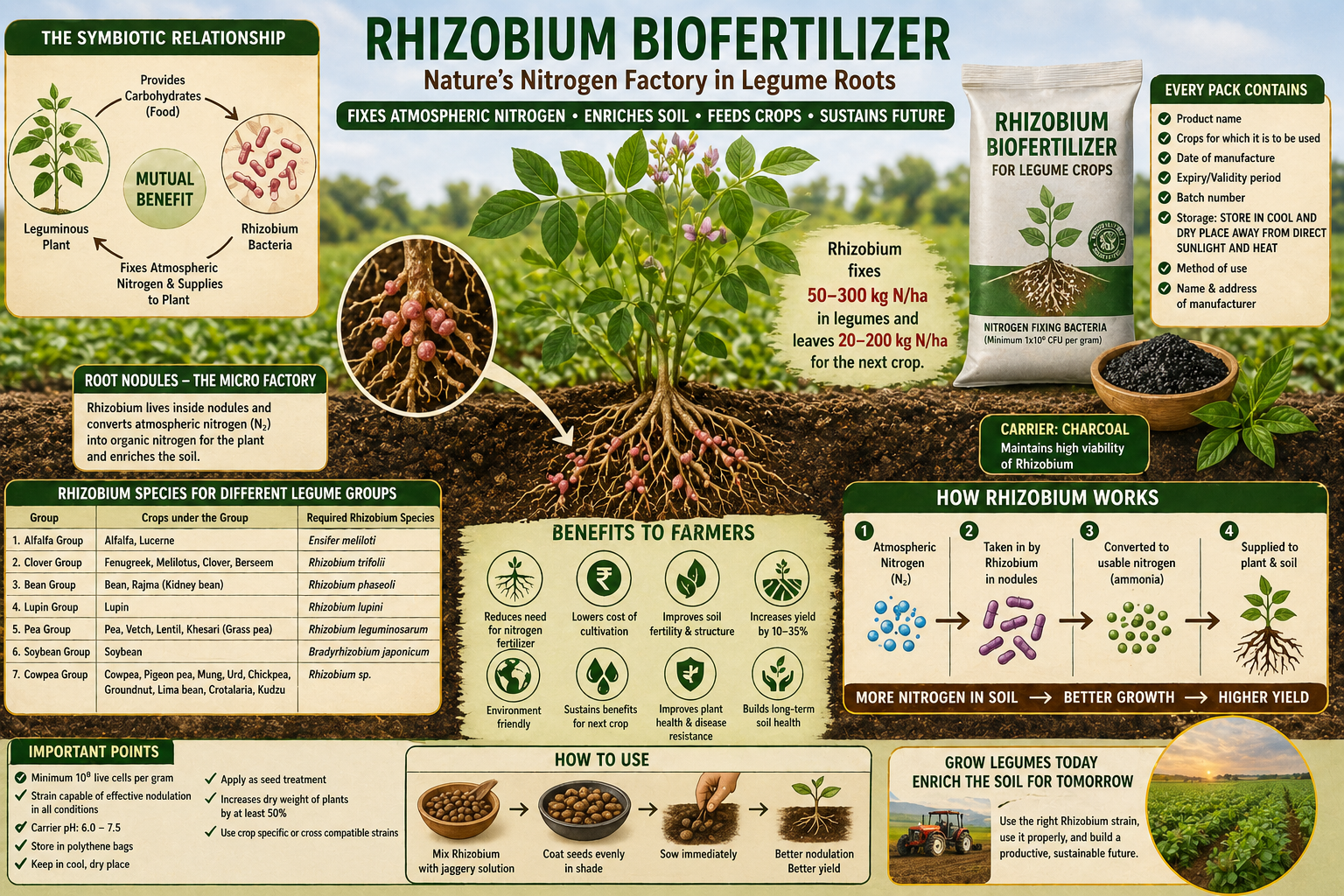
Effectiveness of Different Types of Beneficial Microbial Fertilizers
April 25, 2026 | by anisurrahaman235f@gmail.com