


Due to intensive cultivation, quick land preparation, and not giving repeated and phased tillage in the field, the incidence of weeds is increasing. As a result, statistics show that where the rate of increase in the use of insecticides and fungicides is 2.5% and 3.3% respectively, the rate of increase in the use of chemical herbicides is 5.5%.
Weed control measures can be broadly divided into four parts:
- Cultural method
- Mechanical method
- Biological control method
- Chemical control method
Proper and integrated use of the above control measures can keep weeds under control, control crop diseases and pests, and increase yield. In reality, it is not possible to completely eradicate weeds because weeds do not spread only through seeds; they also reproduce through various vegetative methods, produce a large number of seeds in many cases, and remain viable for many years. Therefore, the strategy of keeping weeds under control while producing crops is important.
1. Cultural Method:
(1) Before crop cultivation, weed-free certified seeds must be selected so that weed seeds do not enter the field in any way.
(2) Cow dung manure applied to the field must be fully decomposed; raw cow dung should never be applied.
(3) Weeds whose seeds have matured should not be fed to livestock.
(4) Agricultural implements must be thoroughly cleaned when transporting from one place to another.
(5) Irrigation water should be made as weed-free as possible.
(6) When transferring soil from one field to another, farmers must be conscious about weed seeds.
(7) The field should be tilled in summer (April-May), after one or two days of pre-monsoon rain, and then the weeds should be killed.
(8) The soil should be covered with light-colored plastic (0.05 mm) for at least 3 weeks in moist soil so that weeds can be destroyed. Polythene mulching is becoming very popular nowadays. In many cases, rice straw, husk, crop residues after threshing, and other mulching materials are used.
(9) In crop rotation, monocot and dicot crops, deep-rooted and shallow-rooted crops, legume and non-legume crops should be planted.
(10) In various orchard crops such as mango and banana, short-duration crops should be planted.
(11) In the field, at least in the crop cycle, crops that cover the soil should be planted, such as black gram, groundnut, soybean, mung bean, etc.
(12) Green manure crops such as Dhaincha should be cultivated.
(13) Green leaf manure such as Karanja, Subabul, Kalmi, and flowerless Parthenium should be used.
(14) During crop harvesting, threshing, winnowing, and storage, care must be taken so that weed seeds do not mix in any way.
(15) Regular contact should be maintained with agricultural experts.
(16) Intercropping and mixed cropping with the main crop can control weeds to a large extent. Chinese groundnut with broadcast Aus rice, cauliflower with potato, soybean in upland with broadcast rice, and gram with wheat can be cultivated.
(17) If fertilizer is applied at the base of the plants, the crop will get more fertilizer, which will reduce weed growth.
(18) Instead of growing the same crop repeatedly in the same field, following a well-defined crop cycle can reduce weed infestation. For example, instead of repeatedly growing wheat, potato, or mustard in the same field, changing the crops alternately can reduce weeds.
2. Mechanical Method of Weed Control:
Among all types of control measures, the mechanical method — mainly removing weeds or weeding with the help of laborers — is a very old and traditional method that is still widely practiced.
(ক) Hand Weeding:
Although this method is still quite popular, especially in small fields and hilly areas where using a hoe is not possible. This method can mainly control annual and biennial weeds, but controlling perennial weeds is quite difficult. However, it requires much more labor. Nowadays, due to labor shortage and increased wages, this method is gradually decreasing. Weed removal work must be done before flowering and seed formation. This method can be used for weed control in vegetable gardens, flower gardens, and rice fields.
(খ) Weeding with Tools:
Weeds along with their roots can be uprooted using tools like Khurpi, weeding hoe, spade, wheel hoe, weeder, etc. Nowadays, in row-sown crops, various weeders and wheel hoes, multi-row weeding implements are used. This reduces cost and clears the field of weeds in less time. These tools can be used in zero-tillage rice and wheat fields and in SRI method rice fields.
(গ) Tillage:
This method is used for controlling all types of weeds. The main objective of tillage is to reduce weed seeds in the soil and to separate weeds from the soil. First, the field is tilled to allow weeds to germinate, then tilled again to kill them. Tillage is done using rotovator, disc harrow, power tiller, tractor, chisel plough, etc. Deep tillage sends weed seeds deeper into the soil where they can remain viable for a long time; therefore, shallow tillage is very useful. Tillage is very effective for controlling perennial weeds in vegetables, orchards, and fallow lands. Taking advantage of Kalbaishakhi storms, summer tillage followed by chemical application can reduce weeds.
(ঘ) Mowing and Cutting Weeds:
By cutting and removing weeds, weed seed production can be reduced mainly in fallow lands, roadsides, playgrounds, railway lines, etc., and weed growth can also be controlled. Weeds are cut at ground level using mowers, sickles, daos, etc. Repeated cutting reduces food reserves in the soil and decreases weed incidence.
(ঙ) Flooding for Weed Control:
In this method, the infested area is first tilled, then the field is submerged under 15-25 cm of water and kept for 4-6 weeks, especially during summer. This method mainly reduces oxygen in the soil, causing weeds to die. Weeds like Ghentu and wild tulsi are controlled by this method.
(চ) Burning:
By setting fire to the field, the temperature reaches 45-55°C, killing the cells, stopping enzyme activity, and causing weeds to die. This method controls weeds in a very short time. In many cases, steam and flame are also used.
3. Biological Method of Weed Control:
Biological weed control is gradually becoming popular nowadays. This method has two main parts:
(ক) Cultivation of Weed Competitive Crops
(খ) Control of weeds through parasites, predators, and pathogens
(গ) Botanical or Plant-derived Herbicides
(ক) Cultivation of Weed Competitive Crops (Cropping and Competition):
By cultivating crops that grow rapidly, cover the soil easily, and follow proper crop sequences, weed growth is suppressed. Since some weeds coexist with certain crops, following proper crop rotation and avoiding repeated cultivation of the same crop year after year creates a competitive environment between crop and weed, reducing weed infestation. For example, to reduce Fela grass in wheat fields, broad-leaved crops such as potato, sunflower, and soybean can be grown. The selected crop should grow quickly and create sufficient shade.
(খ) Control through Parasites, Predators, and Pathogens:
The main objective of biological control is to keep weed intensity below the economic threshold so that crop production does not decrease and environmental pollution from chemical herbicides is avoided. In this case, parasites and predators must be highly specific. Natural predators must be free from parasites so they can easily control weeds. Predators must be highly host-specific so they never attack crops. In this regard, bud borers, gall makers, and fruit borers are much more effective than leaf and plant feeders.
Biological control first started in 1902 in Hawaii with the use of predatory insects Agromyza lantana, Thecla echion, etc. against Lantana camara weed.
In Australia, Opuntia inermis and Opuntia stricta weeds were successfully controlled using Cactoblastis cactorum from Argentina and Dactylopius opuntiae from America.
The Indian Fisheries Research Institute, Bhopal, has reported that grass carp fish can control aquatic weeds such as Najas, Hydrilla, and Lemna.
In India, efforts are being made to control Parthenium weed by cultivating Chakunda and Kalakesunda.
In various countries, Parthenium hysterophorus weed is being effectively controlled using Zygogramma bicolorata.
Aquatic weed Eichhornia crassipes is being well controlled by Neochetina eichhorniae and Neochetina bruchi.
Among terrestrial weeds, the most dangerous and harmful weed known as Congress grass or Parthenium is being controlled using pathogens. Efforts have been made in various European countries and India. It has been observed that the rust pathogens Puccinia melampodii and Puccinia abrupta can control Parthenium in Australia and Mexico. Rust pathogens inhibit vegetative growth and seed production. The fungus Phytophthora palmivora causes root rot in Morrenia odorata weed in lemon orchards. Special species of ladybirds eat water hyacinth and aquatic ferns. Grass carp, tilapia, goldfish, etc. eat Hydrilla, Lemna, and Najas aquatic weeds.
(গ) Botanical or Plant-derived Herbicides:
Various chemicals and alkaloids obtained from plant extracts are used as herbicides in different crops. They mainly inhibit weed seed germination. Coumarin, xanthotoxin, esculetin, etc., phenolic compounds act as herbicides. Anisomycin, a chemical obtained from Streptomyces bacteria, controls Shyama and crab grass in rice. Benzyl isothiocyanate obtained from papaya tree is used to control velvet leaf weed.
At present, this area is not very widespread, but there is ample scope for research in this field.
4. Chemical Weed Control:
The most effective, acceptable, and popular method for weed control is chemical weed control. At present, the application of this method is gradually increasing. According to one estimate, where the growth rate of insecticide use is 2.5% and fungicide use is 3.3%, the annual growth rate of chemical herbicide use is 5.0%.
Currently, there are many types of chemical herbicides, and selective herbicides for different crops are very popular today. Weeds can be easily controlled by this method and higher yields can be obtained. Due to labor shortage, increased wages, etc., these herbicides easily break down in the soil and have almost no residual effect on crops. New types of herbicides are used in very low doses and have low environmental pollution with blue and green labels. For example, previously Dalapon was used at 15,000 grams/hectare, but now Sulfonyl Urea is widely used at 20-30 grams/hectare.
Advantages of Chemical Herbicides:
- Eliminates weeds that look like crops and weeds in between rows: Often weeds and crops look the same at the early stage, so they cannot be distinguished. As a result, controlling weeds by hand weeding becomes difficult.
- Weeds can be controlled before the critical period: Weeds can be controlled before competition starts between crops and weeds. This allows very good initial growth of the crop.
- Timely application: Where weeding is not possible due to unavailability of laborers, chemical herbicides can be used easily.
- Crop roots are less damaged: During intercultural operations or weeding, crop roots get damaged, but in this case there is no such possibility.
- Zero-tillage cultivation becomes possible: Due to the discovery of chemical herbicides, zero-tillage cultivation has become possible, which is not feasible only with hand weeding.
Limitations of Chemical Herbicides:
Despite so many advantages, chemical herbicides have some limitations.
- Wrong application: If a specific herbicide is mistakenly applied to another crop, or if the dose is applied in excess, or if a non-selective chemical is applied in the crop, it can cause huge damage to the crop and may even completely destroy the crop.
- Emergence of herbicide-resistant weeds: If a particular group of chemicals is applied repeatedly in the same field, herbicide-resistant weeds emerge. At present, many weeds have become resistant to many chemicals.
- Environmental pollution: Chemical herbicides often pollute soil and water, which harms the environment and human health.
Herbicides are mainly divided into two categories:
(ক) Selective
(খ) Non-selective
(ক) Selective is again divided into two parts:
1) Foliar application
2) Soil application
Foliar applied herbicides are further divided into two categories:
(ক) Contact (খ) Translocated
(খ) Non-selective herbicides are again divided into three categories:
1) Foliar application
2) Soil application
3) Aquatic application
Non-selective Herbicides:
Non-selective herbicides are those which, when used, kill all green plants — whether crops or weeds. That is, they are used only for cleaning the land before sowing crops or for weed control in open areas such as playgrounds, railway lines, airports, etc. These should never be sprayed in crop fields as the crop will die. In this case, remember that herbicides should be mixed in clean water and the sprayer should be washed after spraying.
Foliar Application:
- Contact:
When sprayed on leaves and exposed to sunlight, these destroy the chlorophyll in the leaves and kill the weeds. One spray is enough to control annual weeds, but perennial weeds require repeated applications.
Example: Paraquat Dichloride 24 S.L.
- Translocated:
This type of chemical herbicide can move inside the plant and kill up to the roots. These can control both annual and perennial weeds.
Example: Glyphosate 41 S.L., 2,4-D (Sodium Salt), etc.
Selective Herbicides:
Selective herbicides are those that are highly effective against certain weeds but have no effect on other weeds. When this chemical is sprayed in a field with various types of weeds, some weeds will die, some will be slightly damaged, and some will remain unaffected. The selectivity of selective herbicides depends on the reaction of the chemical with the weed, the amount of chemical used, the method of application, the type of weed, the time of application, the difference in growth between crop and weed, how much the weed leaves are wetted, and the amount of rainfall. The same chemical can be selective or non-selective depending on how it is used. Therefore, the selectivity of a herbicide depends on the complex interrelationship between specific crop weeds, environment, and the chemical.
Role of Plants in Herbicide Selectivity:
The effectiveness of a chemical on weeds and crops depends on various factors.
- Age: Weeds are more susceptible to chemicals at a young stage. Herbicides used before weed emergence mainly kill germinating weed seeds or seedlings and have almost no effect on the crop.
- Growth Rate: Weeds that grow rapidly are much more sensitive than those that grow slowly.
- Plant Appearance: The selectivity of the chemical depends on the structure of the roots, the nature of the leaves, and where the plant is growing.
- Physiological Process: It depends on the physiological process of the weed — how much chemical it can absorb and how it is translocated inside the weed. Generally, the more chemical a weed absorbs, the higher its mortality rate.
- Genetic Factors: The effectiveness of a particular chemical on a weed depends on genetic factors inherited through generations.
(ক) Contact: Death of the weed or a part of the weed occurs upon contact with this chemical. Selectivity depends on the difference in absorption capacity and appearance between crop and weed.
Example: Propanil 35 E.C.
(খ) Translocated: This type of chemical flows inside the plant and destroys the roots of perennial weeds. Selectivity depends on the difference in physiological activity between crop and weed.
Example: 2,4-D.
(গ) Soil Application: This type of herbicide is used in the soil. It can be applied before or after crop germination and before or after weed emergence, depending on the nature of the chemical. There should be moisture in the upper layer of the soil. When used with irrigation water or rain, the chemical easily reaches the target place.
Example: Simazine, Atrazine.
Classification According to Time of Application:
Herbicides are divided into 3 classes according to the time of application.
- Pre-planting (before sowing seeds and transplanting seedlings): e.g., Glyphosate, Paraquat, etc.
- Pre-emergence (after sowing seeds but before crop emergence): e.g., Pretilachlor, Pendimethalin, etc.
- Post-emergence (after crop emergence): e.g., Propanil, Pyrazosulfuron Ethyl.
RELATED POSTS
View all

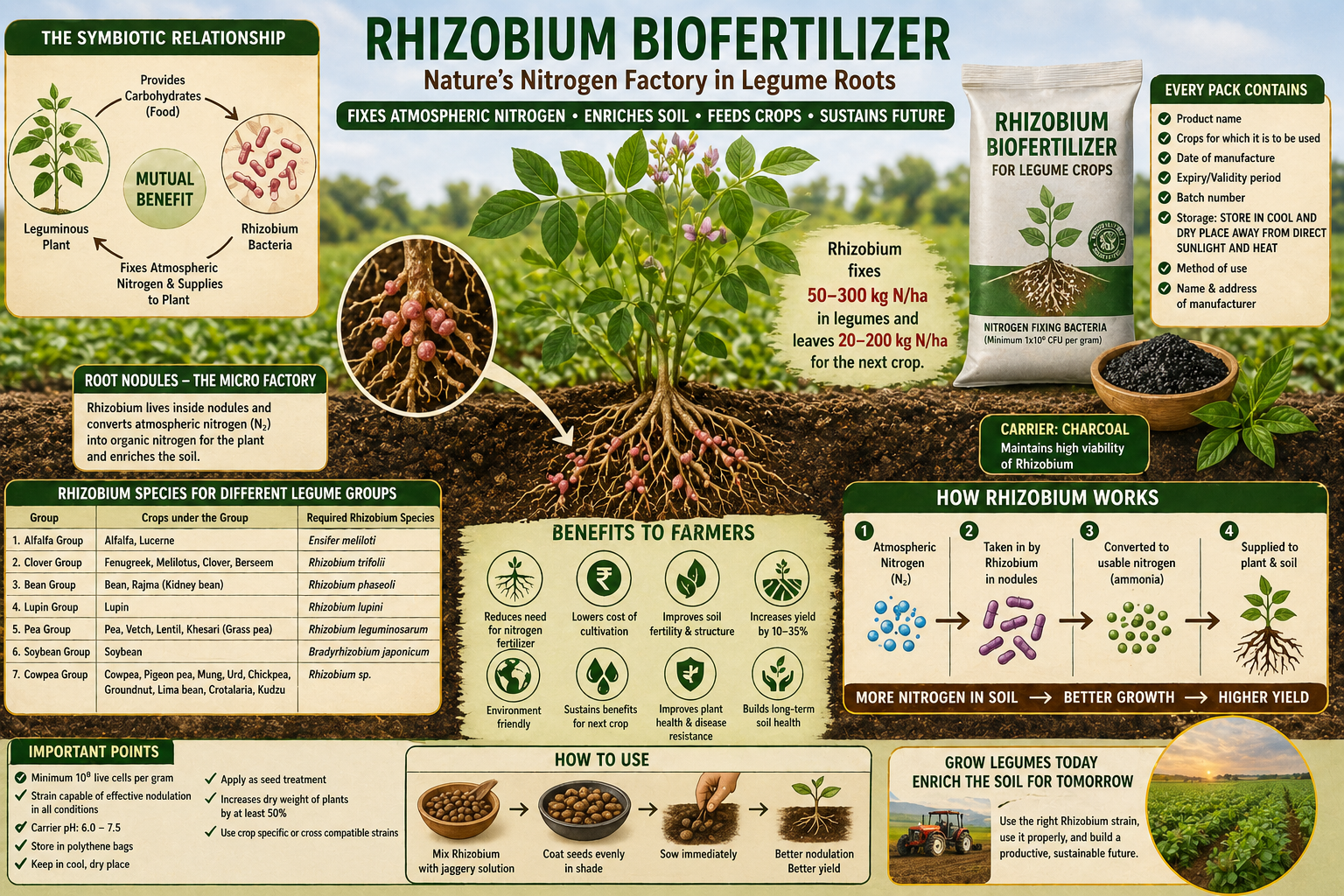
Effectiveness of Different Types of Beneficial Microbial Fertilizers
April 25, 2026 | by anisurrahaman235f@gmail.com
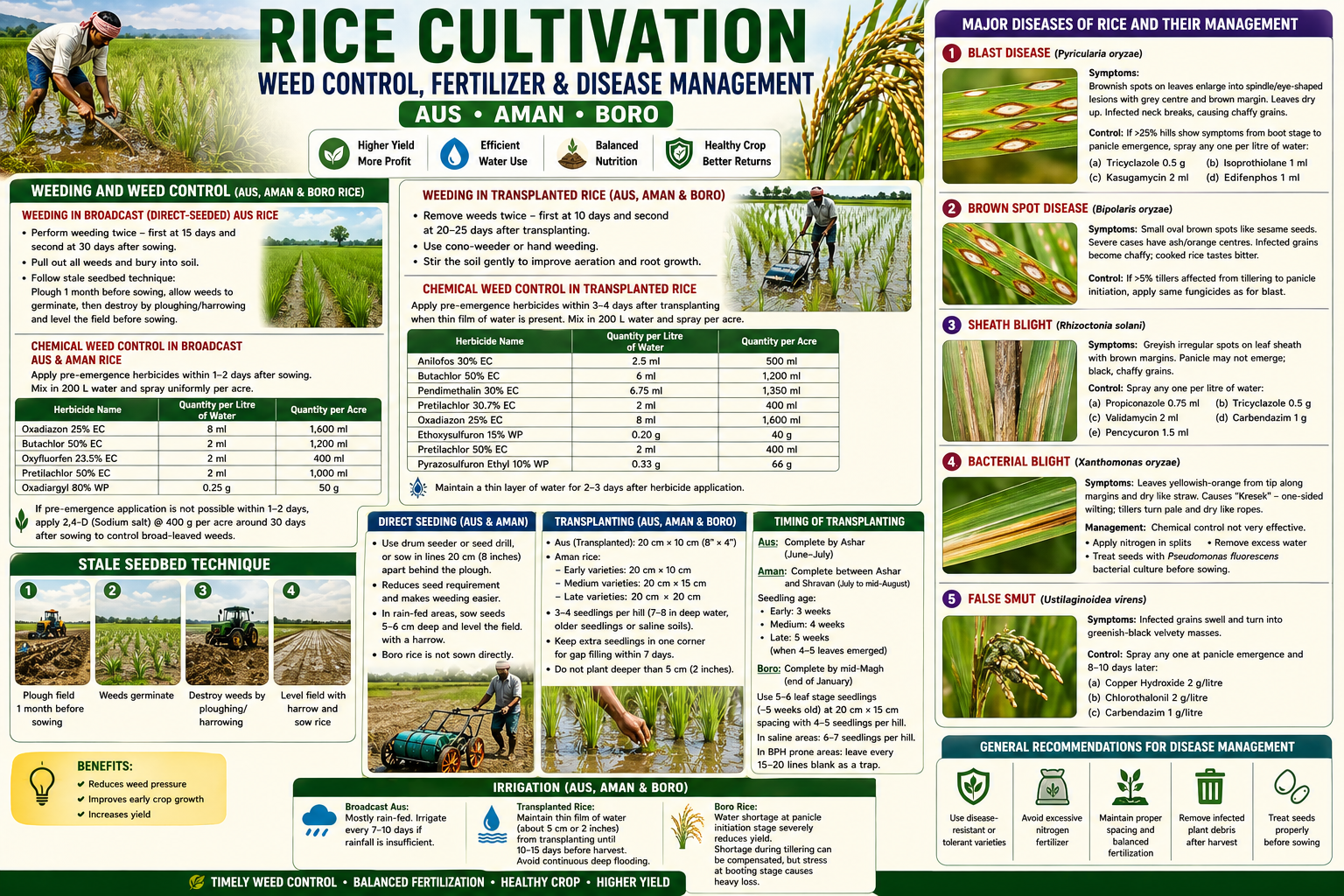
Weeding and Weed Control (Aus, Aman and Boro Rice)
April 27, 2026 | by anisurrahaman235f@gmail.com