Iron-Chelating Compounds Produced by Microorganisms
April 25, 2026 | by anisurrahaman235f@gmail.com
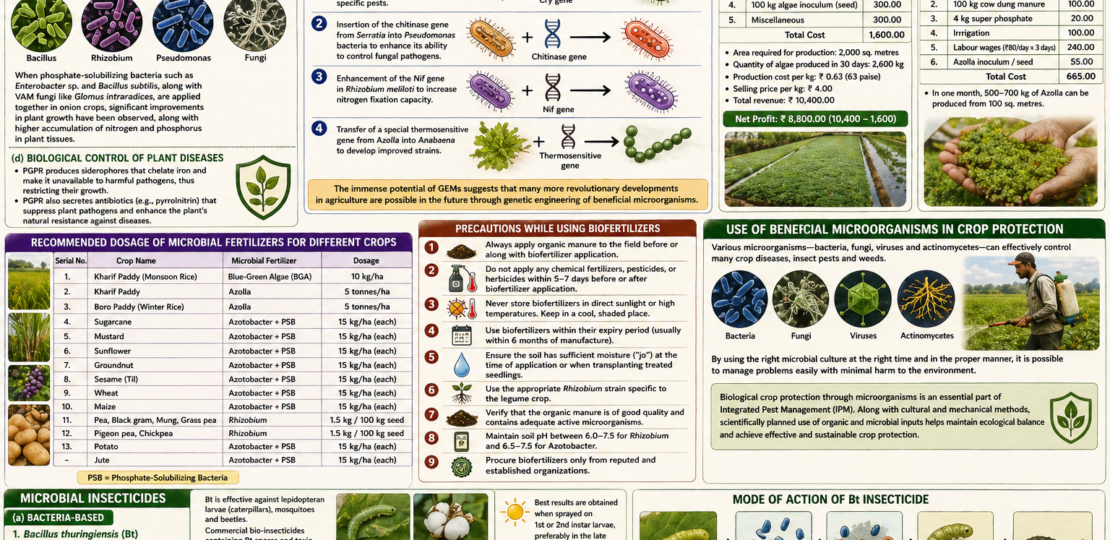
Several microorganisms are capable of producing iron-chelating compounds (siderophores). Important examples include Bacillus, Rhizobium, Pseudomonas, Agrobacterium, Escherichia coli, and various fungi.
When phosphate-solubilizing bacteria such as Enterobacter sp. and Bacillus subtilis, along with VAM fungi like Glomus intraradices, are applied together in onion crops, significant improvements in plant growth have been observed, along with higher accumulation of nitrogen and phosphorus in plant tissues.
(d) Biological Control of Plant Diseases
PGPR plays a major role in the biological control of various soil-borne plant diseases. These beneficial bacteria produce siderophores that form stable complexes with iron, making iron less available to harmful pathogens. This restricts the growth and activity of disease-causing microorganisms in the soil.
Additionally, PGPR secretes various antibiotics (such as pyrrolnitrin) that help suppress plant pathogens and enhance the plant’s natural resistance against diseases.
Genetically Engineered Microorganisms (GEMs)
Genetically Engineered Microorganisms (GEMs) are created by inserting one or more specific genes into a microorganism through recombinant DNA technology. These modified microbes are designed for targeted purposes in agriculture. They usually produce useful proteins or special metabolic compounds that help control crop diseases, pests, and weeds.
Some notable examples include:
- Introduction of the Cry gene from Bacillus thuringiensis (Bt) into Clavibacter to make it resistant and effective against specific pests.
- Insertion of the chitinase gene from Serratia into Pseudomonas bacteria to enhance its ability to control fungal pathogens.
- Enhancement of the Nif gene in Rhizobium meliloti to increase nitrogen fixation capacity.
- Transfer of a special thermosensitive gene from Azolla into Anabaena to develop improved strains (work is quite advanced in this area).
The immense potential of GEMs suggests that many more revolutionary developments in agriculture are possible in the future through genetic engineering of beneficial microorganisms.
Cost of Production of Blue-Green Algae (BGA)
The cost of producing the required quantity of blue-green algae for one acre of land is as follows:
| Sl. No. | Particulars | Cost (₹) |
|---|---|---|
| 1. | Land preparation and labour | 400.00 |
| 2. | Super phosphate | 200.00 |
| 3. | Water and electricity | 400.00 |
| 4. | 100 kg algae inoculum (seed) | 300.00 |
| 5. | Miscellaneous | 300.00 |
| Total Cost | 1,600.00 |
- Area required for production: 2,000 sq. metres
- Quantity of algae produced in 30 days: 2,600 kg
- Production cost per kg: ₹ 0.63 (63 paise)
- Selling price per kg: ₹ 4.00
- Total revenue: ₹ 10,400.00
- Net Profit: ₹ 8,800.00 (10,400 – 1,600)
Cost of Azolla Production
Cost details for setting up one Azolla production unit on 100 sq. metres (one decimal) of land in rural conditions (in ₹):
| Sl. No. | Particulars | Cost (₹) |
|---|---|---|
| 1. | Nursery land preparation | 150.00 |
| 2. | 100 kg cow dung manure | 100.00 |
| 3. | 4 kg super phosphate | 20.00 |
| 4. | Irrigation | 100.00 |
| 5. | Labour wages (₹80/day × 3 days) | 240.00 |
| 6. | Azolla inoculum / seed | 55.00 |
| Total Cost | 665.00 |
- In one month, 500–700 kg of Azolla can be produced from 100 sq. metres.
Recommended Dosage of Microbial Fertilizers for Different Crops
| Serial No. | Crop Name | Microbial Fertilizer | Dosage |
|---|---|---|---|
| 1. | Kharif Paddy (Monsoon Rice) | Blue-Green Algae (BGA) | 10 kg/ha |
| 2. | Kharif Paddy | Azolla | 5 tonnes/ha |
| 3. | Boro Paddy (Winter Rice) | Azolla | 5 tonnes/ha |
| 4. | Sugarcane | Azotobacter + PSB | 15 kg/ha (each) |
| 5. | Mustard | Azotobacter + PSB | 15 kg/ha (each) |
| 6. | Sunflower | Azotobacter + PSB | 15 kg/ha (each) |
| 7. | Groundnut | Azotobacter + PSB | 15 kg/ha (each) |
| 8. | Sesame (Til) | Azotobacter + PSB | 15 kg/ha (each) |
| 9. | Wheat | Azotobacter + PSB | 15 kg/ha (each) |
| 10. | Maize | Azotobacter + PSB | 15 kg/ha (each) |
| 11. | Pea, Black gram, Mung, Grass pea | Rhizobium | 1.5 kg / 100 kg seed |
| 12. | Pigeon pea, Chickpea | Rhizobium | 1.5 kg / 100 kg seed |
| 13. | Potato | Azotobacter + PSB | 15 kg/ha (each) |
| – | Jute | Azotobacter + PSB | 15 kg/ha (each) |
Precautions While Using Biofertilizers
It is essential to follow certain precautions when using microbial fertilizers:
- Always apply organic manure to the field before or along with biofertilizer application.
- Do not apply any chemical fertilizers, pesticides, or herbicides within 5–7 days before or after biofertilizer application.
- Never store biofertilizers in direct sunlight or high temperatures. Keep them in a cool, shaded place.
- Use biofertilizers within their expiry period (usually within 6 months of manufacture).
- Ensure the soil has sufficient moisture (“jo”) at the time of application or when transplanting treated seedlings.
- Use the appropriate Rhizobium strain specific to the legume crop.
- Verify that the organic manure is of good quality and contains adequate active microorganisms.
- Maintain soil pH between 6.0–7.5 for Rhizobium and 6.5–7.5 for Azotobacter. Incorrect pH will reduce microbial activity and effectiveness.
- Procure biofertilizers only from reputed and established organizations to minimize risk.
Use of Beneficial Microorganisms in Crop Protection
Various microorganisms — bacteria, fungi, viruses, and actinomycetes — can effectively control many crop diseases, insect pests, and weeds. By using the right microbial culture at the right time and in the proper manner, it is possible to manage these problems easily with minimal harm to the environment.
Biological crop protection through microorganisms is now an essential and inseparable part of integrated pest management (IPM). Indiscriminate and excessive use of chemical pesticides has not only caused environmental pollution but has also raised serious questions about the sustainability of crop protection systems.
Therefore, along with cultural and mechanical methods, there is a strong need for scientifically planned application of organic and microbial inputs. By understanding the specific problem and applying suitable beneficial microorganisms, crop protection can be achieved while maintaining ecological balance.
Microbial Insecticides
(a) Bacteria-based
1. Bacillus thuringiensis (Bt)
Bacillus thuringiensis is a soil-dwelling bacterium that does not harm humans, animals, birds, or the environment. So far, about 67 subspecies have been identified, among which the kurstaki subspecies is most widely used in agriculture.
This bacterium is effective against various insects, especially lepidopteran larvae (caterpillars), mosquitoes, and beetles.
Commercial bio-insecticides containing Bt spores and toxic active proteins are available under different brand names. These can be sprayed to control:
- Diamondback moth in cabbage
- Bollworm in cotton
- Tobacco caterpillar
- Leaf and fruit borers in pulses and tomato
- Leaf folders and defoliators in cabbage
- Hairy caterpillars in jute and sesame
Best results are obtained when sprayed on 1st or 2nd instar larvae, preferably in the late afternoon. Effectiveness decreases when ambient temperature exceeds 30°C.
After ingestion, the Bt spores and endotoxin spread throughout the insect’s body, causing toxicity in the gut. In the highly alkaline midgut, the protoxin is converted into active delta-endotoxin, which perforates the gut lining. The insect stops feeding, becomes paralysed, and dies slowly within 1–3 days.
RELATED POSTS
View all

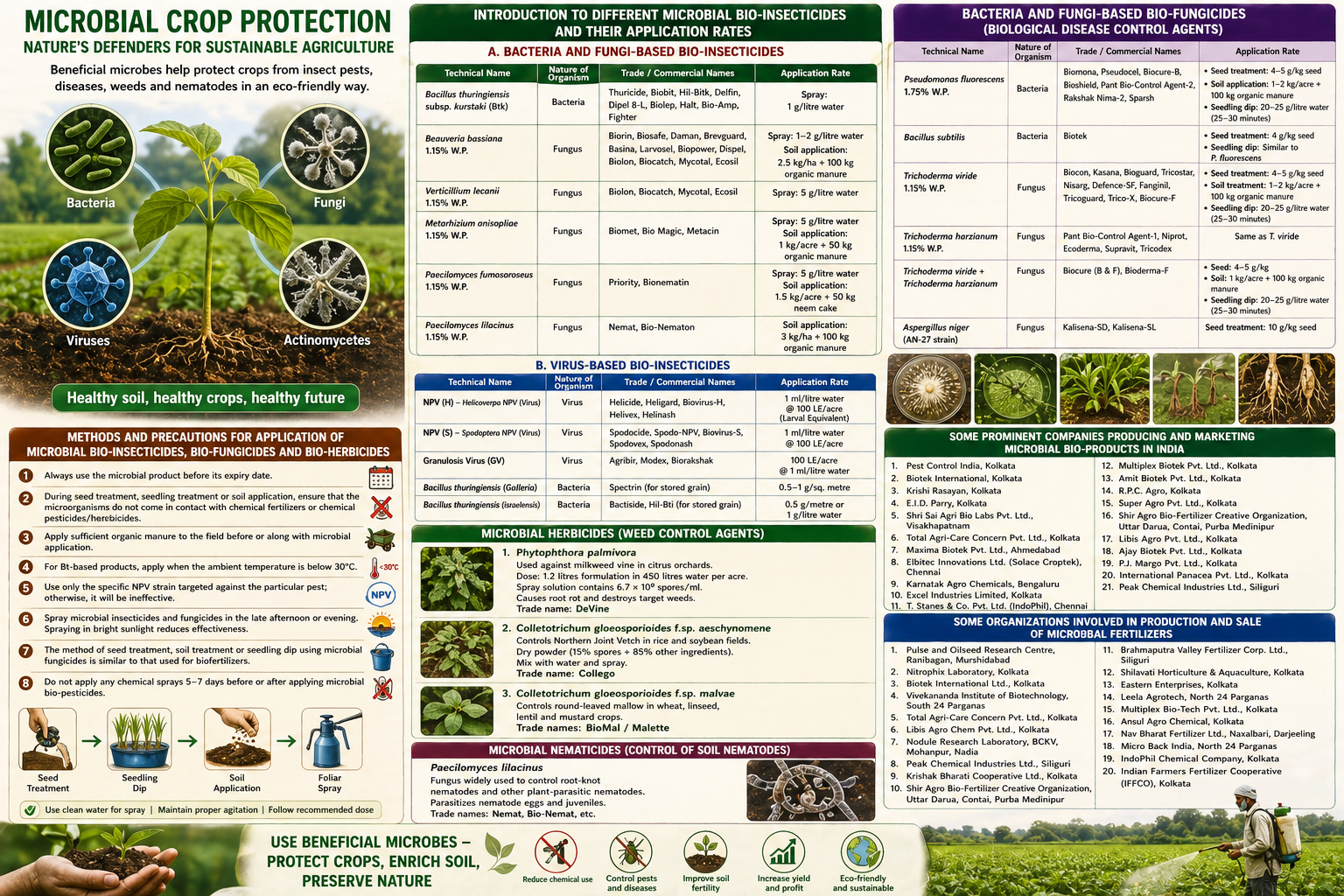
Introduction to Different Microbial Bio-Insecticides and Their Application Rates
April 25, 2026 | by anisurrahaman235f@gmail.com