

Hostinger vs Namecheap Hosting: Detailed Comparison (2026)
August 2, 2026 | by anisurrahaman235f@gmail.com
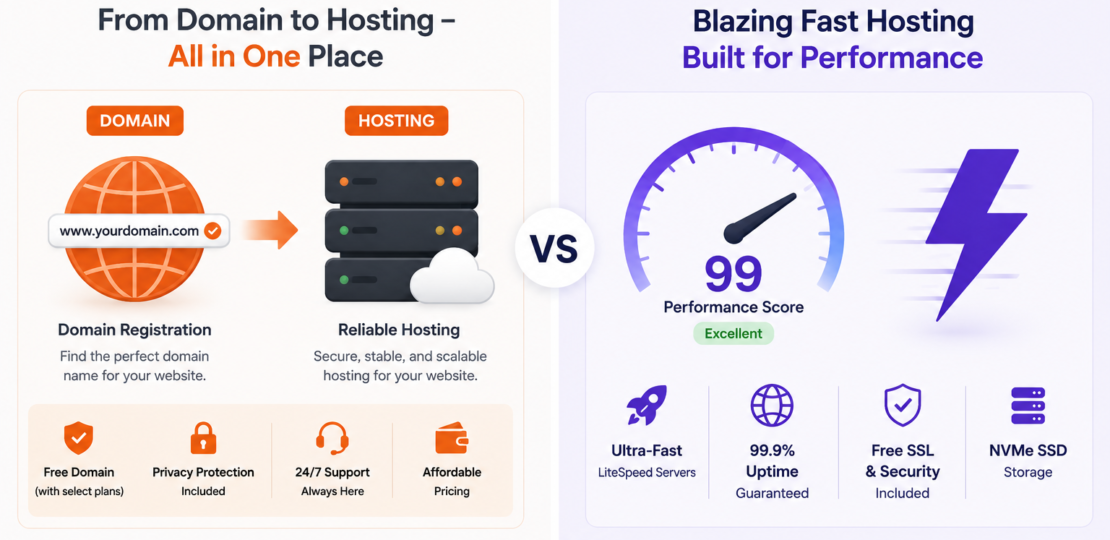
Namecheap built its reputation as a domain registrar first, and its hosting division has spent years trying to prove it’s just as capable as its domain business. In 2026, that effort has paid off in a genuinely interesting way: Namecheap now runs two very different hosting products — traditional cPanel-based shared hosting, and a purpose-built managed WordPress platform called EasyWP. Hostinger, meanwhile, has stuck to refining a single modern infrastructure stack across all its plans.
This comparison looks at how the two actually perform in 2026, based on independent testing data covering speed, uptime, pricing, and features — not just what either company claims on its pricing page.
Quick Verdict
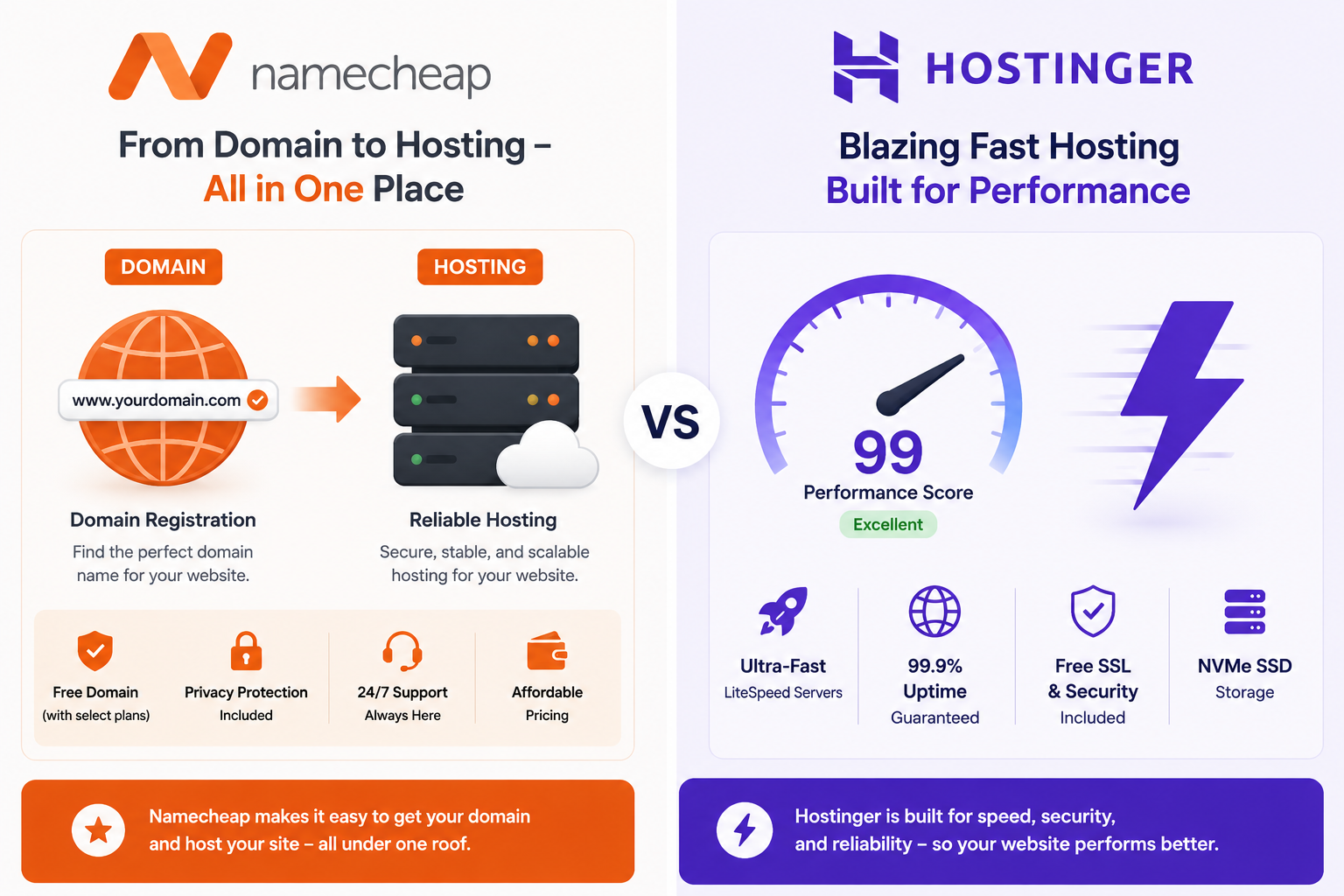
Hostinger is the stronger all-around choice for most websites — faster infrastructure by default, more generous resources at the entry price, and consistent performance across shared, VPS, and cloud tiers. Namecheap’s advantage is flexibility and its EasyWP platform’s simplicity for WordPress-only projects, plus genuinely low-cost VPS options for developers who want root access without a big monthly bill. If you want one dependable host that scales with you, Hostinger is the safer bet. If you specifically want a no-frills, low-cost WordPress-only setup or cheap self-managed VPS, Namecheap’s EasyWP and VPS lines are worth a closer look.
Company Background
Hostinger has built a unified hosting experience: one modern control panel (hPanel), one LiteSpeed-based infrastructure stack, and consistent feature bundling across shared, cloud, and VPS tiers. Namecheap’s approach is split. Its Stellar shared hosting line runs on the traditional cPanel interface most experienced website owners already know, while EasyWP, launched in 2018 and rebuilt on containerized infrastructure in 2021, runs each WordPress install in its own isolated container with WordPress, MySQL, and PHP-FPM pre-configured for performance.
That split matters when comparing the two companies, because “Namecheap hosting” isn’t really one product — the right comparison point depends on whether you’re evaluating its general shared hosting or its WordPress-specific EasyWP platform.
Pricing Comparison
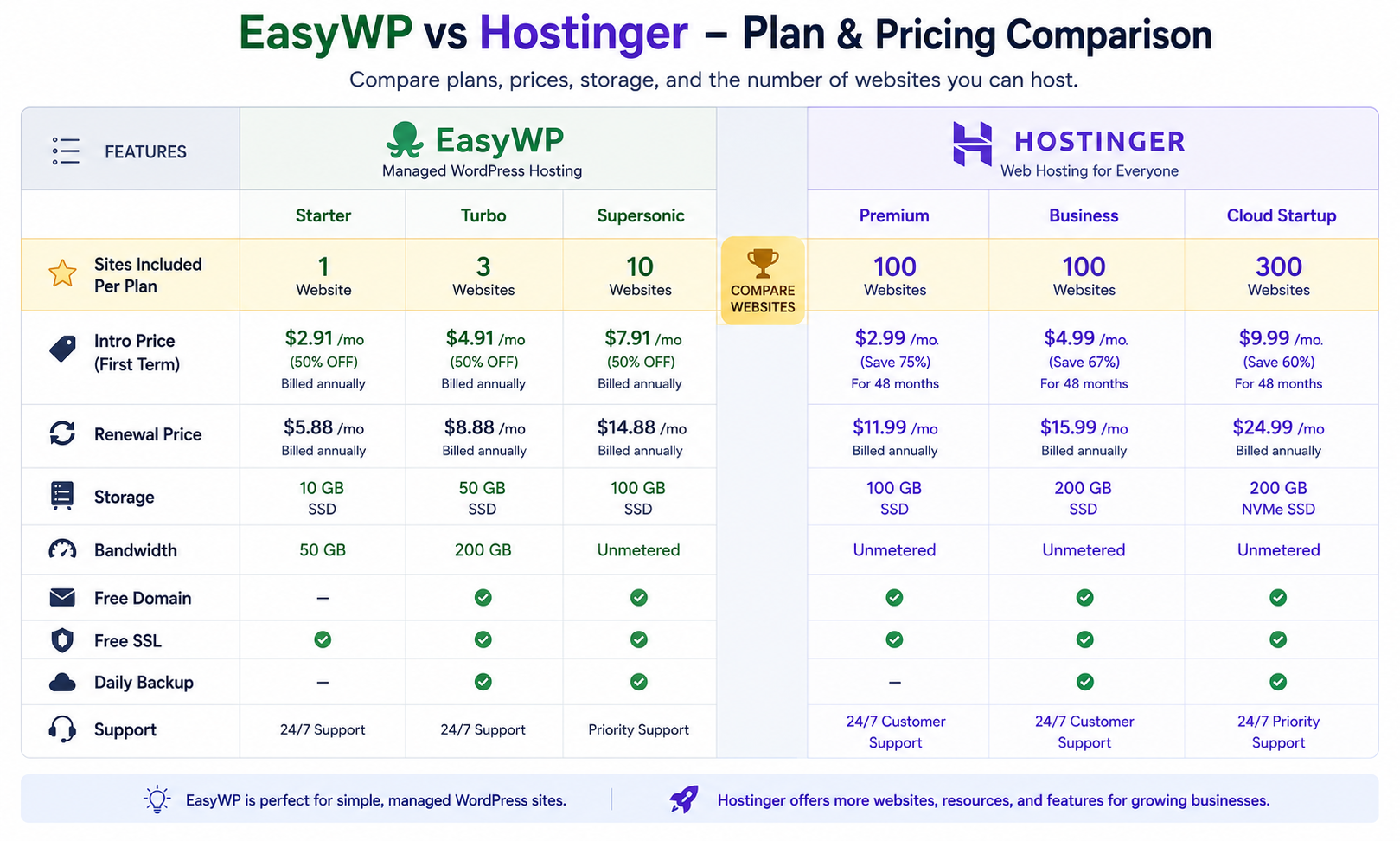
Namecheap’s EasyWP pricing in 2026 breaks down into three tiers: Starter at roughly $3.88/month on annual billing (10GB NVMe storage, 50,000 monthly visitor cap, one site), Turbo at around $7.88/month annual (50GB storage, 200,000 visitors, a free domain), and Supersonic at about $13.88/month annual (100GB storage, 500,000 visitors, a 99.99% uptime SLA). A genuinely useful perk here is a 30-day free trial with no credit card required on the Starter plan — a rare offer in this market. The clear limitation: each plan covers exactly one WordPress site, so anyone managing multiple sites needs to buy multiple EasyWP plans.
Hostinger’s shared plans start even lower on comparable multi-year terms, typically in the $2–5/month range, and — critically — a single Premium plan can host up to 100 websites, not just one. For anyone running more than a single site, this difference alone can make Hostinger dramatically cheaper in practice, even when the headline monthly numbers look similar.
On the VPS side, Namecheap’s self-managed VPS plans start at a competitive $6.88/month with full root access on Linux or Windows, putting it roughly in the same territory as Hostinger’s entry-level VPS pricing. This is one category where the two are genuinely close in value.
Performance and Speed: What the Data Actually Shows
Both companies test reasonably well in 2026, though the results vary more for Namecheap depending on which product you’re looking at.
For Namecheap’s traditional shared hosting, independent GTmetrix testing has recorded load times as fast as 526 milliseconds with a perfect performance score in some test runs — a genuinely strong result for budget shared hosting. For EasyWP, results are more tier-dependent: testers running the Starter plan have measured Time to First Byte around 380ms and page load times near 1.8 seconds, while the higher Turbo tier, which uses NVMe SSD storage, dropped TTFB to roughly 220ms and page load to about 1.1 seconds. Uptime figures for EasyWP across independent long-term monitoring have generally landed between 99.2% and 99.95%, with occasional brief outages reported by real users tracking their own sites over several months.
Hostinger, running LiteSpeed Enterprise across every plan tier rather than only its premium options, has posted TTFB figures around 180–300 milliseconds and page load times frequently under 1.5 seconds on cache-enabled plans, with uptime consistently measured at 99.9% or higher, including several reports of 100% uptime across multi-month testing windows.
The practical difference: Hostinger delivers its best-tier performance consistently across all plans, while Namecheap’s performance depends heavily on which plan and product you choose — the entry-level EasyWP Starter tier noticeably lags behind its own Turbo tier, whereas Hostinger’s gap between its cheapest and mid-tier plans is smaller.
Features Comparison
| Feature | Hostinger | Namecheap |
|---|---|---|
| Control panel | Custom hPanel (all plans) | cPanel (shared) / custom EasyWP panel (WordPress) |
| Web server tech | LiteSpeed Enterprise | Standard stack (shared) / containerized (EasyWP) |
| Sites per plan | Up to 100 on entry-level Premium | 1 site per EasyWP plan |
| Free CDN | Included from Business plan up | Included on EasyWP (Cloudflare-powered) |
| Free SSL | Yes, all plans | Yes, all plans |
| Free trial | 30-day money-back guarantee | 30-day free trial (EasyWP Starter, no card required) |
| VPS entry price | Comparable, LiteSpeed-based | From $6.88/month, Linux or Windows |
| Free migration | Yes | Yes, within 24 hours |
| Two-factor authentication | Available | Available |
| Email hosting included | Yes | Not included with EasyWP |
The “one site per plan” limitation on EasyWP is worth emphasizing again here, since it’s easy to overlook during signup and it’s the single biggest structural difference between the two companies’ pricing models.
Ease of Use
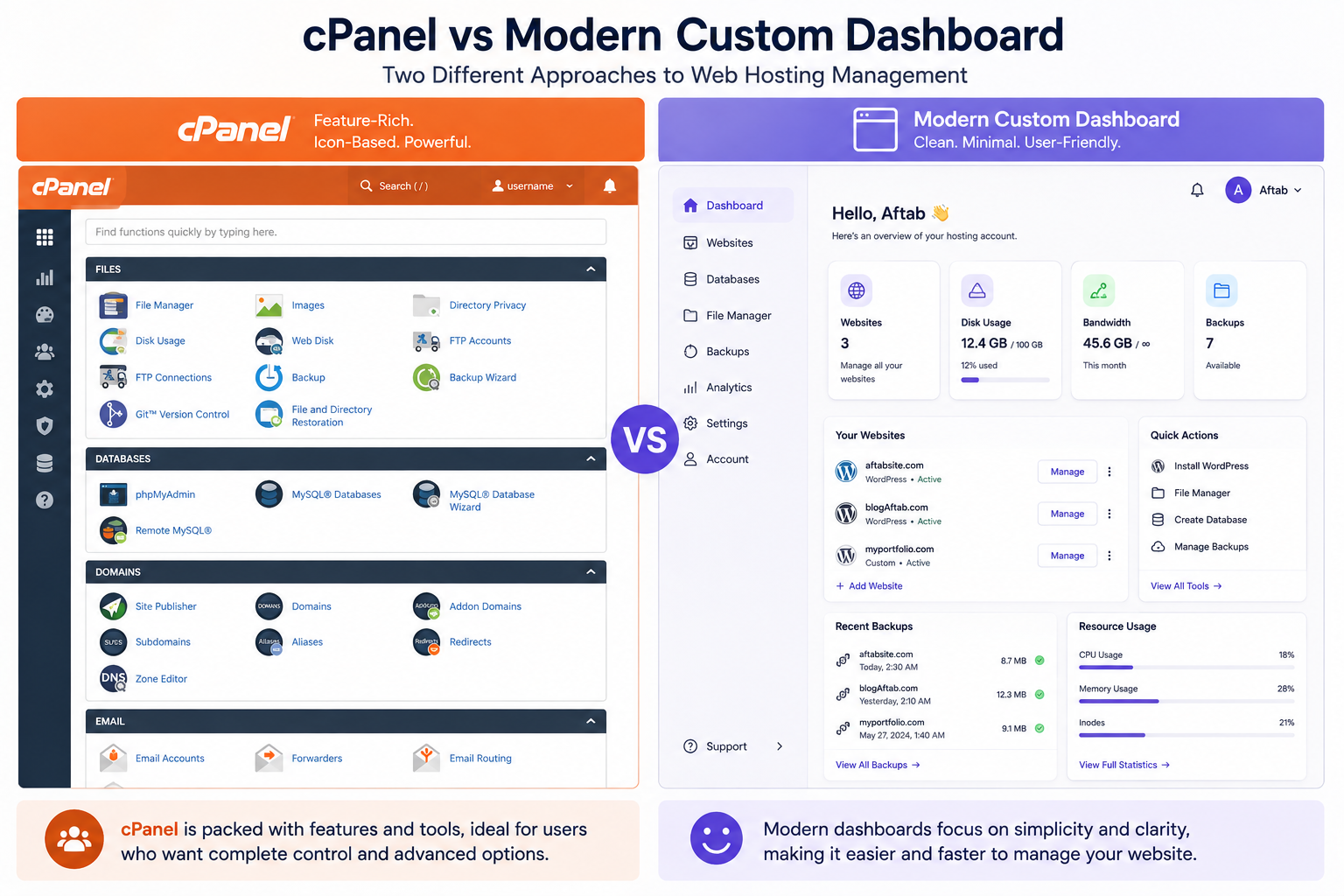
hPanel gives Hostinger users a single, consistent interface no matter which plan they’re on, with real-time resource monitoring built in. Namecheap splits its experience: cPanel on shared hosting will feel instantly familiar to anyone who’s used hosting before, thanks to its icon-heavy, decades-old layout and deep Softaculous app installer integration. EasyWP’s dashboard, by contrast, is deliberately minimal — showing only backups, SSL, domain connection, and traffic stats, which testers consistently describe as hard to get lost in, even for complete beginners.
If you specifically want the familiarity of cPanel, Namecheap’s shared hosting is the only one of the two that offers it — Hostinger has moved away from cPanel entirely in favor of hPanel across its shared and cloud tiers.
Customer Support
Namecheap offers 24/7 support, but independent reviewers have consistently described it as inconsistent rather than bad — agents are generally polite and available, but resolving more complex issues sometimes takes longer or requires more back-and-forth than expected. Hostinger’s 24/7 live chat support faces a similar critique in independent reviews: fast for routine problems, less predictable for advanced technical issues.
Neither company stands out as clearly superior on support in 2026 — both are adequate for typical shared-hosting-level problems but neither offers the phone-support safety net that some competitors provide.
Security Features
Namecheap includes free SSL, two-factor authentication, domain privacy on eligible domains, DDoS protection, malware scanning, and secure FTP access across its hosting lineup, plus automatic backups on select plans. Hostinger includes DDoS protection, malware scanning, and free SSL by default on every plan tier, with daily backups included from its Business tier upward.
Both companies cover the essentials well. The main practical difference is that Namecheap’s two-factor authentication and domain privacy tools are a natural fit if you’re also managing your domain registration through the same account — a workflow advantage for anyone who registers domains with Namecheap already.
Who Should Choose Hostinger?
- Anyone managing multiple websites, since a single entry-level plan supports far more sites than an equivalent EasyWP plan
- Buyers who want consistent performance across every plan tier rather than a noticeable gap between entry and premium options
- Users who prefer a single modern dashboard (hPanel) across shared, cloud, and VPS hosting
- Sites that need included email hosting without buying it separately
Who Should Choose Namecheap?
- Single-site WordPress owners who want a genuinely simple, minimal dashboard and don’t mind the one-site-per-plan limit
- Anyone who wants to test EasyWP risk-free with its 30-day no-card-required trial
- Users who specifically want traditional cPanel rather than a custom control panel
- Developers who want low-cost self-managed VPS hosting with full root access
- People who already register domains through Namecheap and want account consolidation
Final Verdict
Hostinger comes out ahead for most general-purpose hosting needs in 2026 — its infrastructure is consistently fast across every tier, it supports far more sites per plan, and its pricing holds up well even against Namecheap’s cheapest options once you factor in the one-site restriction on EasyWP. Namecheap earns its place for two specific scenarios: WordPress-only site owners who want the simplicity of EasyWP and appreciate its risk-free trial, and developers who want inexpensive, no-frills VPS hosting with full control.
Neither host is a poor choice, and the right pick genuinely depends on your setup. If you’re managing one WordPress blog and want the simplest possible experience, EasyWP’s minimal dashboard and free trial make it easy to test. If you’re building anything more ambitious — multiple sites, a growing business, or simply want the strongest performance-per-dollar across the board — Hostinger is the more complete and future-proof option.
RELATED POSTS
View all

Hostinger vs Bluehost: Complete Hosting Comparison (2026)
August 1, 2026 | by anisurrahaman235f@gmail.com
Best Hosting for Small Business Websites in 2026
August 2, 2026 | by anisurrahaman235f@gmail.com
Best Hosting for Small Business Websites in 2026
August 2, 2026 | by anisurrahaman235f@gmail.com