

Best Hosting for Small Business Websites in 2026
August 2, 2026 | by anisurrahaman235f@gmail.com
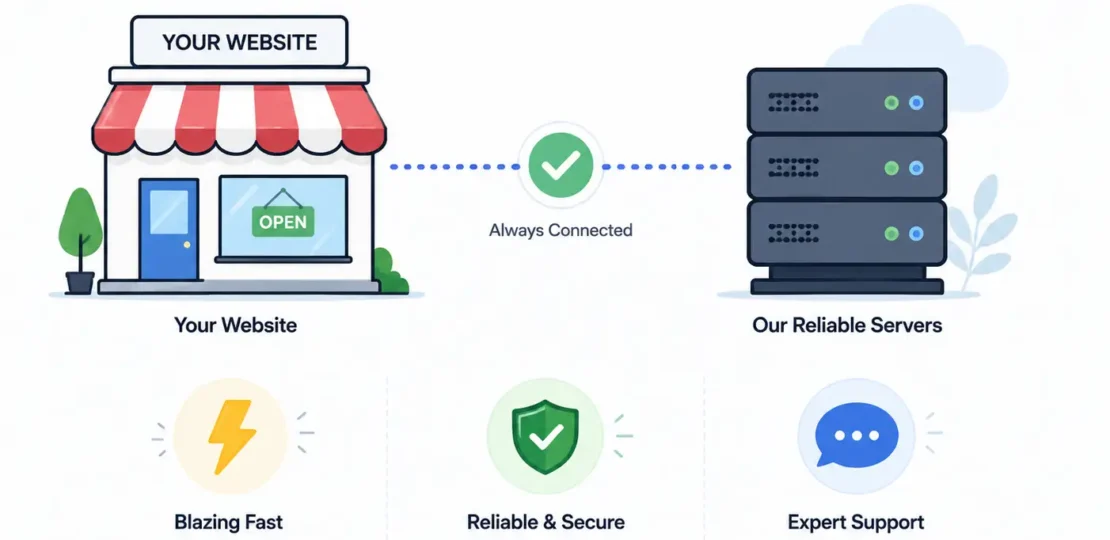
Picking hosting for a small business website is a different decision than picking hosting for a personal blog or hobby project. A slow-loading page doesn’t just annoy a casual reader — it can quietly cost you a sale, a booking, or a client inquiry before they ever finish reading your homepage. At the same time, most small businesses don’t need enterprise-grade infrastructure built for millions of monthly visitors. This guide compares the hosting providers that actually make sense for small business owners in 2026, based on current pricing, independently reported performance data, and what each one is genuinely best suited for.
What Small Businesses Actually Need From Hosting
Before comparing specific providers, it helps to be clear about what actually matters at this stage. For most small businesses, the priority list looks like this: reliable uptime (since a business site going offline can directly cost revenue), reasonably fast loading speed, straightforward customer support when something breaks, room to grow without a painful migration later, and pricing that doesn’t require a large upfront commitment before you know the site is working out. Flashy enterprise features like dedicated server clusters or custom Kubernetes deployments are simply overkill for a business running a five-page website and a contact form.
Hostinger — Best Overall Value
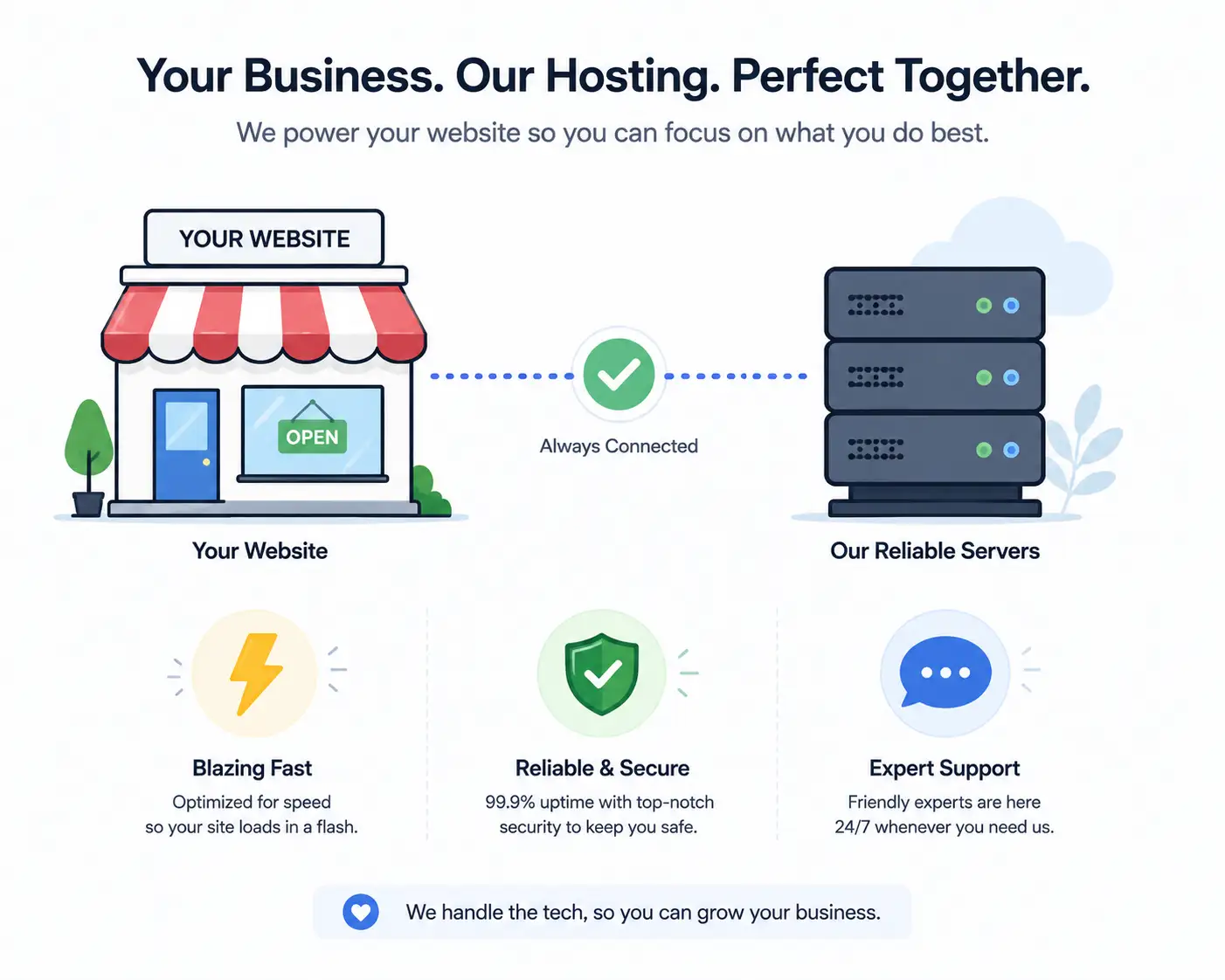
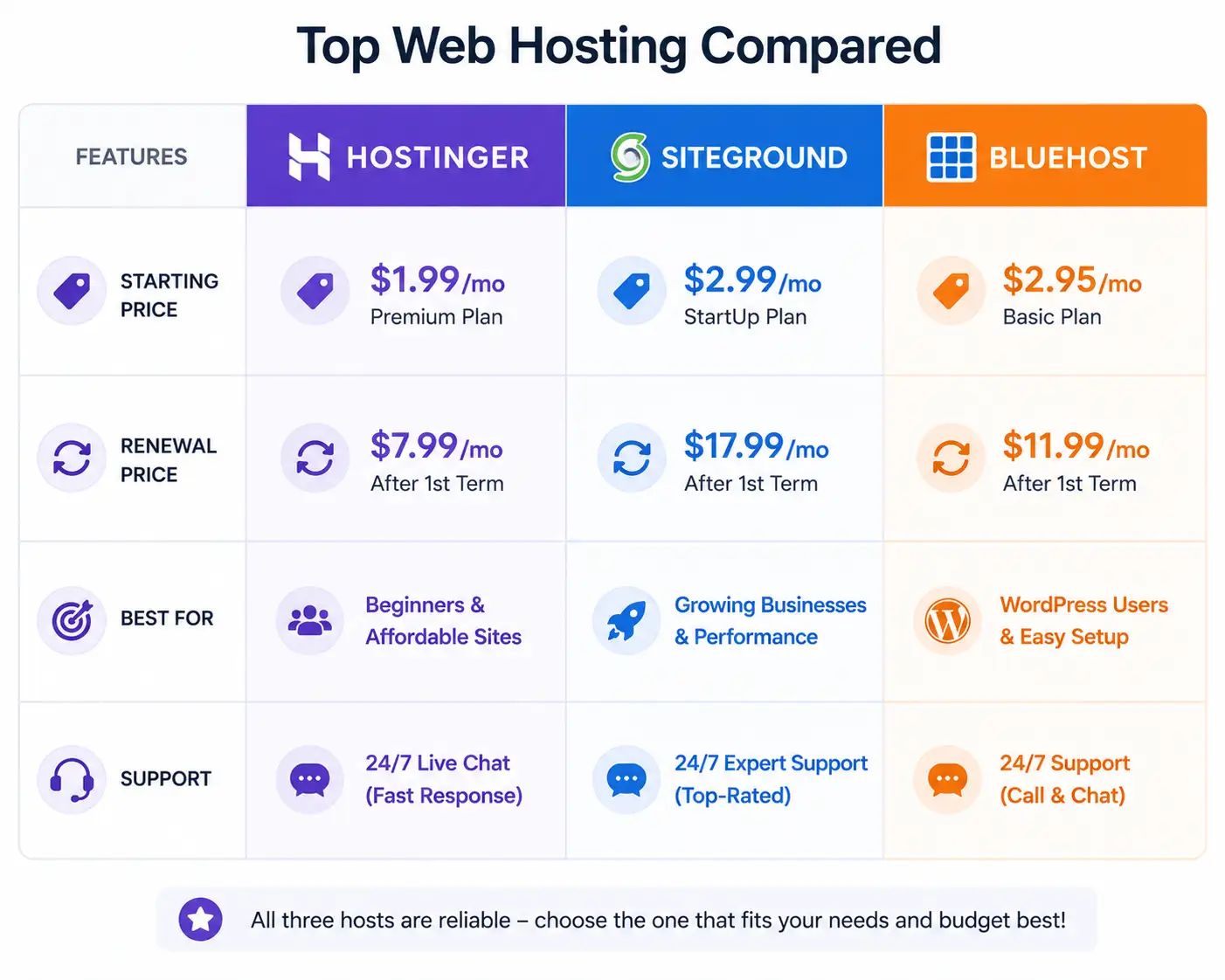
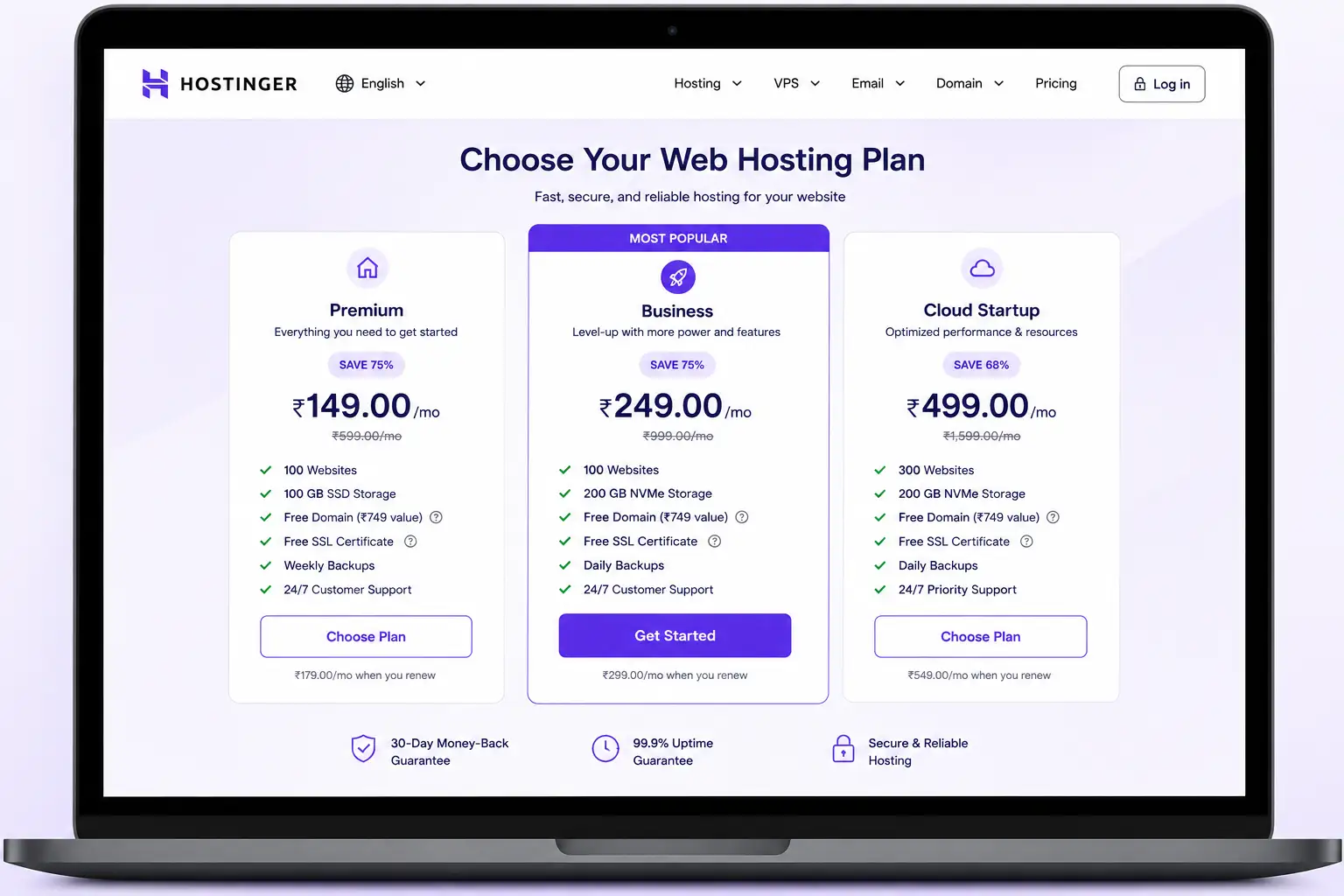
Hostinger has become the go-to recommendation for cost-conscious small businesses, and independent testing throughout 2026 backs up why. Multiple third-party testing efforts recorded Hostinger delivering average load times around 0.7 seconds with uptime figures close to 99.98%, putting its real-world performance ahead of several higher-priced competitors. Entry-level plans typically start around $2.99 per month on longer billing terms, with renewal pricing climbing to roughly $17.99 per month afterward, which is worth budgeting for in advance rather than being surprised by later.
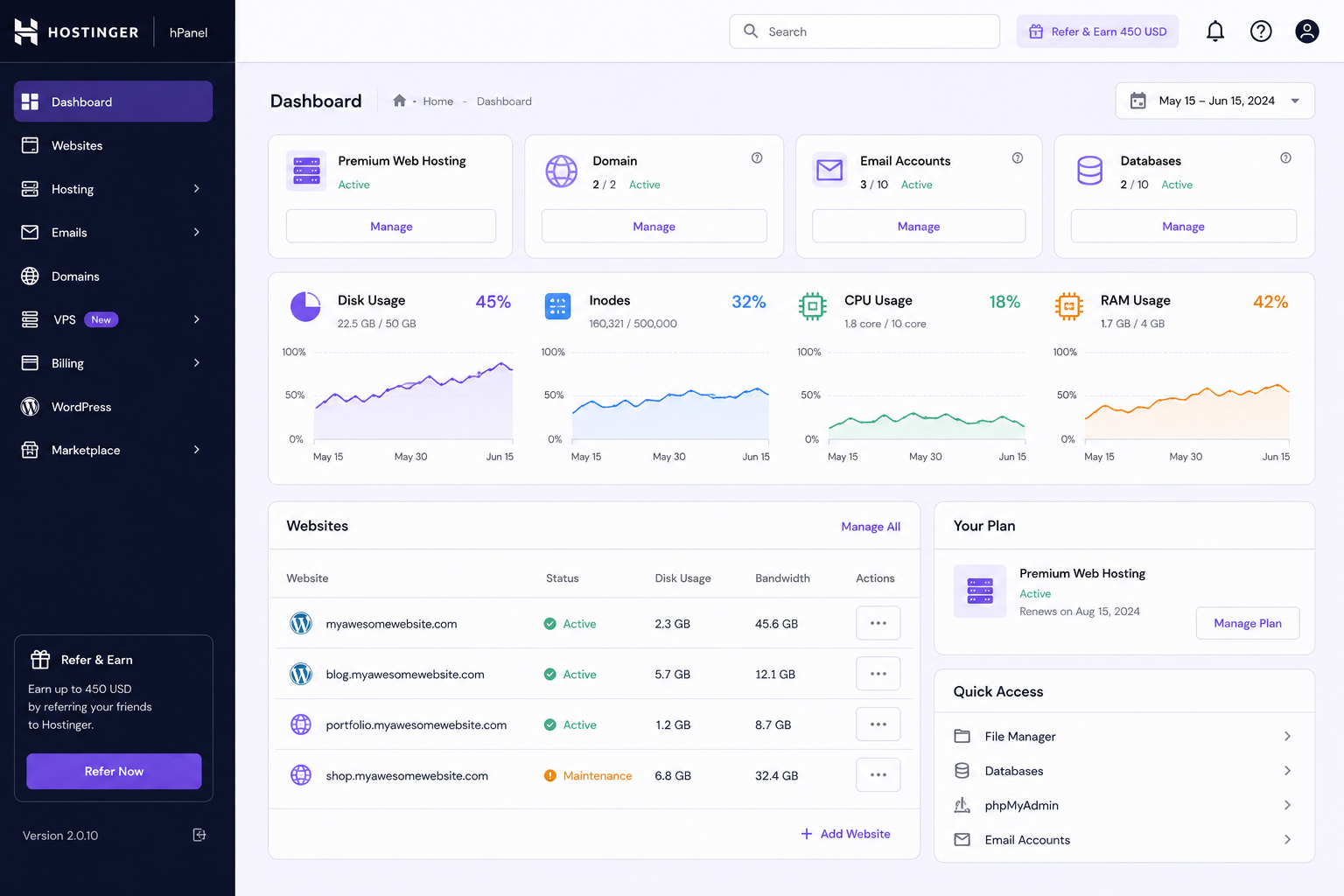
What makes Hostinger particularly well-suited to small businesses specifically is the breadth of tools bundled into its lower-cost plans by default: an AI website builder, a custom hPanel dashboard that’s generally considered cleaner and faster to navigate than traditional cPanel, and increasingly capable AI-assisted support through its Kodee agent. The main tradeoff is support format — Hostinger offers 24/7 live chat but no phone support, which matters if you specifically want to talk to a person when something goes wrong.
SiteGround — Best for Support and Reliability
For small business owners who want the strongest possible support experience and are willing to pay more for it, SiteGround consistently ranks near the top. It runs entirely on Google Cloud Platform infrastructure across data centers on four continents, and independent monitoring has tracked SiteGround maintaining around 99.99% uptime with sub-220 millisecond response times in recent testing windows. SiteGround’s own reported first-contact ticket resolution rate sits around 90%, with initial response times commonly under 15 minutes, a notably faster response than many budget hosts offer.
SiteGround is also one of only three hosting companies officially recommended directly by WordPress.org, alongside Bluehost and DreamHost, which reflects a long track record specifically within the WordPress ecosystem. The catch is price: SiteGround’s entry plans start around $2.99 to $7.99 per month, but renewal pricing jumps considerably higher, often landing between $17.99 and $40 per month depending on the tier, which is a meaningfully steeper long-term cost than Hostinger for a similar starting point.
Bluehost — Best for First-Time WordPress Users
Bluehost’s biggest advantage is its beginner-friendly setup process combined with deep, official WordPress integration. As one of the small number of hosts formally recommended by WordPress.org, Bluehost has built its entire onboarding flow around guided setup wizards, one-click WordPress installation, and increasingly, AI-driven tools like its WonderSuite feature for simplifying site design and initial configuration. This makes it a particularly strong fit for a small business owner setting up their very first WordPress site with no prior technical background, including WooCommerce-based online stores.
Independent performance testing has generally placed Bluehost slightly behind Hostinger and SiteGround on raw speed, with recorded average load times closer to 1.3 seconds and uptime around 99.93% in recent comparative testing, though this is still solidly reliable for most standard small business use cases. Pricing on Bluehost’s Choice Plus plan, which includes automated backups, typically renews around $19.99 per month, positioned as a more moderate long-term cost compared to SiteGround’s higher renewal tiers.
DreamHost — Best for Long-Term Value and Flexibility
DreamHost doesn’t always show up first in small business hosting conversations, but it deserves more attention than it usually gets, particularly for cost-conscious owners planning to stick with one host for several years. It’s the third provider officially recommended by WordPress.org, and it stands out with a genuinely unusual 97-day money-back guarantee, far longer than the 30-day window most competitors offer, giving small business owners real time to evaluate the service properly before committing long-term. DreamHost also includes free domain privacy protection (WHOIS masking) on every plan at no extra cost, a feature many competitors charge $10 to $20 per year for separately, along with unmanaged bandwidth on shared plans and NVMe SSD storage as standard.
Calculated over a three-year period, DreamHost has been shown to save small businesses a meaningful amount compared to equivalent unlimited plans from Bluehost and SiteGround. The main gap is WordPress-specific managed features, which are less extensive than SiteGround or dedicated managed WordPress hosts, and DreamHost’s entry-level Shared Starter plan notably doesn’t include email hosting, requiring a separate service like Google Workspace.
Cloudways — Best for Businesses Planning to Scale
If your small business is growing quickly, or you expect meaningful traffic growth within the next year or two, Cloudways occupies a useful middle ground between basic shared hosting and a fully unmanaged VPS. It provides managed cloud infrastructure built on top of DigitalOcean, AWS, or Google Cloud servers, but wraps all of it in a dashboard designed for non-developers, removing most of the server administration burden that normally comes with cloud hosting. Entry-level Cloudways plans on DigitalOcean infrastructure start around $11 per month for a basic configuration, scaling up to around $22 to $42 per month for setups better suited to a growing small business with increasing traffic and resource needs.
The tradeoff is that Cloudways doesn’t include domain registration or the beginner hand-holding that Bluehost or Hostinger provide, so it fits best once a business has outgrown a purely beginner-focused hosting experience and wants more scalable infrastructure without hiring dedicated technical staff.
Matching Hosting to Your Business’s Actual Size
A practical way to narrow this down is by your realistic monthly traffic level rather than by brand reputation alone:
- Under 10,000 monthly visitors: Entry-level shared hosting is almost always sufficient. Hostinger Premium, Bluehost Basic, or DreamHost’s shared plans all comfortably handle this range.
- 10,000 to 50,000 monthly visitors: A higher-tier shared plan or entry-level cloud hosting starts making more sense. SiteGround GrowBig, Hostinger Business, or a basic Cloudways plan fit this range well.
- 50,000+ monthly visitors or rapid growth: This is generally the point to seriously consider a scalable cloud plan like Cloudways, or managed WordPress hosting specifically built for higher-traffic sites.
Common Mistakes Small Businesses Make When Choosing Hosting
A few recurring mistakes show up across nearly every hosting comparison: focusing entirely on the flashy first-year discount while ignoring the renewal price, which can be two to three times higher; choosing a host based purely on brand recognition rather than actual performance data for your specific use case; underestimating how much customer support format matters until an actual emergency happens at an inconvenient hour; and buying significantly more hosting capacity than a new business genuinely needs in its first year, when starting smaller and upgrading later is almost always the more cost-effective path.
Frequently Asked Questions
Is the cheapest hosting plan always the wrong choice for a small business?
Not necessarily. For a genuinely small site with modest traffic, a budget-friendly plan from a reputable provider like Hostinger is often perfectly adequate. The mistake is choosing based purely on price without checking real performance data and renewal costs first.
How important is phone support for a small business website?
It depends on your comfort level and how central your website is to daily operations. If your business relies heavily on the site functioning correctly at all times, providers like SiteGround or Bluehost that offer phone support add a genuine safety net that chat-only providers don’t.
Should a small business start with shared hosting or go straight to cloud hosting?
Unless you’re already expecting significant traffic from day one, starting with shared hosting and upgrading later is the more financially sensible approach for almost every new small business website.
Does the hosting provider actually affect SEO rankings?
Indirectly, yes. Page speed and uptime are factors in search ranking algorithms, so consistently slow or unreliable hosting can measurably hurt your visibility in search results over time, even if no other SEO factors change.
Final Thoughts
There isn’t a single “best” hosting provider for every small business — the right choice depends on your budget, technical comfort level, and how much you value premium support versus lower cost. Hostinger remains the strongest overall value pick for most small businesses in 2026, SiteGround is worth the higher price if support quality is non-negotiable, Bluehost suits first-time WordPress users best, DreamHost rewards businesses planning to stay put for years, and Cloudways makes sense once real growth is already underway. Matching the provider to your actual current stage, rather than your hoped-for future scale, is what actually saves money and frustration in the long run.
This guide reflects publicly available pricing and independently reported performance data as of August 2026. Hosting prices, features, and promotional offers change frequently, so it is worth confirming current terms directly on each provider’s website before purchasing.
RELATED POSTS
View all

How to Create a Website with Hostinger in 2026
August 2, 2026 | by anisurrahaman235f@gmail.com
Hostinger Review 2026: Features, Pricing, Pros and Cons
August 1, 2026 | by anisurrahaman235f@gmail.com
How to Back Up Your Website on Hostinger (2026 Guide)
August 2, 2026 | by anisurrahaman235f@gmail.com