

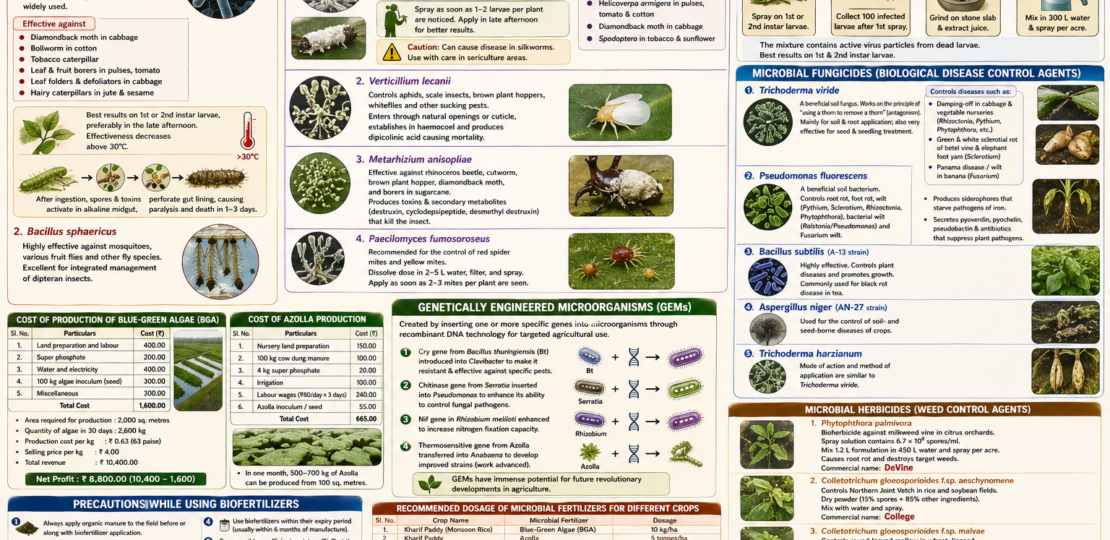
Bacillus sphaericus is a highly effective bacterium used primarily for controlling mosquitoes, various fruit flies, and other fly species. It is particularly valuable in integrated pest management programs targeting dipteran insects.
b) Fungi-based Microbial Insecticides
1. Beauveria bassiana
Beauveria bassiana is a beneficial entomopathogenic fungus widely used to control sucking insects and lepidopteran (caterpillar) pests. Even if the insect does not ingest the fungus through food, mere contact is sufficient for the fungal spores to germinate on the insect’s body, penetrate the cuticle, and multiply inside. The fungus produces toxic metabolites such as beauvericin and bassianolide, which cause toxicity and ultimately kill the pest.
This fungus is highly effective against:
- Rice stem borer and leaf folder
- White grub in groundnut
- Pyrilla in sugarcane
- Rhinoceros beetle in coconut
- Helicoverpa armigera in pulses, tomato, and cotton
- Diamondback moth (Plutella xylostella) in cabbage
- Spodoptera (leaf-eating caterpillars) in tobacco and sunflower
Spraying should be done as soon as 1–2 larvae per plant are noticed. Application in the late afternoon gives better results.
Caution: Beauveria bassiana can cause disease in silkworms. Therefore, special care must be taken while using it in areas where sericulture is practised.
2. Verticillium lecanii
Verticillium lecanii is a beneficial fungus mainly used to control aphids, scale insects, brown plant hoppers, whiteflies, and other sucking pests. The fungus enters the insect’s body through natural openings or by penetrating the cuticle, establishes itself in the haemocoel (body cavity), and produces toxic compounds such as dipicolinic acid, which kill the pest.
3. Metarhizium anisopliae
Metarhizium anisopliae is another highly effective entomopathogenic fungus. It is particularly useful against:
- Rhinoceros beetle (Oryctes rhinoceros) in coconut
- Cutworm (Agrotis ipsilon) in groundnut
- Brown plant hopper (Nilaparvata lugens) in rice
- Diamondback moth in cabbage
- Stem, internode, and shoot borers in sugarcane
Like other entomopathogenic fungi, it penetrates the insect’s body through openings or the cuticle and kills it by producing toxins. It also secretes secondary metabolites such as destruxin, cyclodepsipeptide, and desmethyl destruxin.
4. Paecilomyces fumosoroseus
This fungus is recommended for the control of red spider mites and yellow mites. For application, dissolve the recommended dose in 2–5 litres of water, filter the solution through a fine muslin cloth, pour it into the spray tank, add the required quantity of water, and spray thoroughly. It should be applied as soon as 2–3 mites per plant are observed.
c) Virus-based Microbial Insecticides
1. NPV (Nuclear Polyhedrosis Virus)
Nuclear Polyhedrosis Virus (NPV) is used primarily to control lepidopteran caterpillars. A specific NPV strain must be used against its target pest.
After the first spray, collect 100 infected or paralysed larvae, crush or grind them on a stone slab, and extract the juice. Mix this extract in 300 litres of water and spray it over one acre. The mixture contains active virus particles from the dead larvae.
Best results are obtained when applied against 1st and 2nd instar larvae.
Microbial Fungicides (Biological Disease Control Agents)
1. Trichoderma viride
Trichoderma viride is a beneficial soil-inhabiting fungus that does not harm humans or plants. It works on the principle of “using a thorn to remove a thorn” — it antagonizes and suppresses harmful soil-borne fungi. It is mainly recommended for soil and root application and is also very effective for seed and seedling treatment.
It effectively controls many soil- and seed-borne fungal diseases such as:
- Damping-off disease in cabbage and vegetable nurseries (Rhizoctonia, Pythium, Phytophthora, etc.)
- Green and white sclerotial rot at the base of betel vine and elephant foot yam (Sclerotium)
- Panama disease / wilt in banana (Fusarium)
2. Pseudomonas fluorescens
Pseudomonas fluorescens is a beneficial soil-dwelling bacterium that does not attack humans, animals, or plants. It is widely used to control root rot, foot rot, and wilt diseases caused by fungi (Pythium, Sclerotium, Rhizoctonia, Phytophthora) as well as bacterial wilt (Ralstonia or Pseudomonas) and Fusarium wilt.
This bacterium produces siderophores (iron-chelating agents) that starve harmful fungi of iron. It also secretes toxic compounds such as pyoverdin, pyochelin, and pseudobactin, and produces several antibiotics that suppress the growth of pathogenic fungi.
3. Bacillus subtilis
The A-13 strain of Bacillus subtilis is highly effective. It not only controls plant diseases but also promotes plant growth. It is commonly used for the control of black rot in tea.
4. Aspergillus niger (AN-27 strain)
The AN-27 strain of Aspergillus niger is used for controlling soil- and seed-borne diseases of crops.
5. Trichoderma harzianum
Its mode of action and method of application are similar to Trichoderma viride.
Microbial Herbicides (Weed Control Agents)
1. Phytophthora palmivora
This soil-inhabiting fungus is used as a bioherbicide, especially against milkweed vine in citrus orchards. The spray solution contains 6.7 × 10⁸ spores per millilitre. Mix 1.2 litres of the formulation in 450 litres of water and spray over one acre. It causes root rot in the target weeds and effectively destroys them.
Commercially, it is available under the name DeVine.
2. Colletotrichum gloeosporioides f.sp. aeschynomene
This fungus is available in dry powder form (15% spores + 85% other ingredients). When mixed with water and sprayed, it effectively controls Northern Joint Vetch in rice and soybean fields.
Commercially, it is marketed as Collego.
3. Colletotrichum gloeosporioides f.sp. malvae
This beneficial fungus is used to control round-leaved mallow in wheat, linseed, lentil, and mustard crops. It is available commercially as BioMal or Malette.
Microbial Nematicides (Control of Soil Nematodes)
Paecilomyces lilacinus
The fungus Paecilomyces lilacinus is widely used to control root-knot nematodes and other plant-parasitic nematodes. It parasitizes nematode eggs and juveniles.
Commercially, it is available under the names Nemat, Bio-Nemat, etc.
RELATED POSTS
View all

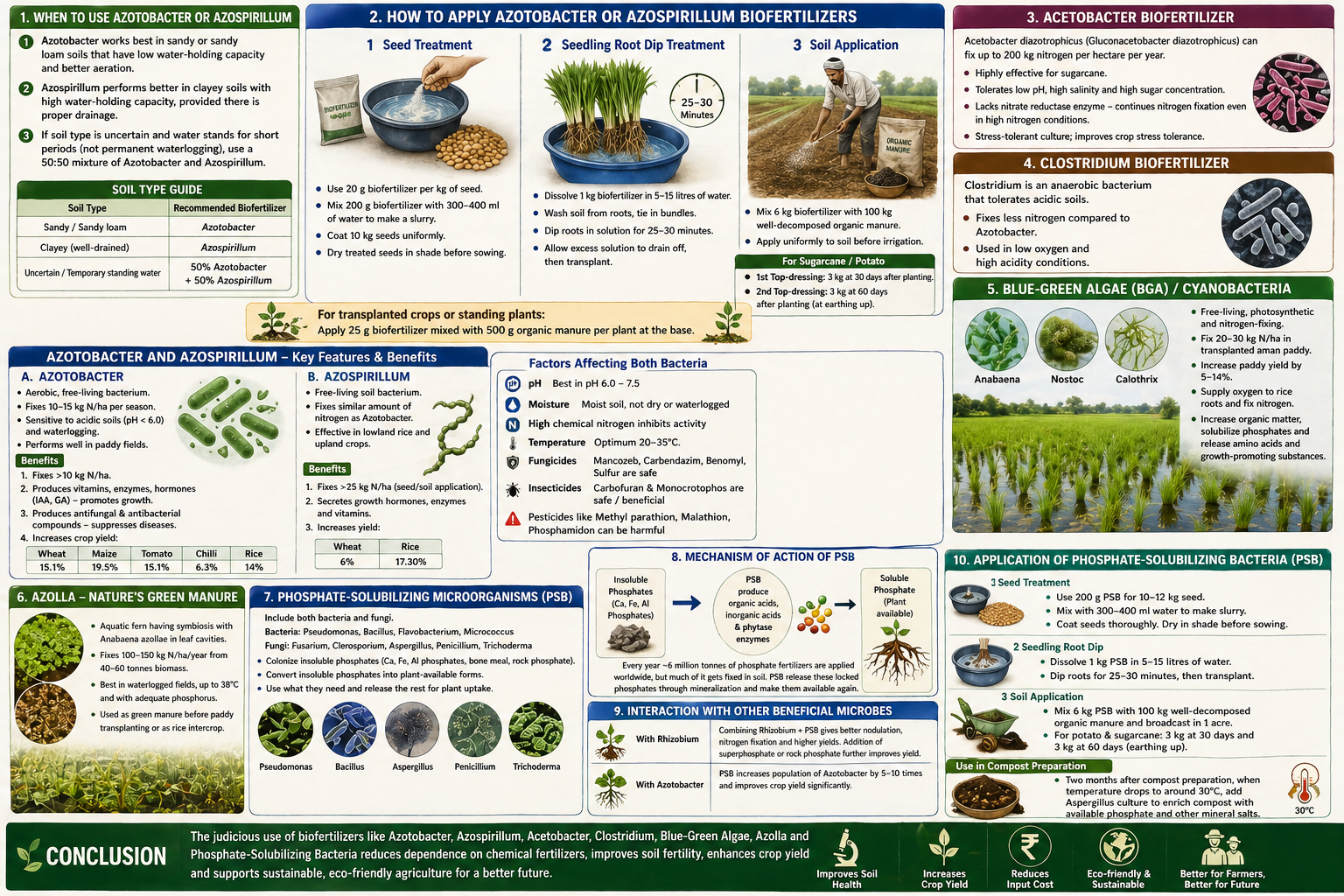
When to Use Azotobacter or Azospirillum
April 25, 2026 | by anisurrahaman235f@gmail.com

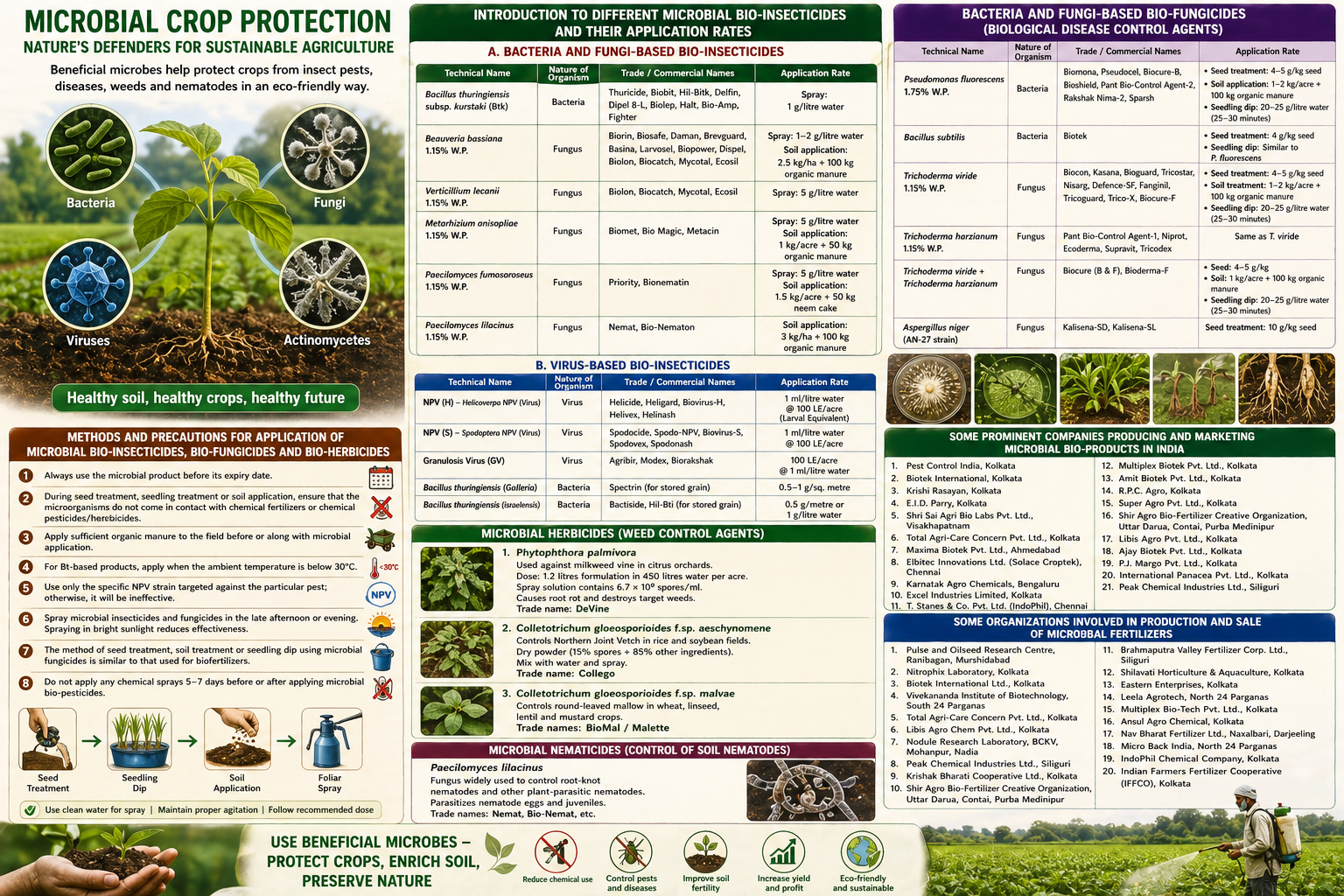
Introduction to Different Microbial Bio-Insecticides and Their Application Rates
April 25, 2026 | by anisurrahaman235f@gmail.com