

Crop Protection in Wheat Cultivation
May 8, 2026 | by anisurrahaman235f@gmail.com
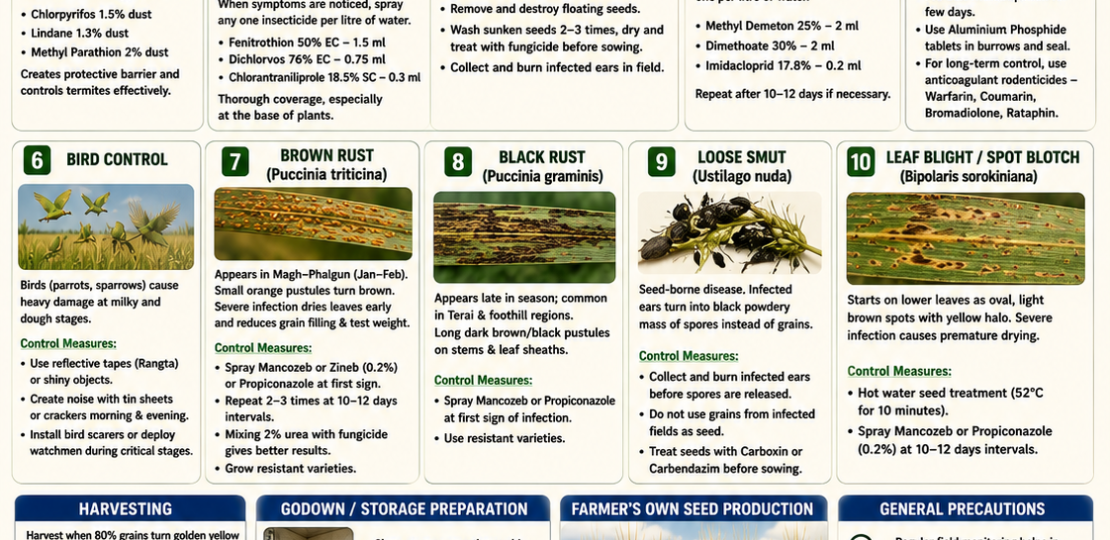
Effective crop protection is essential for achieving higher and stable yields in wheat. Wheat is vulnerable to various insect pests, diseases, rodents, and birds. Timely monitoring and integrated management practices can significantly reduce losses and improve both grain quality and quantity.
1. Termite (White Ant) Control
Termites are a major soil-borne pest that attack wheat roots and stems, often killing young plants. They are particularly damaging in dry and light soils.
Control Measures:
Before the final ploughing, mix any one of the following dust insecticides uniformly into the soil at 12 kg per acre:
- Chlorpyrifos 1.5% dust
- Lindane 1.3% dust
- Methyl Parathion 2% dust
This soil application creates a protective barrier and effectively controls termites during the early growth stages.
2. Stem Borer (Majra Poka)
The stem borer is one of the most destructive pests of wheat. Adult moths lay eggs on leaves. After 8–10 days, larvae hatch, bore into the stem, and feed inside, eventually pupating. This causes “dead heart” in young plants and “white ear” in mature plants, resulting in completely chaffy grains.
Control Measures:
When dead hearts or white ears are noticed, spray any one of the following insecticides per litre of water:
- Fenitrothion 50% EC — 1.5 ml
- Dichlorvos 76% EC — 0.75 ml
- Chlorantraniliprole 18.5% SC — 0.3 ml
Thorough coverage, especially at the base of plants, is necessary for good results.
3. Ear Cockle Disease (Nematode Disease)
Ear cockle is a nematode (Anguina tritici) induced disease. Infected plants become stunted and weak. The ears become distorted and curled, and grains turn into small, hard, dark galls (cockles) instead of normal seeds.
Management:
- Before sowing, soak seeds in 5% salt solution. Infected galls float while healthy seeds sink.
- Remove and destroy floating seeds.
- Wash the sunken healthy seeds 2–3 times in clean water, dry them, and treat with fungicide before sowing.
- In the field, collect and burn all infected ears immediately to prevent spread.
4. Aphids (Jab Poka)
Aphids suck sap from tender leaves and stems, causing stunted growth and reduced grain filling. They multiply rapidly under favourable conditions and can transmit viral diseases.
Control Measures:
When aphids are noticed, spray any one of the following per litre of water:
- Methyl Demeton 25% — 2 ml
- Dimethoate 30% — 2 ml
- Imidacloprid 17.8% — 0.2 ml
Repeat the spray if necessary after 10–12 days.
5. Rat Control
Rats cause heavy damage during the grain-filling and maturity stages by cutting panicles and eating grains.
Control Measures:
- Prepare bait by mixing 18 g flour or maida + 2 g edible oil + 2 g Zinc Phosphide.
- Place small amounts of bait near rat burrows in the evening.
- Pre-bait (without poison) for a few days to make rats accustomed.
- Aluminium Phosphide tablets can be placed inside burrows and sealed.
- For long-term control, use anticoagulant rodenticides like Warfarin, Coumarin, Bromadiolone, or Rataphin.
6. Bird Control
Birds (especially parrots and sparrows) cause significant damage during the milky and dough stages.
Control Measures:
- Use reflective tapes (Rangta) or shiny objects hung across the field.
- Create noise by beating tin sheets or using crackers during morning and evening.
- Install bird scarers or deploy manual watchmen during critical stages.
7. Brown Rust (Puccinia triticina)
Brown rust usually appears in Magh–Phalgun (January–February). It starts with small orange pustules on leaves that later turn brown. In severe cases, leaves dry up prematurely, reducing grain filling and test weight.
Control Measures:
As soon as pustules appear, spray Mancozeb or Zineb (0.2%) or Propiconazole. Repeat 2–3 times at 10–12 days intervals. Mixing 2% urea with the fungicide gives better results. Growing resistant varieties is the most economical long-term solution.
8. Black Rust (Puccinia graminis)
Black rust appears late in the season. It is more common in the Terai and foothill regions. Long dark brown to black pustules appear on stems and leaf sheaths. Severe infection weakens plants and reduces grain quality.
Control Measures:
Spray Mancozeb or Propiconazole at the first sign of infection. Resistant varieties should be preferred.
9. Loose Smut (Ustilago nuda)
Loose smut is a seed-borne disease. Infected ears turn into a black powdery mass of spores instead of grains.
Control Measures:
- Collect and burn infected ears before spores are released.
- Do not use grains from infected fields as seed.
- Treat seeds with Carboxin or Carbendazim before sowing.
10. Leaf Blight / Spot Blotch (Bipolaris sorokiniana)
This disease starts on lower leaves as small oval, light brown spots that later enlarge with yellow halos. Severe infection causes premature drying of leaves.
Control Measures:
- Hot water seed treatment (52°C for 10 minutes).
- Spray Mancozeb or Propiconazole (0.2%) at 10–12 days intervals.
Harvesting and Storage
Harvest wheat when 80% of the grains turn golden yellow and hard. The ideal stage is when the ear tips slightly bend and grains feel firm but not brittle when pressed between teeth (moisture content 15–18%).
Post-Harvest Management:
- Thresh immediately after harvesting.
- Dry grains thoroughly in the sun until moisture content reaches 10–12% (grains should break into two pieces when pressed between teeth).
- Proper drying prevents storage pests and maintains germination power.
Godown / Storage Preparation:
- Clean the storage area thoroughly.
- Spray walls, floor, and ceiling with Malathion 50% EC (0.5%) solution (10 ml per litre of water). Use 3 litres of solution per 100 sq. metre.
- Dry the godown completely before storing grains.
- Treat gunny bags with Malathion 0.1% solution or spray on filled bags.
- Store grains in cool, dry, well-ventilated places.
Farmer’s Own Seed Production:
- Select the best-performing patches in the field for seed production.
- Remove off-type plants and weeds before harvesting.
- Harvest, thresh, and clean seeds separately.
- Dry thoroughly and store carefully.
- Replace seed every 3–4 years with fresh certified seeds to maintain purity and vigour.
Conclusion
Successful wheat cultivation in West Bengal requires integrated crop protection, timely harvesting, and scientific storage. By following these practices — from termite and stem borer control to disease management and proper post-harvest handling — farmers can significantly reduce losses and achieve higher yields and better quality grains. Adoption of resistant varieties, balanced nutrition, and timely interventions are the keys to profitable and sustainable wheat farming in the state.
RELATED POSTS
View all

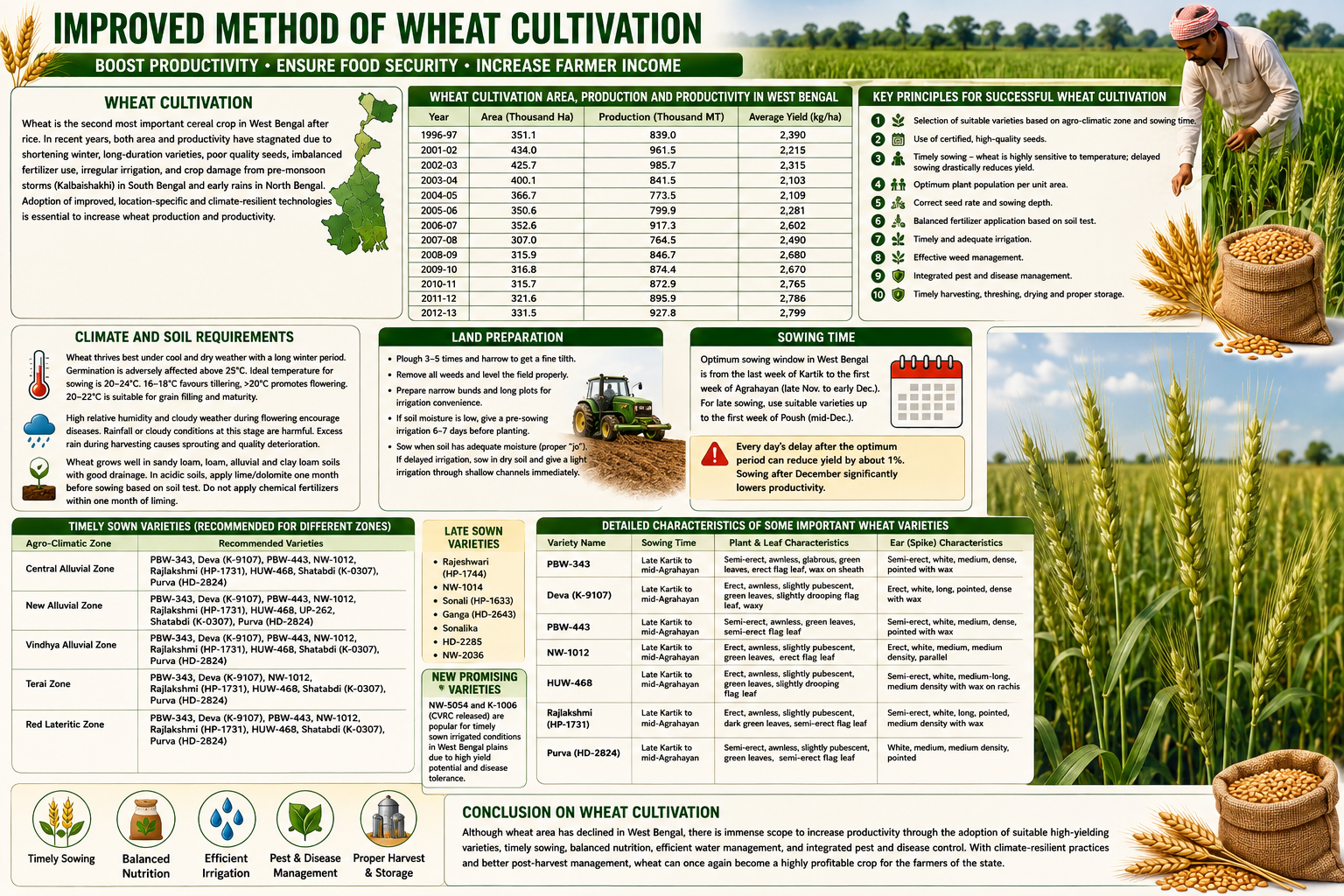
Improved Method of Wheat and Maize Cultivation
May 8, 2026 | by anisurrahaman235f@gmail.com
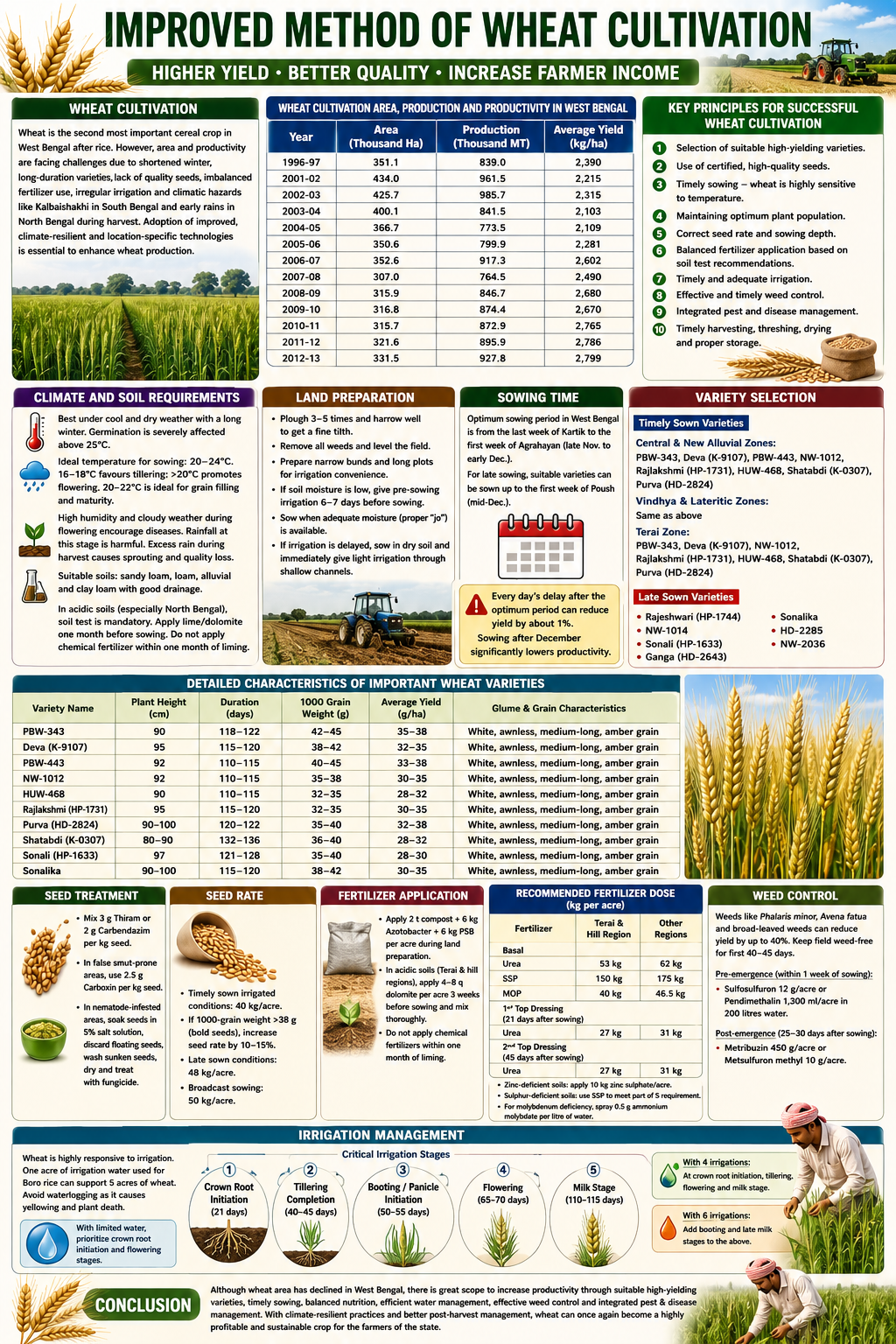
Improved Method of Wheat Cultivation
May 8, 2026 | by anisurrahaman235f@gmail.com