

How Much Does It Cost to Start a Website in 2026?
August 2, 2026 | by anisurrahaman235f@gmail.com
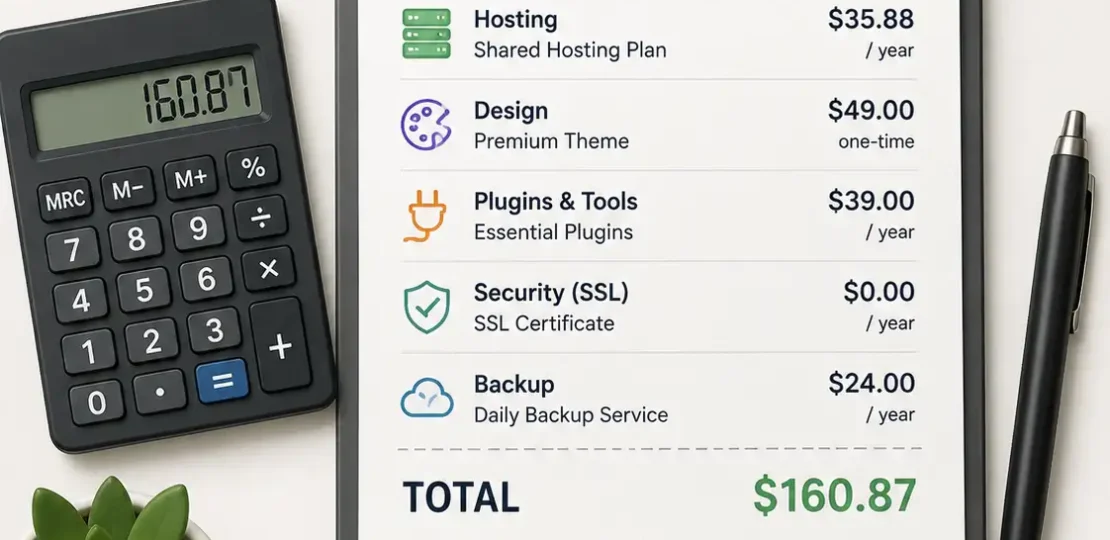
“How much does a website cost?” doesn’t have a single honest answer, and anyone who gives you one number without asking a follow-up question is oversimplifying. A one-page personal blog and a custom e-commerce platform are both technically “a website,” but they sit at completely different points on a budget scale that spans from essentially free to well over $30,000. What actually determines your cost isn’t some fixed industry rate — it’s five specific decisions: your domain, your hosting, your build method, your design approach, and what you do (or don’t do) for ongoing maintenance.
This guide breaks down every one of those line items with real 2026 pricing, then puts them together into three realistic budget scenarios so you can see where your own project actually lands.
The Five Building Blocks of Website Cost
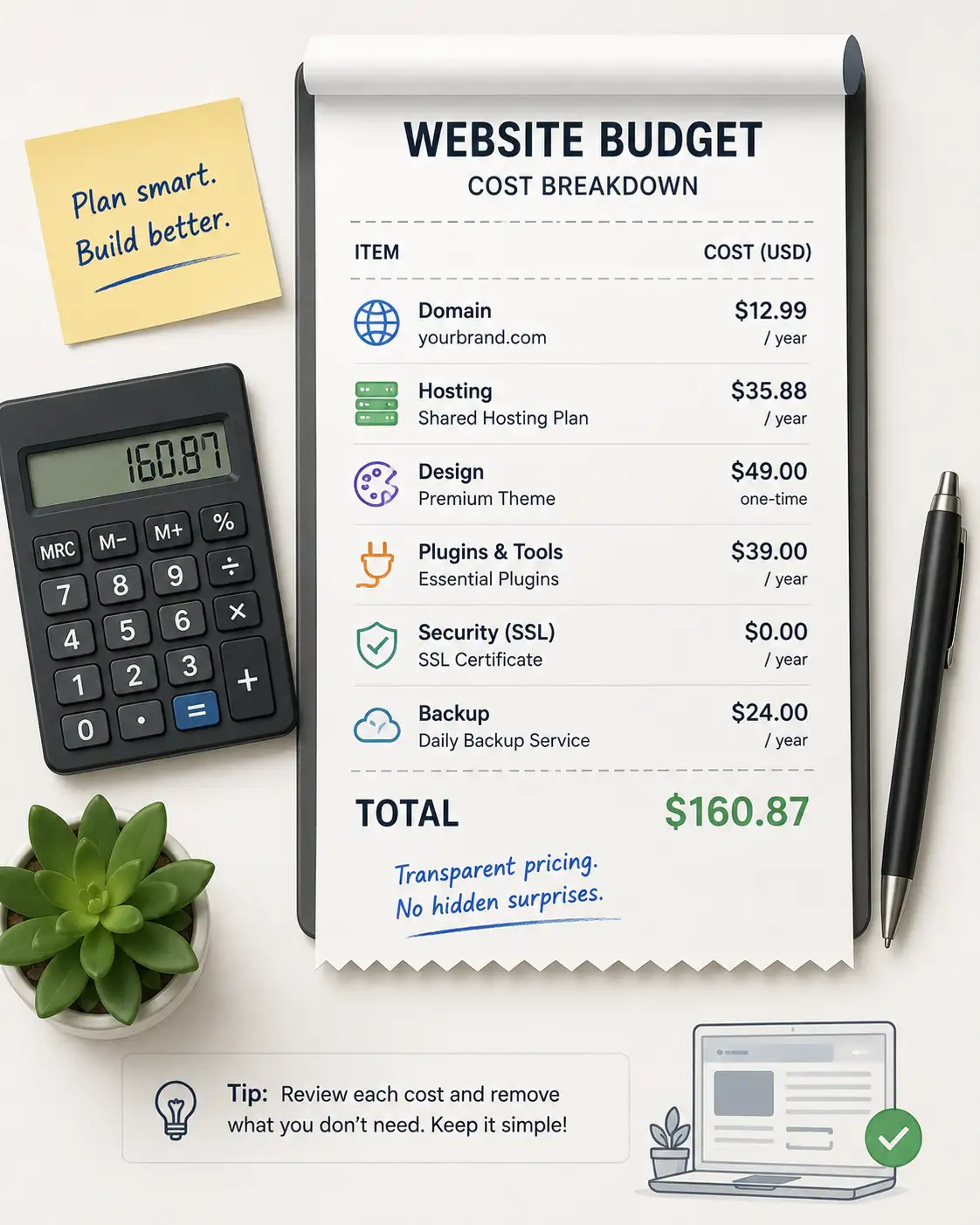
Every website, regardless of size or purpose, is built from the same five cost categories. Understanding each one separately makes the total far less mysterious.
1. Domain Name: $10–$35/Year
Your domain is your website’s address, and it’s the one cost almost nobody can avoid entirely. A standard .com, .org, or .net domain typically runs $10 to $20 per year, though pricing can climb toward $35 depending on the registrar and extension. Premium domains — short, keyword-rich, or highly memorable names — can cost significantly more, sometimes reaching several hundred dollars for names in high demand. For the average new website, though, a domain under $20 is completely sufficient; what matters more than price is picking something relevant and easy to remember. Many hosting providers also bundle a free domain for the first year with an annual plan, effectively absorbing this cost into your hosting purchase.
Optional: domain privacy protection, which hides your personal registration details from public lookup databases, typically adds $10 to $15 per year if it isn’t already included.
2. Web Hosting: $2–$500+/Month
This is where the widest cost range in website budgeting actually lives, because “hosting” covers everything from a few dollars a month to enterprise-grade infrastructure:
- Shared hosting: roughly $2–$10/month — the standard entry point for new sites with light to moderate traffic
- VPS hosting: roughly $20–$60/month — more dedicated resources and control as a site grows
- Managed WordPress hosting: roughly $20–$120/month — specialized infrastructure with automatic updates, backups, and WordPress-specific performance tuning
- Dedicated hosting: roughly $80–$300+/month — an entire server reserved for high-traffic or resource-intensive sites
If you’re using an all-in-one website builder rather than self-hosting, hosting is usually bundled directly into the platform’s monthly subscription rather than billed separately.
3. SSL Certificate: $0–$100/Year
An SSL certificate encrypts data traveling between your site and its visitors, and it’s become a baseline expectation rather than an optional extra. The good news: most hosting providers and website builders now include a free SSL certificate (typically through Let’s Encrypt) with every plan. Paid certificates offering deeper business verification — Organization Validated or Extended Validation tiers — generally only make sense for larger businesses handling regulated data or financial transactions, and can run $10 to $100 or more per year when purchased separately. If a host is charging extra just for basic SSL in 2026, treat that as a sign of outdated or uncompetitive pricing rather than something worth accepting.
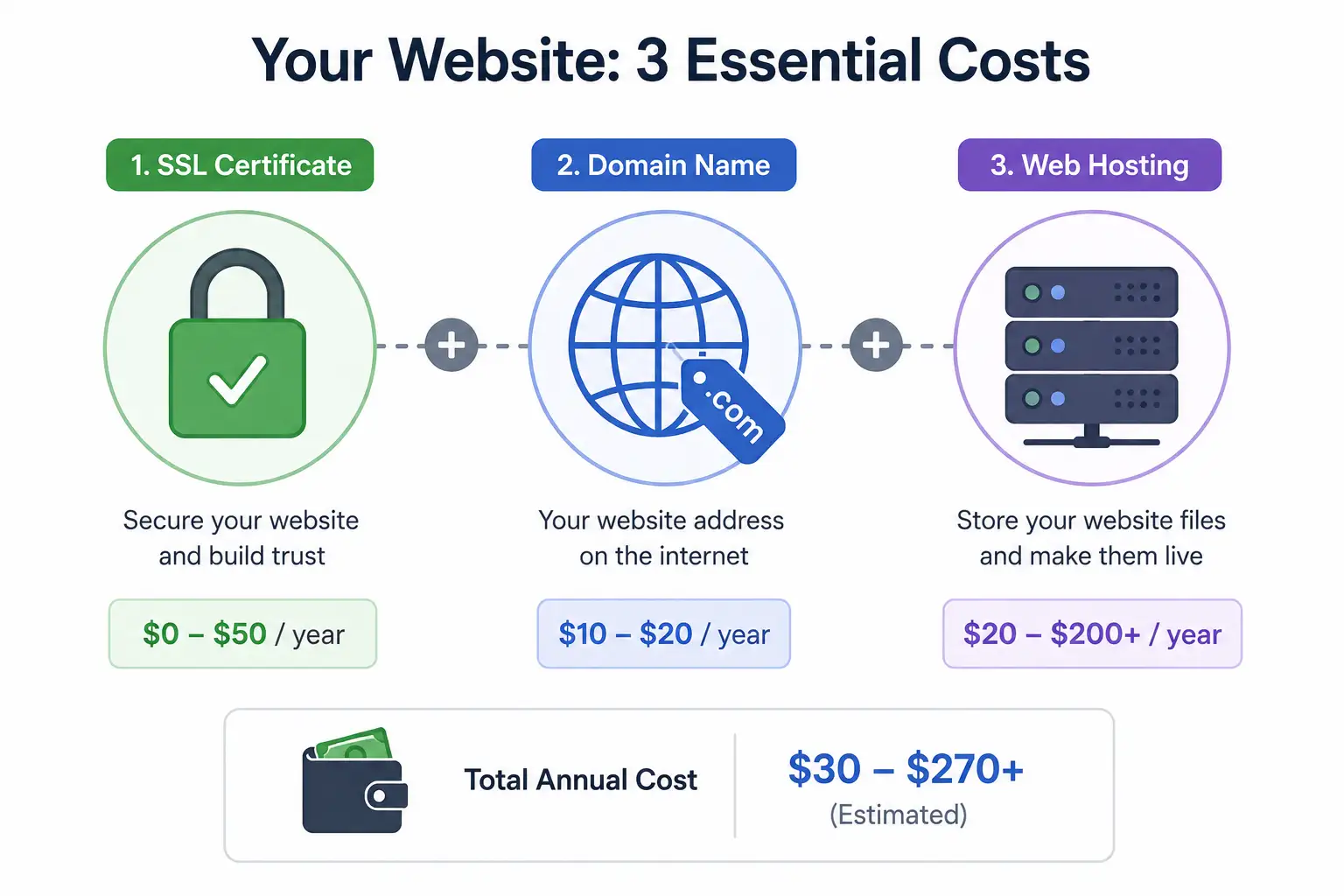
4. Design and Theme: $0–$10,000+
This category has the widest possible range because it depends entirely on how much customization and professional involvement you want:
- Free themes/templates: $0 — a perfectly viable starting point for a personal blog or simple site
- Premium themes: roughly $0–$200 as a one-time or occasionally annual cost, offering more polish and built-in features than free options
- Freelance web designer: roughly $500 to $10,000+, depending on experience, scope, and how custom the final design is — a typical small-business brochure site from a freelancer often lands in the $1,500–$8,000 range and takes several weeks to complete
- Agency-built site: $5,000 to $30,000+, appropriate for larger businesses needing custom functionality, integrations, or brand-specific design work beyond what templates can offer
5. Ongoing Costs: $50–$5,000+/Year
This is the category first-time website owners most often forget to budget for, since it doesn’t show up during the exciting “building” phase. Realistic recurring costs include:
- Hosting renewal, often higher than the introductory rate you initially signed up for
- Domain renewal, generally similar year to year unless you registered at a promotional first-year rate
- Plugins or apps for specific functionality — e-commerce tools alone can add $0 to $468+ per year depending on what your site needs
- Security and backup tools, if not already included in your hosting plan
- Basic maintenance, whether that’s your own time or a paid maintenance retainer if you’ve hired outside help
Altogether, most website owners should budget somewhere between $1,100 and $5,000 per year in ongoing costs once hosting, security, backups, and any recurring tools are accounted for — a figure that’s easy to underestimate if you only priced out the initial launch.
Three Realistic Budget Scenarios
Rather than a single number, here’s what website cost actually looks like across three common paths in 2026.
Scenario 1: Minimal DIY Website (Self-Built, Self-Hosted)
Domain registration around $15/year, combined with basic shared hosting around $5–$8/month, brings a bare-bones self-hosted WordPress site to roughly $100–$115 for the first year. Using a free theme and handling all content yourself keeps this the cheapest realistic path to a fully functional, professional-looking website — appropriate for personal blogs, portfolios, or very small projects where budget matters more than customization.
Scenario 2: All-in-One Website Builder
Using a hosted website builder (where hosting, templates, and design tools are bundled into one subscription) typically runs $150 to $1,200 per year all-in, depending on the plan tier and any add-on features like e-commerce functionality. This path trades some long-term flexibility for genuine simplicity — there’s no separate hosting purchase to manage, and most builders now include AI-assisted design tools that speed up the initial setup considerably.
Scenario 3: Professionally Designed Small Business Site
For a small business wanting a custom-designed, professionally built website, realistic costs land between $500 and $5,000 for the initial build, with ongoing costs of roughly $50–$200 per month depending on whether it’s builder-based or custom-coded. This range typically includes a handful of core pages, basic SEO setup, and a design that reflects specific branding rather than a generic template.
For context, this scenario sits well below what a full agency engagement costs — larger, more complex agency-built sites with custom functionality can run $5,000 to $30,000 or more before the site has generated a single lead, which is only worth considering once a business has outgrown what template-based or freelancer-built sites can reasonably deliver.
Hidden Costs That Catch People Off Guard
A meaningful share of website budget overruns don’t come from a single bad decision — they come from gradually accumulating small costs nobody planned for upfront:
- Migration costs if you choose cheap hosting first and outgrow it. Moving a site between hosts later, especially if it’s grown complex, can cost $700 to $6,000 to fix properly if done poorly or urgently, compared to choosing hosting with more headroom from the start.
- Content creation. Website cost breakdowns often assume you’ll write your own copy and source your own images, but professional photography, copywriting, or stock image licensing all carry real costs if you don’t handle them yourself.
- SEO and marketing. A finished website doesn’t generate traffic on its own. Budgeting nothing for search optimization or promotion is one of the most common gaps between “the site is done” and “the site is actually working for the business.”
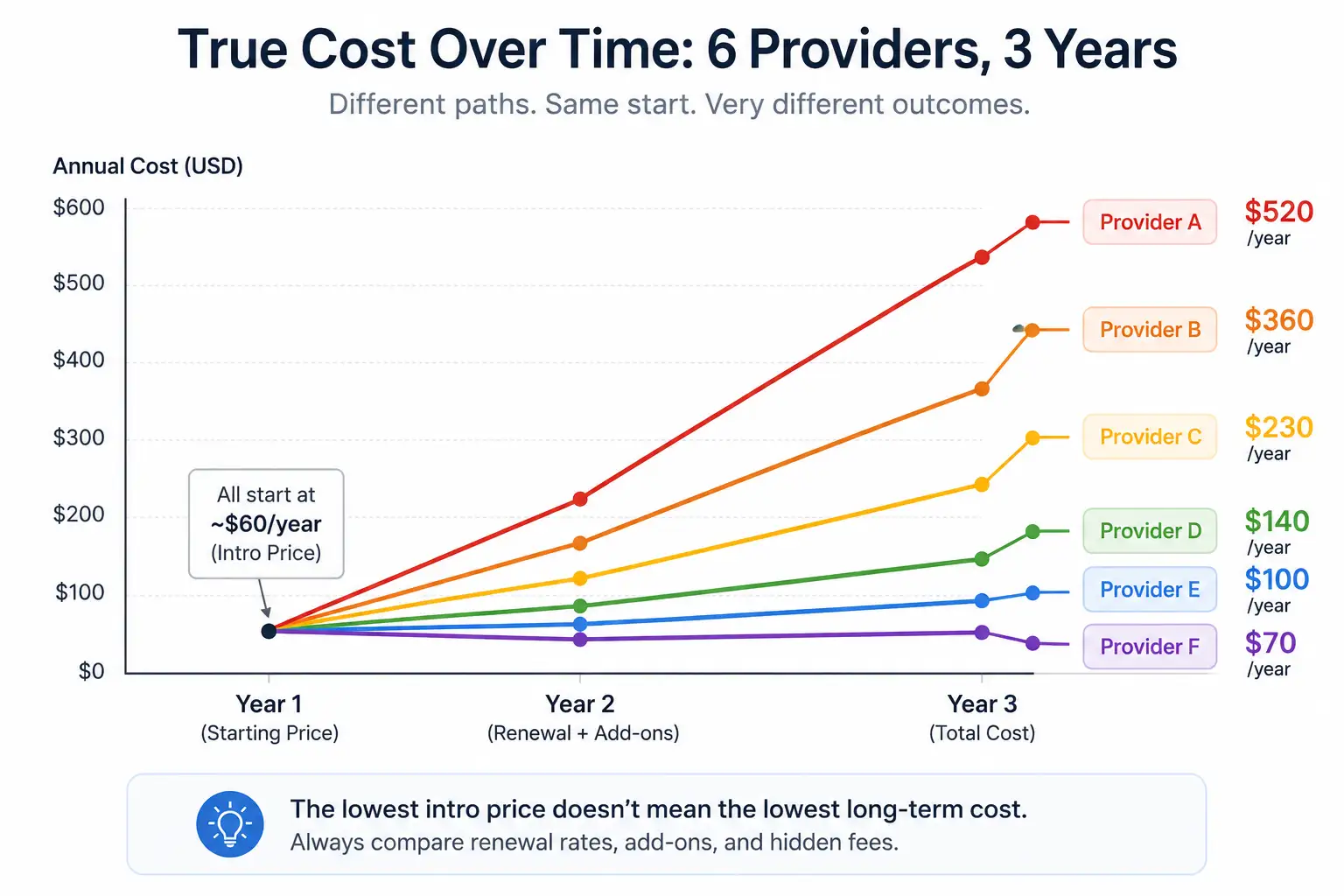
- Renewal price jumps. As covered above, many hosting providers advertise a steep introductory discount that increases substantially at renewal — budget for the renewal price, not just the first-year number, when planning multi-year costs.
- Unused plugins and subscriptions. It’s easy to accumulate paid tools during the building phase that quietly continue billing long after they’ve stopped being useful — a periodic audit of active subscriptions is worth the ten minutes it takes.
How to Keep Your Website Cost Under Control
- Start with a clear site plan before building anything, so you’re not paying for pages or features you don’t actually need
- Use a template or builder rather than custom code unless you have a specific reason requiring full customization
- Write your own initial content, saving professional editing or copywriting for a later polish pass once the site’s structure is proven
- Prioritize must-have features first, adding e-commerce tools, advanced plugins, or custom functionality only once there’s a genuine need for them
- Check the renewal price on any hosting or subscription before committing, not just the attractive introductory rate
Final Thoughts
The honest range for starting a website in 2026 runs from under $100 for a minimal DIY setup to $30,000-plus for a fully custom agency build, and almost every project in between is entirely reasonable depending on what the site actually needs to accomplish. The real budgeting mistake isn’t picking the wrong price point — it’s failing to account for the ongoing costs and hidden expenses that show up after launch. Plan for renewal pricing, budget realistically for maintenance and content, and match your spending to your website’s actual purpose rather than either the cheapest option available or unnecessary premium features you won’t use.
RELATED POSTS
View all

Best Cheap Hosting Providers Compared (2026): What “Cheap” Actually Costs
August 2, 2026 | by anisurrahaman235f@gmail.com
Hostinger Coupon Code Guide: How to Save Money on Hosting (2026)
August 3, 2026 | by anisurrahaman235f@gmail.com
Best Hosting for Small Business Websites in 2026
August 2, 2026 | by anisurrahaman235f@gmail.com