Best Cheap Hosting Providers Compared (2026): What “Cheap” Actually Costs
August 2, 2026 | by anisurrahaman235f@gmail.com
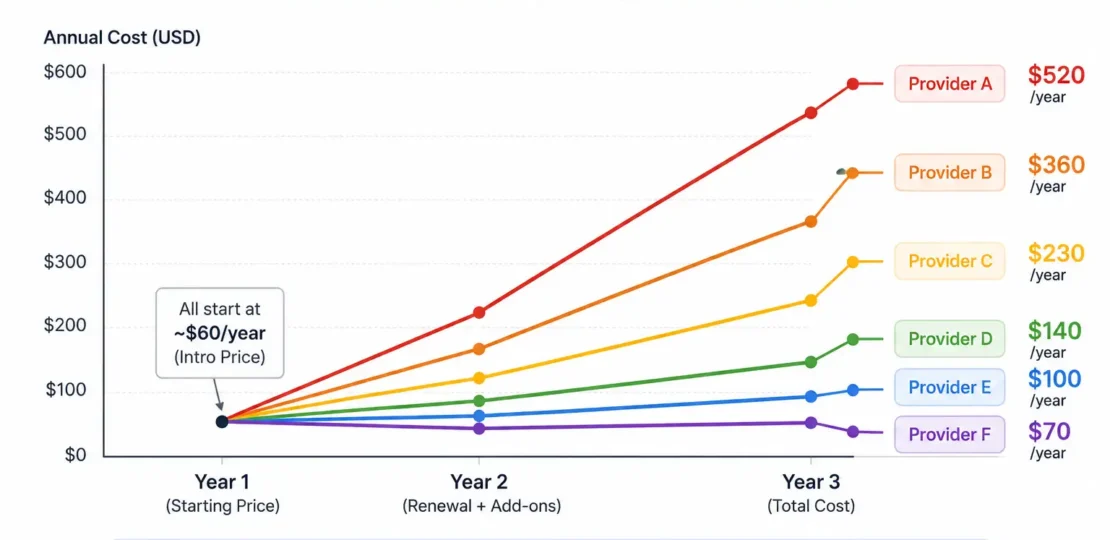
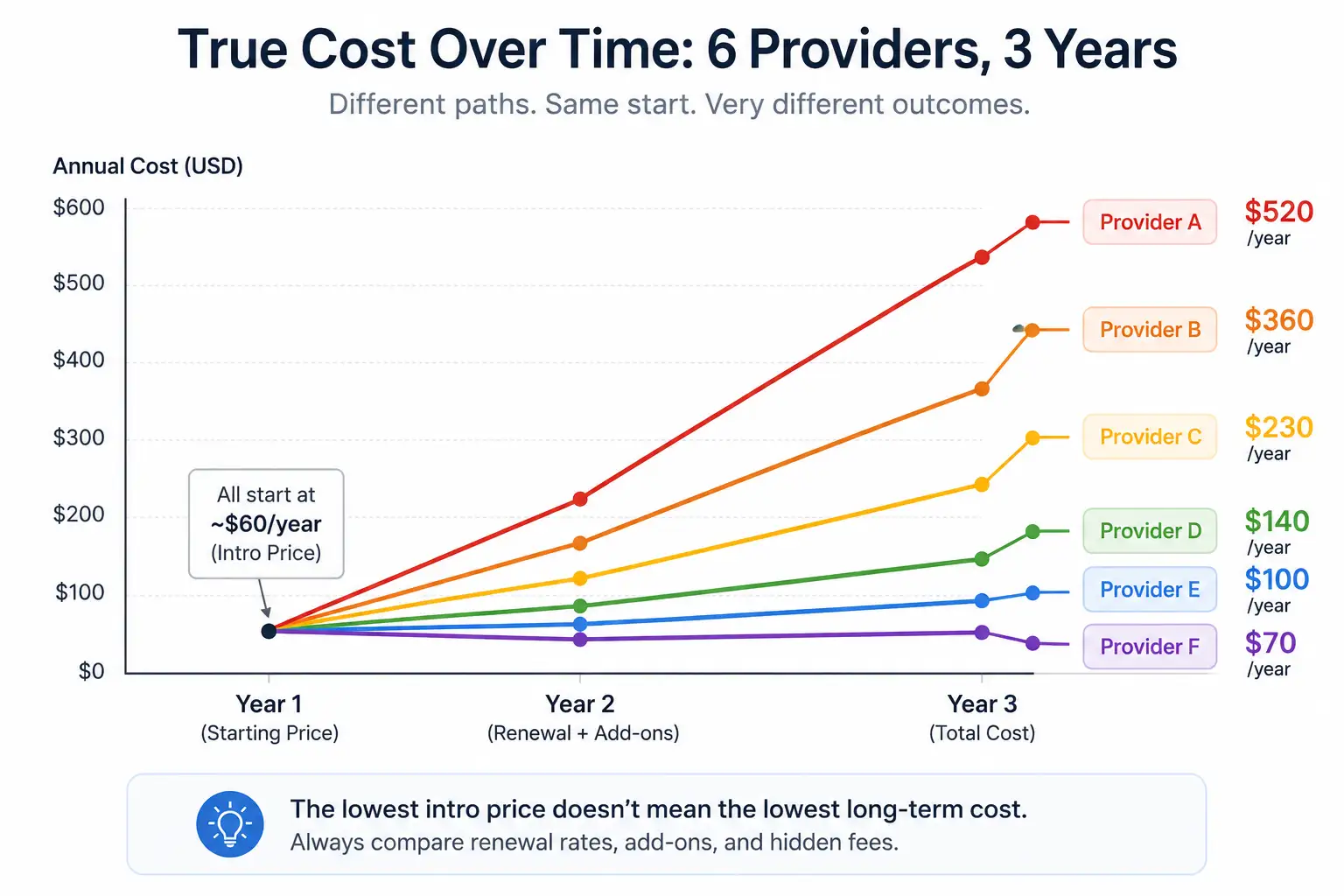
“Cheap hosting” is one of the most misleading phrases in the entire industry, mostly because almost every provider on this list can legitimately claim it. The real question isn’t which hosting company shows the smallest number on their homepage — it’s which one is actually cheapest once you account for renewal pricing, real performance, and what gets quietly upsold as an add-on later. This comparison looks past the headline prices and calculates what each of these budget providers genuinely costs over time.
Why the Headline Price Is the Wrong Number to Compare
Every hosting company in the budget segment uses the same basic strategy: offer a steep discount for the first term to win new customers, then renew at a significantly higher rate once that customer is already invested in the platform. This isn’t unique to any single provider, it’s simply how the industry’s pricing model works. The problem is that comparing headline prices alone tells you almost nothing about what you’ll actually pay over the two, three, or five years most people realistically keep a website on the same host.
InterServer — Best for Renewal Price Protection
InterServer’s standout feature isn’t its starting price, which sits around $2.50 to $3 per month on a one-year plan — it’s what happens after that term ends. InterServer offers a genuine price-lock guarantee, meaning the rate you sign up at simply doesn’t increase at renewal, a structural difference from nearly every other provider on this list. The plan includes unlimited storage, bandwidth, email accounts, and FTP accounts, runs on LiteSpeed servers with RAID-10 storage for added data redundancy, and throws in a free Cloudflare CDN. Its data centers are located just outside New York City, which makes it a particularly strong performer for a primarily U.S.-based audience, though less ideal if your visitors are concentrated elsewhere.
Namecheap — Best Long-Term Renewal Rate (With a Catch)
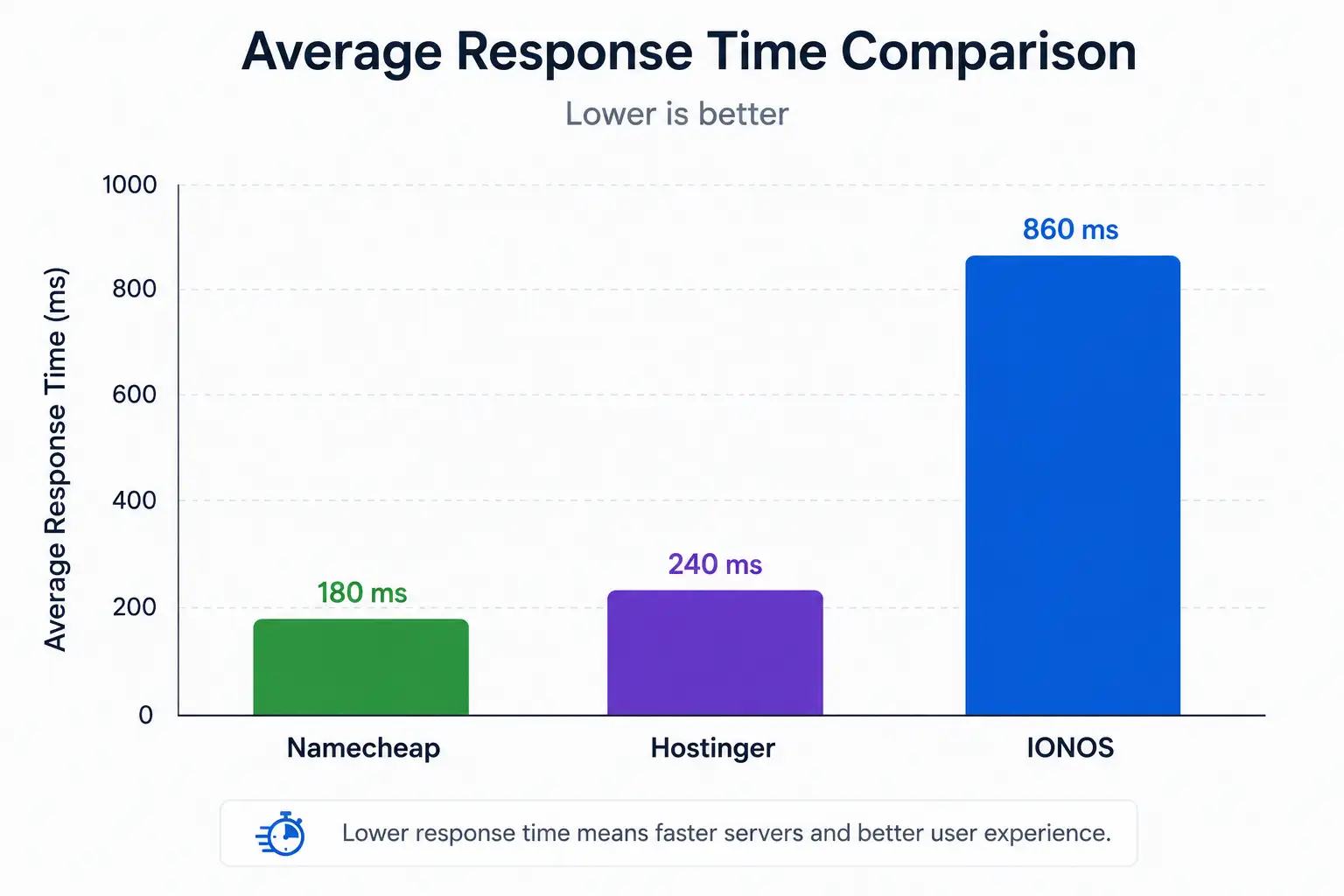
Namecheap’s Stellar plan is frequently cited as having the lowest true renewal pricing in the budget hosting category, typically landing around $4.48 to $4.88 per month after the introductory period, compared to some competitors that jump 3x or more. Independent testing has recorded Namecheap delivering a roughly 462 millisecond average Time to First Byte and 99.98% uptime, solid numbers for a budget shared host.
The catch that doesn’t show up in most comparison charts: Namecheap’s backup schedule on its base plans isn’t guaranteed to run consistently, meaning weeks can occasionally pass without an automatic backup actually completing, and truly reliable automated backups require a separate $2.99 per month add-on. Email hosting is also sold separately rather than bundled in, typically adding around $3 per month if you need professional email addresses tied to your domain.
IONOS — Cheapest Entry Price, Weakest Performance
If the absolute lowest possible starting number is your only priority, IONOS currently offers the cheapest entry-level pricing in the budget hosting category, sometimes as low as $1 per month for the first year. However, this is a case where the cheapest number and the best value genuinely diverge. Independent 2026 performance testing has placed IONOS below several competitors on response time, with recorded average Time to First Byte figures around 527 milliseconds and uptime closer to 99.94%, both noticeably behind Hostinger and Namecheap in the same testing round. IONOS is a reasonable choice specifically for someone testing a first website idea with minimal financial risk, but it’s a weaker long-term pick if performance matters to your visitors or your search rankings.
Hostinger — Best Balance of Price and Performance
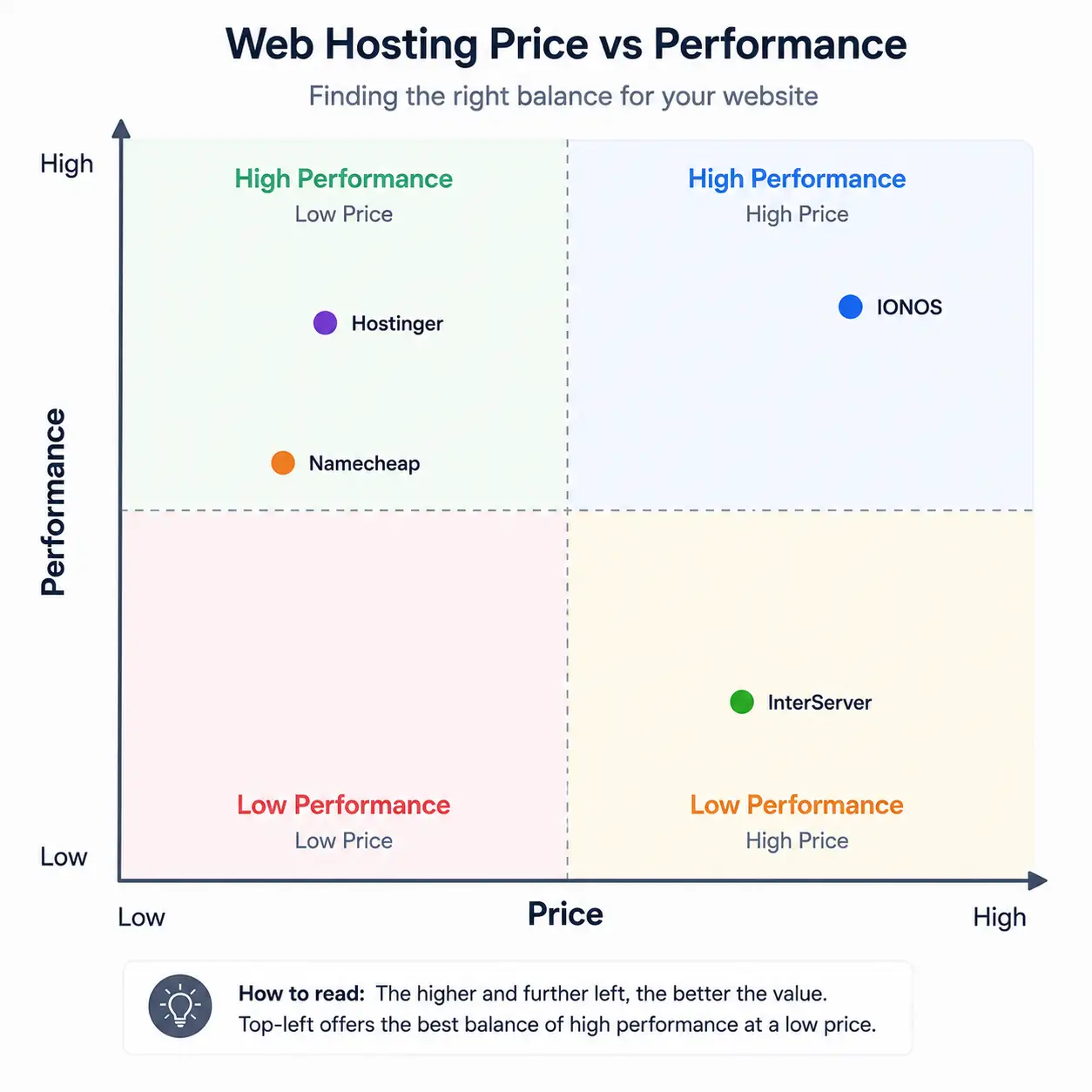
Hostinger doesn’t win on either the absolute cheapest entry price or the absolute lowest renewal rate, but it consistently ranks among the strongest performers in its price bracket, thanks to its LiteSpeed server infrastructure and built-in caching. Entry pricing typically starts around $2.69 to $2.99 per month, with renewal pricing landing in the $10 to $17 per month range depending on the specific plan, representing roughly a 60 to 80 percent increase rather than the far steeper jumps seen with some competitors. For most beginners specifically prioritizing a working balance of low cost and real-world speed, Hostinger remains difficult to beat, even though providers like InterServer or Namecheap technically undercut it on long-term renewal price alone.
BigCloudy — Most Aggressive Specs-Per-Dollar
A newer entrant worth watching in the ultra-budget category, BigCloudy has positioned itself around an unusually aggressive combination of NVMe storage, LiteSpeed servers, full cPanel access, and daily backups, all starting around $1.19 per month. For a provider at that price point, having NVMe storage and LiteSpeed included rather than reserved for higher tiers is a genuinely uncommon combination, though its shorter market track record compared to more established names like Hostinger or Namecheap means it’s worth doing a bit of extra due diligence before committing long-term.
Hostwinds — Best Uptime Guarantee on Paper
Hostwinds backs its budget shared hosting plans, starting around $5.24 to $6.99 per month, with an unusually strong 99.9999% uptime guarantee, well above the standard 99.9% industry average. It’s also consistently praised in independent reviews for faster-than-average support response times within the budget hosting category. It isn’t the cheapest option on this list, but for buyers specifically prioritizing reliability assurances in writing, its guarantee stands out from the pack.
The True 5-Year Cost Comparison
Because renewal pricing structures vary so dramatically, calculating a rough five-year total cost paints a very different picture than comparing month-one prices alone. Using publicly reported first-term and renewal pricing, a five-year total for Namecheap’s Stellar plan lands somewhere around $257, among the lowest of any provider in this comparison specifically because its renewal price stays relatively close to its introductory rate. InterServer’s price-lock structure produces a similarly predictable, low long-term total specifically because there’s no renewal jump to calculate at all. Providers with steeper renewal multipliers, even ones with very cheap first-year pricing like IONOS or some Hostinger plans, can end up costing割 meaningfully more over the same five-year window once the discounted period ends.
Performance vs. Price: The Real Tradeoff
Across nearly every independent testing effort referenced for this comparison, a consistent pattern emerges: the very cheapest entry-level prices tend to correlate with weaker average performance, while providers with slightly higher but more stable renewal pricing, like Namecheap and Hostinger, tend to deliver more consistent speed and uptime. This isn’t a universal rule, since a newer provider like BigCloudy is attempting to break that pattern with genuinely strong specs at an ultra-low price point, but it’s a reasonable general expectation to have going in rather than assuming the cheapest number automatically means comparable performance to a mid-priced competitor.
Who Should Choose Which Provider
- Choose InterServer if: you want a genuinely predictable long-term cost with no renewal price shock, and your audience is primarily U.S.-based.
- Choose Namecheap if: long-term renewal cost matters most, and you’re comfortable paying separately for reliable automated backups and email hosting.
- Choose IONOS if: you’re testing a very early-stage idea with minimal financial commitment and performance isn’t yet a priority.
- Choose Hostinger if: you want the strongest overall balance of price, speed, and beginner-friendly tools without needing to piece together add-ons separately.
- Choose BigCloudy if: you want the most aggressive specs-per-dollar and are comfortable with a newer, less established provider.
- Choose Hostwinds if: a strong written uptime guarantee and responsive support matter more to you than shaving off the last dollar or two per month.
Frequently Asked Questions
Is the cheapest hosting provider ever actually the best choice?
Occasionally, for very low-stakes projects where performance genuinely doesn’t matter. For anything you expect real visitors to rely on, a slightly higher but more consistent-performing provider is usually the better long-term value.
Why do some cheap hosts charge extra for backups and email?
Unbundling these features lets providers advertise a lower headline price while recovering revenue through add-ons afterward. It’s not necessarily dishonest, but it does mean the real cost of running a functional site can be higher than the advertised base price suggests.
Does a price-lock guarantee like InterServer’s really never increase?
Based on current publicly available terms, yes, the rate you lock in at signup stays fixed for as long as you remain on that specific plan, which is a meaningfully different structure than the renewal-jump model most competitors use.
Should I judge a hosting provider by its cheapest plan alone?
Not entirely. It’s worth checking whether the cheapest plan’s resource limits are realistic for your actual website, since an unrealistically restrictive entry tier can push you into a more expensive upgrade sooner than expected anyway.
Final Thoughts
The cheapest hosting plan and the best-value hosting plan are frequently two different things once renewal pricing, add-on costs, and real-world performance are factored in together. InterServer and Namecheap currently offer the most predictable long-term costs, Hostinger remains the strongest overall balance for most beginners, and IONOS or BigCloudy make sense specifically for early-stage, low-risk projects. Running the actual five-year math, rather than comparing whichever number is largest on the homepage, is what separates a genuinely good cheap hosting decision from one that quietly costs more than a mid-tier provider would have in the first place.
This comparison reflects publicly available pricing and independently reported performance data as of August 2026. Hosting prices, features, and promotional offers change frequently, so it is worth confirming current terms directly on each provider’s website before purchasing.
RELATED POSTS
View all

How Much Does It Cost to Start a Website in 2026?
August 2, 2026 | by anisurrahaman235f@gmail.com
Website Security Checklist for New Website Owners (2026)
August 2, 2026 | by anisurrahaman235f@gmail.com