

Hostinger Review 2026: Features, Pricing, Pros and Cons
August 1, 2026 | by anisurrahaman235f@gmail.com
Hostinger has spent the last few years transforming from a budget-hosting curiosity into one of the most talked-about names in the industry. It now shows up near the top of nearly every independent hosting comparison, largely on the strength of aggressive pricing paired with performance numbers that used to be reserved for premium-tier hosts. But “cheap and fast” is a claim every hosting company makes on its homepage — the real question is whether it holds up once you’re actually running a live site on it.
This review looks at what Hostinger offers in 2026: its plan structure, real-world speed and uptime data from independent testing labs, the features bundled into each tier, and the specific downsides that don’t always make it into the glowing affiliate reviews. If you’re deciding whether Hostinger deserves your first year’s hosting budget, this should give you a realistic picture.
What Is Hostinger?
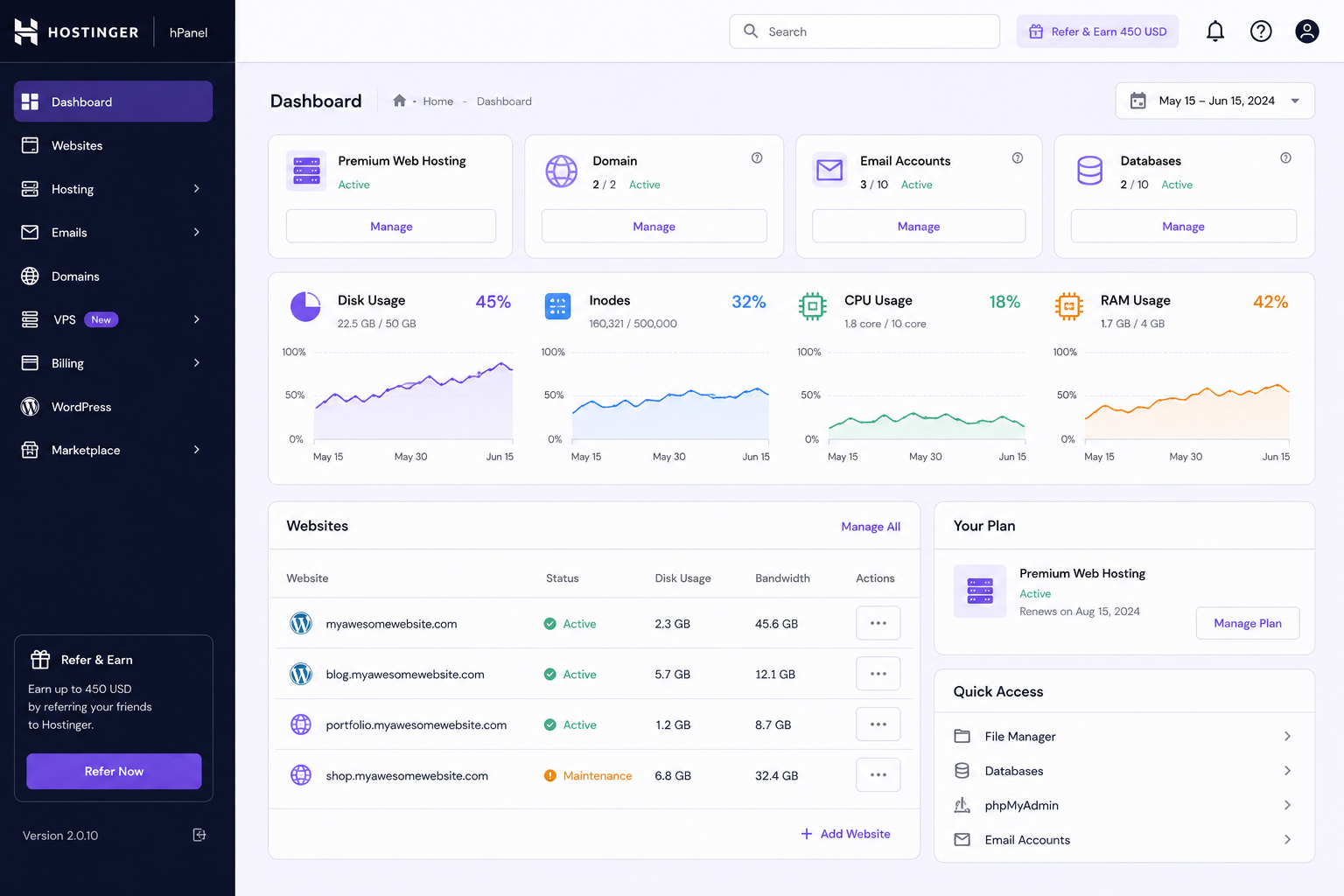
Hostinger is a Lithuania-founded hosting company that now operates data centers across multiple continents and serves millions of customers worldwide. Its core lineup covers shared hosting, managed WordPress hosting, cloud hosting, VPS hosting, and domain registration, all managed through a custom-built dashboard called hPanel rather than the more familiar cPanel most legacy hosts use.
What sets Hostinger apart from older budget hosts isn’t just price — it’s that the low-cost plans aren’t stripped down the way cheap hosting used to be. Free SSL, a content delivery network, malware scanning, and daily backups are standard inclusions rather than paid add-ons on most tiers, which is a meaningful shift from how budget hosting operated even a few years ago.
Hostinger Plans and Pricing in 2026
Hostinger’s pricing structure rewards long-term commitment heavily, and that’s the first thing to understand before comparing it to other hosts. The advertised “starting price” you see in ads almost always reflects a 24- or 48-month prepaid term — pay monthly or for just one year, and the effective rate is noticeably higher.
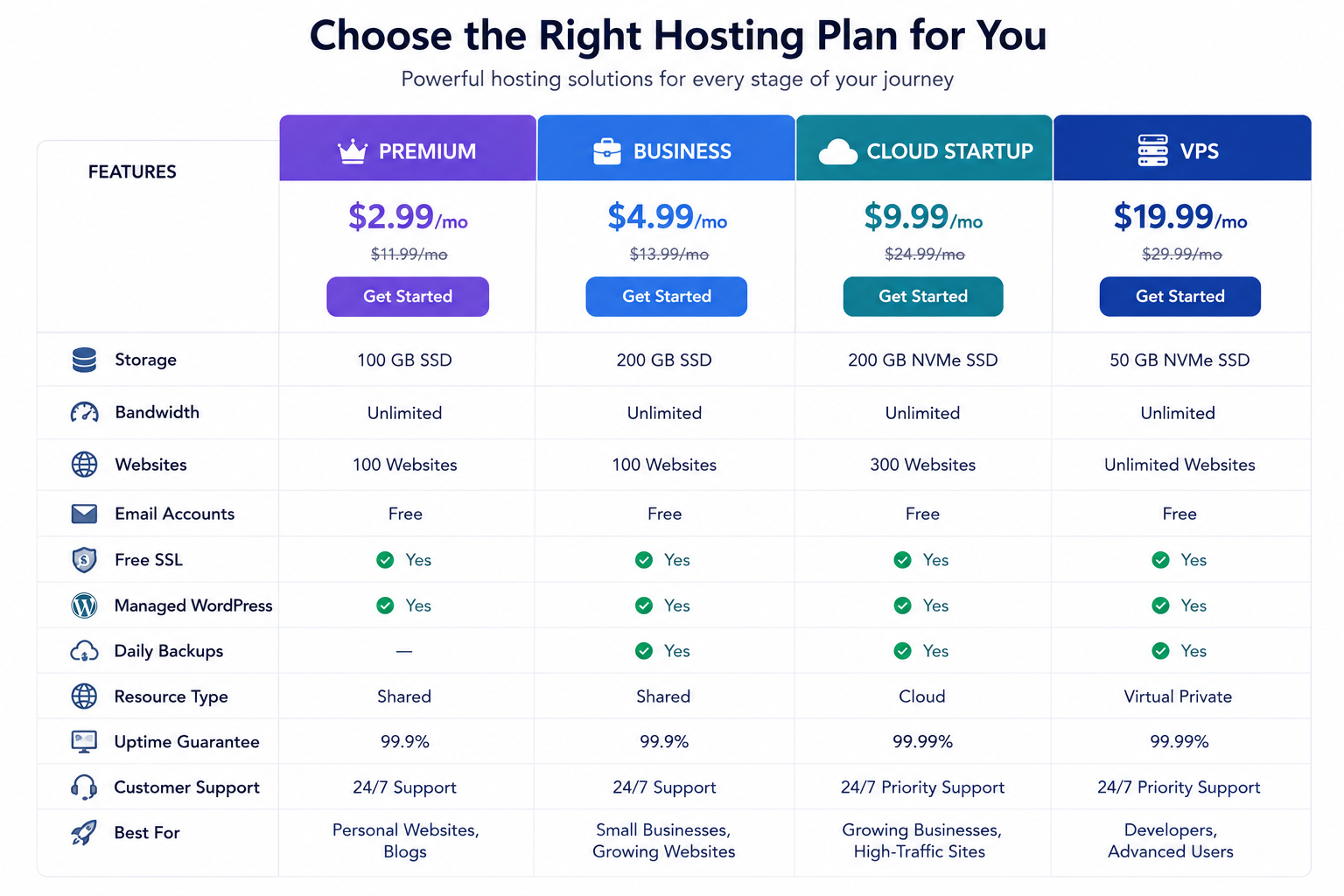
Shared hosting comes in three tiers:
- Premium – the entry-level plan, suitable for a single growing site or a handful of smaller ones, typically priced in the $2–4/month range on multi-year terms and roughly $10–12/month if you choose a short-term commitment.
- Business – adds a content delivery network, daily backups, and noticeably better real-world speed thanks to the bundled CDN, generally landing in the $3–5/month range long-term.
- Cloud Startup – built for higher-traffic sites and small stores, running on cloud infrastructure rather than pure shared resources, usually priced from around $8/month upward.
VPS hosting runs on KVM virtualization with NVMe storage and full root access, aimed at developers and resource-heavy applications, with entry plans typically starting in the single digits per month and scaling up based on CPU cores and RAM.
Cloud hosting sits between shared and VPS in terms of control, offering dedicated resources and a dedicated IP without requiring server administration skills.
A 30-day money-back guarantee applies across most plans, giving you a reasonable window to test real performance before committing to the longer discounted term.
Performance: What Independent Testing Actually Shows
Marketing claims about speed are easy to make and hard to verify, so it’s worth leaning on third-party monitoring data rather than Hostinger’s own homepage. Several independent testing labs that track hosting providers continuously throughout the year — rather than running a single benchmark and calling it done — have published consistent findings for 2026.
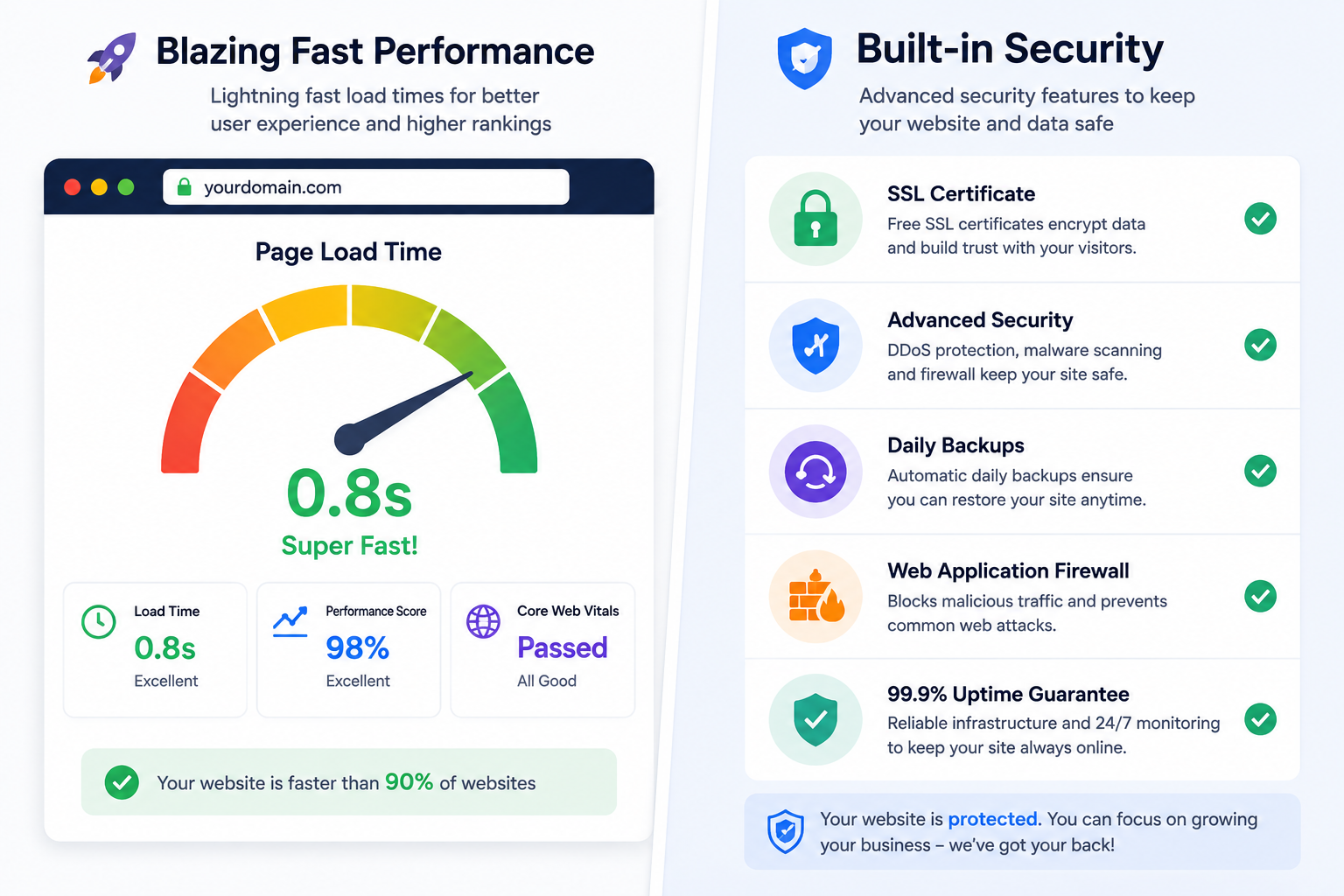
Across multiple monitoring services running hundreds of thousands of checks over extended periods, Hostinger’s shared hosting plans have recorded uptime figures at or above 99.9%, with several testers reporting stretches of 100% uptime across multi-month windows. Time-to-first-byte (TTFB) — the metric that measures how quickly a server starts responding, and one that search engines factor into ranking signals — has generally landed in the 180–300 millisecond range on cache-enabled Business-tier plans, comfortably inside the sub-600ms threshold considered good practice.
One consistent pattern worth calling out: the gap between Hostinger’s entry-level Premium plan and the Business plan is larger than the price difference suggests. Because the Business tier includes a bundled CDN, testers have measured load-handling and global response times several times faster than Premium under identical WordPress setups. If your budget allows it, skipping straight to Business rather than starting on Premium is usually the smarter move for anything beyond a very small personal site.
Fully loaded page times for a standard, reasonably optimized WordPress site have generally landed under 1.5 seconds in recent independent tests, with some testers recording sub-1-second results using LiteSpeed caching. That puts Hostinger competitively ahead of several legacy shared hosts still running on older Apache-based infrastructure.
Key Features Worth Knowing About
LiteSpeed Web Server architecture. Instead of the traditional Apache setup many budget hosts still use, Hostinger runs LiteSpeed, which handles PHP execution and static content substantially faster and integrates directly with the LiteSpeed Cache plugin for WordPress.
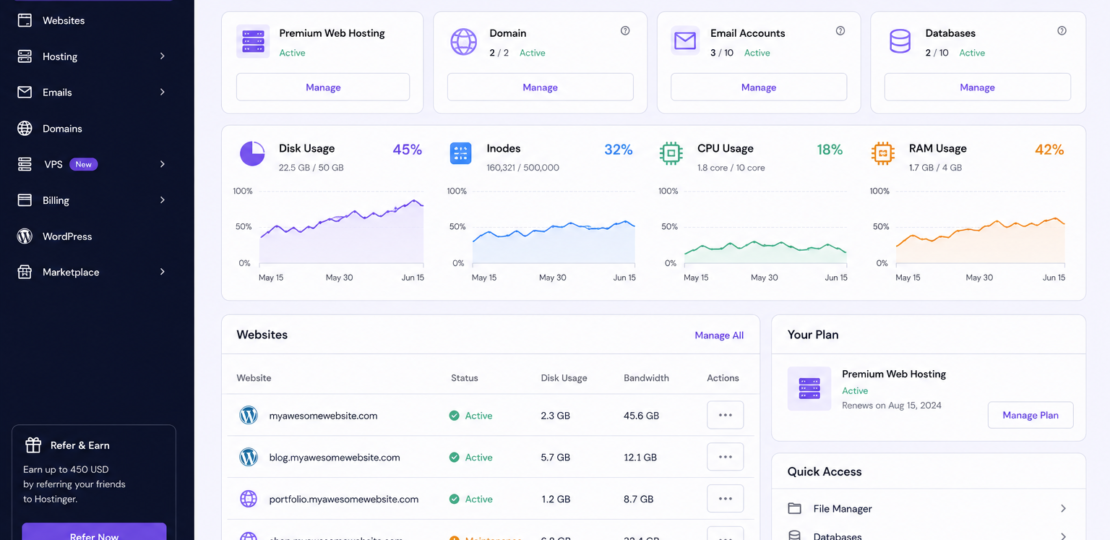
hPanel. Hostinger’s proprietary control panel replaces cPanel entirely on shared and cloud plans. It’s cleaner and arguably more beginner-friendly than cPanel, with built-in resource monitoring that shows CPU, RAM, and bandwidth usage in real time so you can catch performance issues before they escalate. The tradeoff is that experienced users who specifically want cPanel will need to look at VPS plans and install it themselves, since it isn’t included on shared tiers.
AI-powered tools. Hostinger has leaned heavily into AI features over the past couple of years, including an AI website builder (branded Horizons) that can generate a functioning site from a text description, plus AI-assisted troubleshooting tools inside hPanel that flag common configuration issues automatically.
Security inclusions. DDoS protection, free SSL certificates, and malware scanning come bundled at no extra charge on shared plans — a meaningful point of differentiation, since several competitors treat these as premium upsells.
Free domain and email. Annual and multi-year plans typically include a free domain for the first year and a functional number of business email accounts, removing two of the most common early costs of launching a site.
Free migration. If you’re moving from another host, Hostinger’s team handles the transfer for you, generally completing it within 24 hours with minimal downtime.
Customer Support
Hostinger offers 24/7 live chat support as the primary channel, supplemented by an extensive knowledge base and community forum. Response times during normal hours tend to be fast, and for common issues — DNS configuration, SSL setup, email problems — the support team generally resolves things without needing escalation.
The consistent criticism across independent reviews is that support quality becomes less predictable during high-demand periods or for more technical VPS-level issues, where responses can feel more scripted or require multiple back-and-forth messages before reaching a real fix. It’s a reasonable tradeoff for the price point, but it’s not the white-glove support experience some premium managed hosts offer.
Pros
- Genuinely competitive real-world speed and uptime, backed by independent long-term monitoring rather than just marketing claims
- Security features (SSL, DDoS protection, malware scanning) included free rather than sold as add-ons
- hPanel is intuitive and includes useful real-time resource monitoring
- AI website builder and AI troubleshooting tools are ahead of most budget competitors
- Free domain, free migration, and 30-day money-back guarantee reduce first-year friction and cost
- Wide range of plans, from basic shared hosting to VPS, covers most growth stages under one provider
Cons
- Renewal pricing jumps significantly — often two to three times the advertised introductory rate — so the long-term cost needs to be calculated before signing up, not just the first-term price
- No cPanel on shared or cloud plans, which may frustrate users who specifically want that interface
- Entry-level Premium plan lacks the bundled CDN that makes Business-tier performance stand out, so budget-conscious buyers may unknowingly choose the weaker-performing tier
- Support quality can be inconsistent for advanced technical issues or during peak load periods
- Lowest advertised prices require long multi-year commitments, which isn’t ideal if you’re not sure you’ll stick with the platform
Who Should Choose Hostinger?
Hostinger is a strong fit for beginners launching their first blog or small business site, for WordPress users who want fast performance without configuring caching manually, and for anyone prioritizing value over brand-name managed hosting. The VPS lineup also makes it viable for developers who want root access and predictable resources without paying dedicated-server prices.
It’s less suited to users who specifically need cPanel, teams running large-scale enterprise applications with strict compliance requirements, or anyone who wants a fixed, predictable renewal rate without shopping around every couple of years.
Final Verdict
Hostinger earns its reputation in 2026 largely because the performance claims actually hold up under independent, long-term testing — not just a single benchmark run. Combined with genuinely useful included security features, a well-designed control panel, and some of the more forward-looking AI tooling in the budget hosting space, it’s a legitimately strong option for most small to mid-sized websites.
The one thing to go in with your eyes open about is renewal pricing. Budget for the higher rate after your first term ends, choose the Business tier over Premium if performance matters to your project, and use the 30-day guarantee to actually test the service on your own site before fully committing. Handled that way, Hostinger remains one of the more reliable value picks in the hosting market this year.
RELATED POSTS
View all

Best Hosting for Small Business Websites in 2026
August 2, 2026 | by anisurrahaman235f@gmail.com
Best Hosting for Small Business Websites in 2026
August 2, 2026 | by anisurrahaman235f@gmail.com
How Much Does It Cost to Start a Website in 2026?
August 2, 2026 | by anisurrahaman235f@gmail.com