

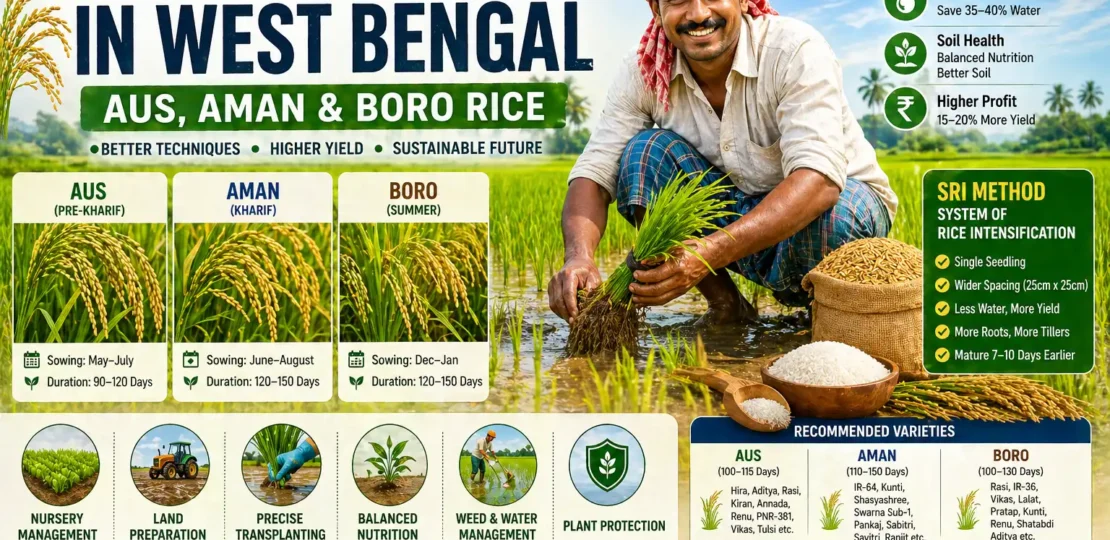
For direct-seeded Aus, Aman, or Boro rice, the land should be ploughed and harrowed 3–4 times to make the soil fine and friable. All weeds must be removed carefully and buried into the soil.
For transplanted Aus or Aman rice, the field must be puddled to a depth of 12–15 cm (5–6 inches). This requires two dry ploughings followed by 3–4 ploughings and harrowings in wet condition to create soft, well-puddled mud. Before the final ploughing, keep 5–6 inches of standing water in the field for 5–6 days to allow the soil to decompose properly. After the final ploughing, level the field thoroughly with a harrow (moi) to ensure a smooth, even surface.
SRI Method of Rice Cultivation (System of Rice Intensification)
SRI is a modern, resource-efficient method of rice cultivation that aims to achieve higher yields with fewer inputs. In this method:
- A small nursery of 1 decimal (100 sq. metre) is prepared with heavy application of organic manure. Only 2 kg of pre-germinated seeds are sown in this nursery.
- For 1 acre of main field, only 2–3 kg of seed is required.
- 8–12 days old seedlings having 2 leaves are transplanted singly at 25 cm × 25 cm spacing (one seedling per hill).
- Seedlings are not pulled from the nursery; they are gently lifted with soil attached to the roots to avoid root damage.
- Each square metre contains 16 hills.
- Transplanting is done in puddled soil without standing water.
- Higher doses of organic manure and 25% less chemical fertilizer than the recommended dose are applied in the main field.
- Instead of continuous flooding, the field is kept moist by irrigating every 3–5 days.
- Weeding is done 2–3 times starting from 10–12 days after transplanting, either manually or with a cono-weeder (paddy weeder).
Advantages of SRI Method:
- Produces more roots, more tillers, and heavier grains.
- Yield increases by 15–20%.
- Saves 35–40% water.
- Crop matures 7–10 days earlier.
Challenges:
- Requires more skilled labour.
- Difficulty in handling very young seedlings.
- Higher weed pressure.
- Not suitable for permanently waterlogged fields.
Fertilizer Application in Main Field (Aus and Aman Rice)
For higher yields, balanced application of plant nutrients is essential. Continuous cultivation of high-yielding varieties and increased cropping intensity have led to depletion of soil organic carbon, nitrogen, phosphorus, and potash. Deficiency of micronutrients, especially zinc, is also observed in some areas. Therefore, organic manure and green manure must be applied regularly. This improves soil physical condition, enhances the efficiency of chemical fertilizers, and helps correct micronutrient deficiencies.
If green manuring is not possible, apply 2 tonnes of well-decomposed cow dung or compost manure per acre during land preparation.
Organic Manure:
Apply 5 tonnes of well-decomposed organic manure per acre and mix thoroughly with the soil during final land preparation.
Inorganic / Chemical Fertilizers
Fertilizer Schedule for Aus and Aman Rice (per acre)
| Rice Type & Duration | Basal Dose (before last ploughing) | Top Dressing (Nitrogen) |
|---|---|---|
| Aus (Broadcast) (100 days) Hira, Aditya, Prasanna, Kalyani-2, Khanika etc. | N: 12 kg P: 12 kg K: 12 kg | 15–20 days after sowing or after first weeding: 12 kg N 30–35 days: 12 kg N |
| Aus (Transplanted) (110–115 days) Rabi, Tulsi, Annada, Gajapati, Nidhi, Mandavijaya, Triguna, Renu, PNR-381, 519, Narendra Dhan 97, 118, 359, IET-2233 etc. | N: 14 kg P: 14 kg K: 14 kg | 15 days after transplanting: 14 kg N 30–35 days: 7 kg N |
| Aman (Transplanted) Local improved varieties (Rupshal, Raghushal, Vashamanik, Patnai-23, SR 26B, Nagra, Tilakkachari etc.) | N: 10 kg P: 10 kg K: 10 kg | — |
| Aman – High Yielding Varieties (a) Short duration (up to 125 days) IR-64, Vikas, PNR-381, 519, Shatabdi, Krishnahamsa, Radhi, Lalat etc. | N: 12 kg P: 12 kg K: 12 kg | 15 days after transplanting: 12 kg N 30–35 days: 6 kg N |
| (b) Medium duration (125–135 days) Ajaya, Kunti, Shasyashree, Vikramacharya, Pusa Basmati-1, Bhuban, Pratap, Daya, Sita, Prakash etc. | N: 14 kg P: 14 kg K: 14 kg | 15–20 days after transplanting: 14 kg N 40–45 days: 7 kg N |
| (c) Long duration (140–150 days) – Water up to 15–30 cm IR-42, Shalibahan, Pankaj, Swarna Dhan, Manas Sarobar, Swarna, Bipasha, Savitri, Gayatri, Ranjit, Swarna Sub-1, MTU-1001, Lunishree, Shashi, Samba Mahsuri, Dharitri, Puja, Jogen, Godavari, Chaitanya etc. | N: 16 kg P: 16 kg K: 16 kg | 21 days after transplanting: 16 kg N 55–60 days: 8 kg N |
| Water up to 30–50 cm (Jogen, Tulsi, Suresh, Biraj, Mandira, Utkalprabha, Nagarjun, Masuri, Rajshree etc.) | N: 14 kg P: 14 kg K: 14 kg | 21 days after transplanting: 14 kg N At panicle initiation: 7 kg N |
| Water up to 50–90 cm (Savita, Nalini, Amulya, Matangini, Purnendu, Hanseshwari, Sudhir, Mahananda, Bhagirathi, Saraswati etc.) | N: 10 kg P: 10 kg K: 10 kg | At active tillering: 10 kg N At panicle initiation: 5 kg N |
| Water more than 90 cm (Dinesh, Golok, Neeraja, Jalpriya, Jalprabha, Madhukar, Purnendu, Jitendra etc.) | N: 10 kg P: 10 kg K: 10 kg | — |
Note: Nitrogen fertilizer application can be guided by Leaf Colour Chart (LCC).
Leaf Colour Chart (LCC) for Nitrogen Management
The Leaf Colour Chart is a simple plastic tool used to determine the right time and amount of nitrogen fertilizer for rice. It has colour strips ranging from light yellowish-green (No. 2) to dark green (No. 5), corresponding to chlorophyll content in rice leaves.
How to use LCC:
- Do not apply basal nitrogen at transplanting (apply full P and K only).
- Start LCC observation 15 days after transplanting for Aman and 20 days for Boro.
- Select 10 healthy hills randomly. Compare the colour of the uppermost fully expanded leaf with the LCC.
- If more than 5 hills show colour below No. 4, apply 21 kg urea per acre for Aman and 27 kg urea per acre for Boro.
- Repeat the test every 10 days. If no application is needed, check again after 5 days.
Benefits of LCC:
- Saves up to 25% nitrogen fertilizer.
- Produces more filled grains.
- Reduces disease and pest incidence.
- Minimizes lodging.
Recommended Boro Rice Varieties
Short Duration (100–115 days):
CR 128-42-1, IET-1444 (Rasi), IET-2233, PNR-381, IR-36, Kshitish (IET-4014), Ratna, IR-64, Vikas, Lalat, Tulsi, Renu, Triguna, Narendra Dhan-97, Annada, Lal Minikit (WGL-20471), Shatabdi (Minikit/IET-4786), Aditya.
Medium Duration:
IET-2815 (Shasyashree), IET-2254 (Prakash), IET-6141 (Kunti), Ajaya, Pratap, Suraksha.
Important Tip for Boro Cultivation:
Choose varieties and sowing time so that the crop can be harvested by mid-Baishakh (April). This helps in:
- Saving irrigation water
- Avoiding yield loss due to water shortage
- Reducing disease and pest attack
- Minimizing damage from pre-monsoon storms, untimely rain, or hail
- Allowing the soil to get sunlight and aeration before the next Kharif crop, thus maintaining soil health and fertility.
RELATED POSTS
View all

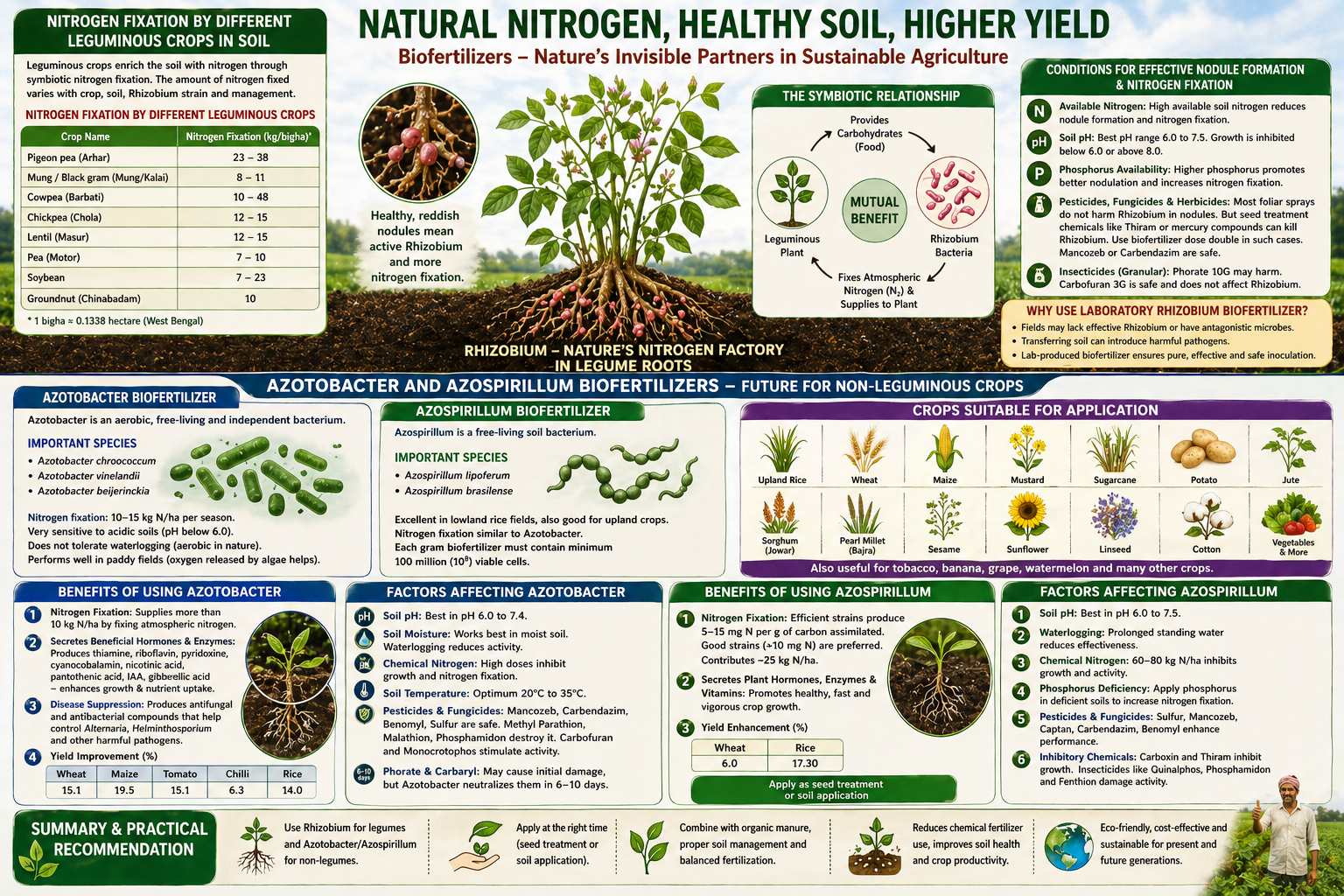
Nitrogen Fixation by Different Leguminous Crops in Soil
April 25, 2026 | by anisurrahaman235f@gmail.com
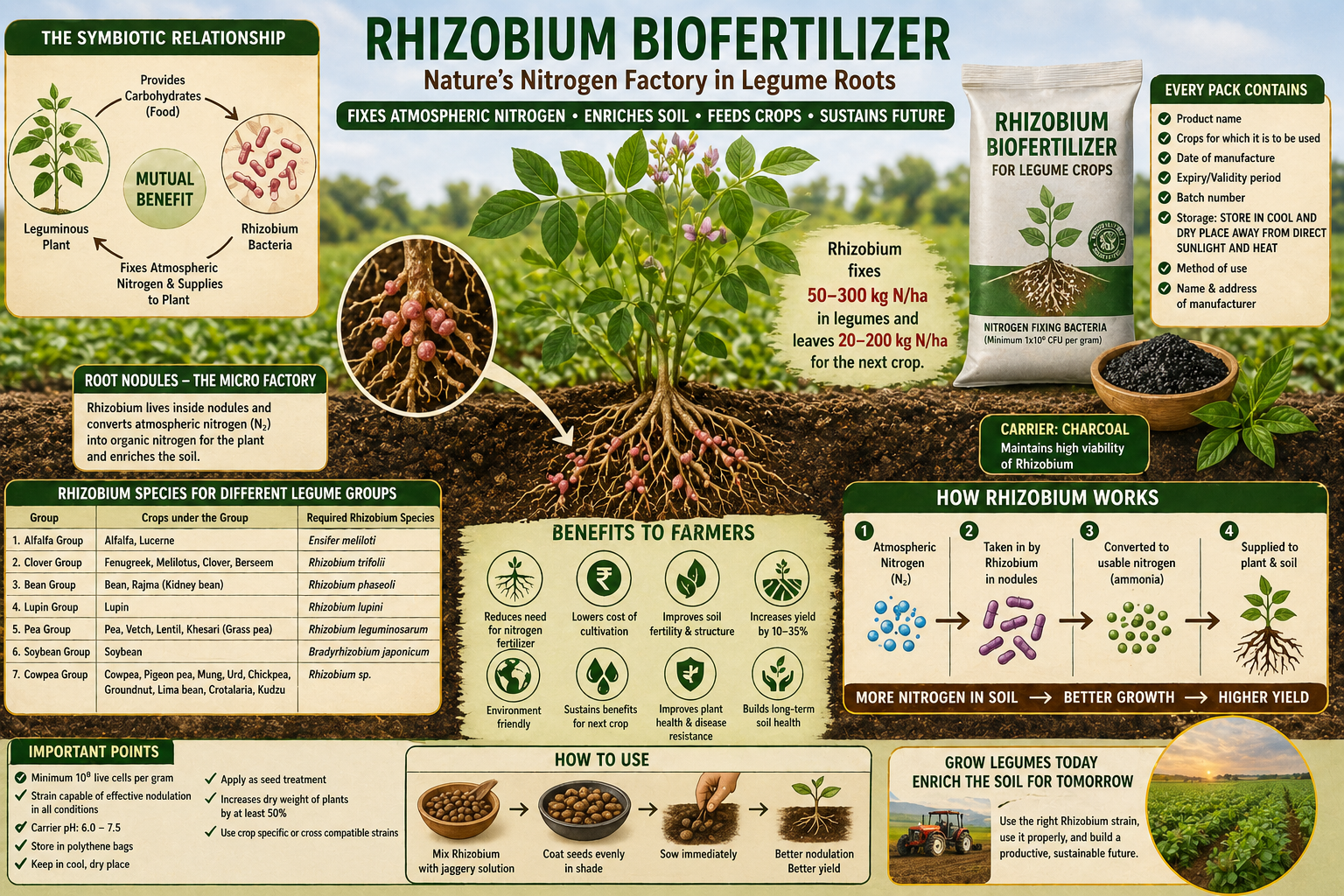
Effectiveness of Different Types of Beneficial Microbial Fertilizers
April 25, 2026 | by anisurrahaman235f@gmail.com

Pulse Crops Cultivation (Improved Method)
May 24, 2026 | by anisurrahaman235f@gmail.com