

Hostinger vs GoDaddy Hosting: Performance and Pricing Review (2026)
August 2, 2026 | by anisurrahaman235f@gmail.com
Hostinger and GoDaddy are two of the most recognizable names in web hosting, but they built their reputations in very different ways. GoDaddy grew into a household name mostly through decades of domain registration and aggressive marketing, while Hostinger built its following more recently around aggressively low pricing and beginner-friendly tools. In 2026, both companies compete directly for the same beginner and small-business customer, which makes an honest, numbers-based comparison genuinely useful rather than just another affiliate-driven “winner” post. This review pulls together current pricing, independently reported performance data, and real feature differences to help you decide which one actually fits your project.
Company Snapshot: Scale and Focus
GoDaddy is the world’s largest domain registrar, managing more than 84 million domains, and it has spent years positioning itself as a one-stop shop for domains, hosting, website building, and business email under a single account. Hostinger, by contrast, has grown into one of the fastest-expanding hosting companies globally, now serving tens of millions of registered users, with a product identity built more tightly around affordable shared, cloud, and VPS hosting plus an increasingly AI-driven feature set.
That difference in focus shows up throughout this comparison: GoDaddy tends to offer more total products and broader business services, while Hostinger tends to offer a narrower, more tightly optimized hosting experience at a noticeably lower price.
Pricing: Where the Gap Is Largest
Pricing is consistently the sharpest difference between the two providers, and it holds true across nearly every comparable tier. Hostinger’s entry-level shared hosting plan generally starts around $2.69 to $2.99 per month on a long-term contract, while GoDaddy’s comparable entry-level shared hosting plan typically starts closer to $5.99 per month — roughly double the cost for a similar feature set.
The gap widens further at higher tiers. On eCommerce-focused plans, Hostinger’s offering has been priced as low as $2.99 per month, compared to GoDaddy’s Commerce plan running closer to $20.99 per month, and GoDaddy’s renewal pricing on that same plan can climb to roughly $50 per month once the introductory period ends. Hostinger’s own renewal pricing is also higher than its introductory rate, generally landing somewhere in the $10 to $17 per month range depending on the plan, but the overall gap between the two providers remains significant even after renewal pricing kicks in on both sides.
There is one pricing area where GoDaddy holds a real advantage: it offers a free website builder plan that requires no credit card to start, while Hostinger has no free tier at all and requires upfront payment before you can test the platform. That said, GoDaddy’s free tier comes with a catch worth knowing about — it typically includes a short trial window of premium features (often around seven days) before automatically downgrading to a more limited free version, with tools like custom domain connection and SEO features locked behind a paid upgrade afterward. Hostinger compensates for having no free plan with a 30-day money-back guarantee across its paid plans, which gives new users a comparable evaluation window, just with a refund process instead of a true no-cost trial.
Performance: Speed and Uptime
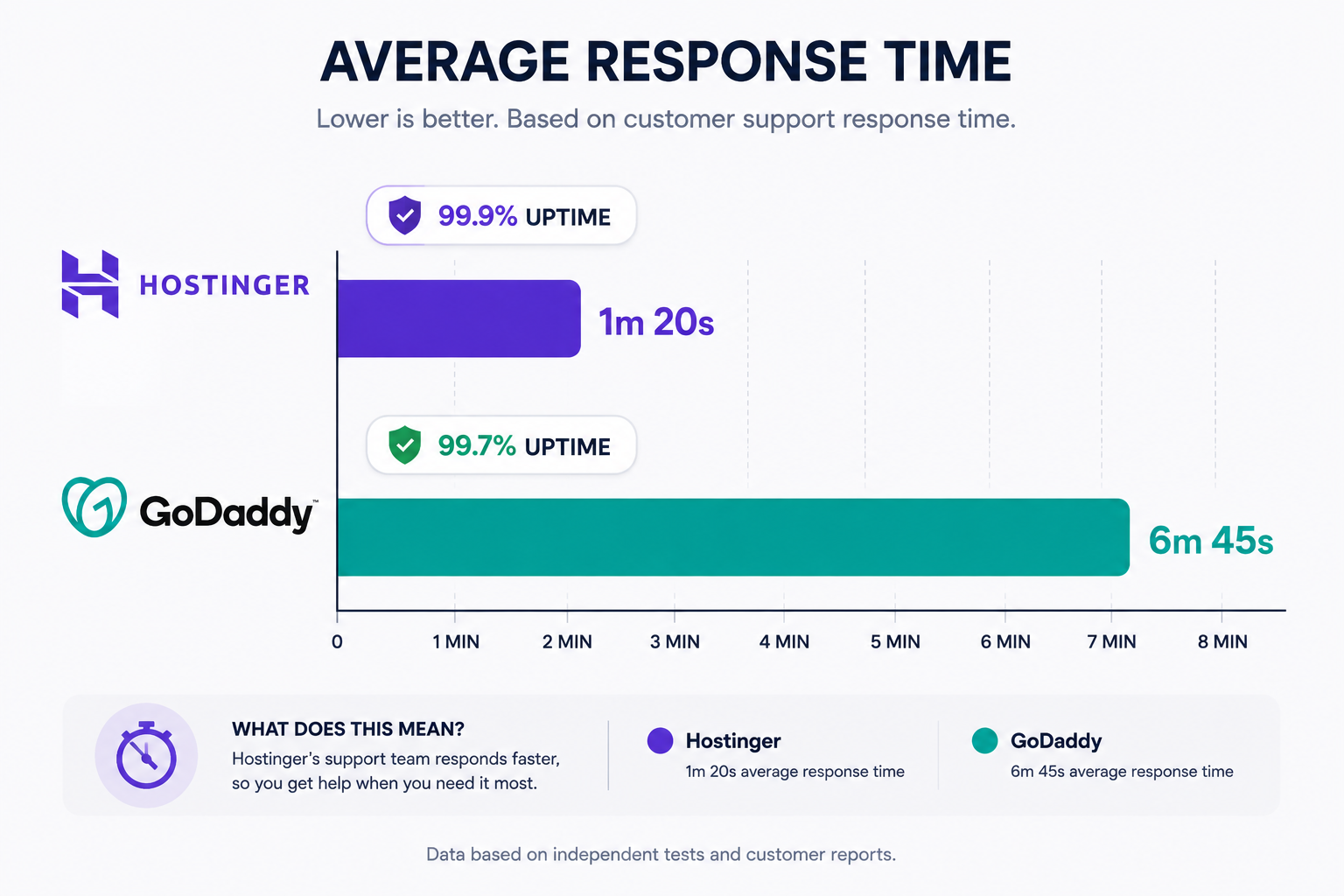
This is where independent testing data becomes genuinely useful instead of relying on marketing claims from either company. Multiple independent testing efforts conducted throughout 2026 have consistently found Hostinger delivering faster average response times than GoDaddy on comparable shared hosting plans, with reported average Time to First Byte figures for Hostinger frequently landing somewhere in the 118ms to 289ms range, compared to GoDaddy figures more commonly falling between roughly 288ms and 487ms in similar tests. The size of that gap varies depending on testing methodology, server location, and whether a CDN was active during the test, but the direction of the result — Hostinger performing faster on average — has shown up repeatedly across separate testing organizations rather than a single isolated report.
Uptime tells a closer story. Both companies publicly guarantee 99.9% uptime, and in most real-world monitoring, both meet or exceed that promise. Aggregated third-party monitoring data from 2026 generally places Hostinger in the 99.94% to 99.99% range and GoDaddy in the 99.89% to 99.97% range over rolling monitoring windows, meaning the practical difference in downtime between the two providers usually amounts to a few extra hours per year at most, rather than a dramatic reliability gap.
A meaningful part of Hostinger’s speed advantage traces back to its underlying server technology. Hostinger runs on LiteSpeed Web Server with built-in LiteSpeed Cache, which handles WordPress object caching automatically without extra configuration, while GoDaddy generally relies on a more traditional Apache-based server stack. For WordPress-heavy sites in particular, this technical difference tends to produce a noticeable, measurable speed advantage in favor of Hostinger even before any manual optimization work is done.
Feature and Technology Comparison
Beyond raw speed, the two platforms differ in how they package their core features. Hostinger tends to bundle more advanced tools into its lower-cost plans by default, including an AI website builder, WordPress staging environments, built-in business email options, and its Kodee AI support agent, which now handles a large share of routine customer support questions before escalating to a human when needed. GoDaddy’s comparable features often exist, but tend to be spread across a wider, sometimes more confusing lineup of separate hosting and WordPress-specific plans, with several advanced tools gated behind higher-priced tiers.
Both platforms support one-click WordPress installation, unlimited SSL certificates on most plans, and modern PHP version support. Hostinger allows PHP version switching directly from its hPanel dashboard, while GoDaddy’s PHP configuration on some plans still requires either a cPanel file edit or a direct support request, which adds friction for users who need to adjust their environment without technical help.
Security Features
Both providers include baseline security tools such as free SSL certificates, automated backups, and malware scanning as part of most hosting plans. GoDaddy has generally positioned itself as offering somewhat stronger built-in security tooling at the account level, which can matter for business users handling more sensitive data, while Hostinger focuses its security stack around DDoS protection, an automatic malware scanner, and a secure access manager included across its standard plans. For most personal and small-business websites, either provider’s baseline security setup is adequate, though larger or more security-sensitive projects may want to evaluate each provider’s specific safeguards more closely before committing.
Customer Support: The One Category GoDaddy Wins Clearly
If there is one area where GoDaddy holds a consistent, structural advantage, it is customer support format. GoDaddy offers 24/7 phone and text support in addition to live chat, while Hostinger relies entirely on 24/7 live chat and its Kodee AI agent, with no phone support option at all. For users who strongly prefer speaking to a person directly when something breaks, this is a real, ongoing difference rather than a minor inconvenience, and it is consistently the deciding factor for reviewers who otherwise rate Hostinger ahead on price and speed.
Server Locations and Global Reach
Server location matters more than many beginners realize, since physical distance between your server and your visitors directly affects loading speed. Hostinger currently operates a noticeably larger global data center footprint, with server locations spread across roughly nine regions worldwide, compared to GoDaddy’s more limited selection of server locations. For website owners targeting a specific regional audience, checking whether either provider has a data center near that audience is worth doing before signing up, since it can meaningfully affect real-world load times regardless of which provider generally “wins” broader speed benchmarks.
Who Should Choose Which Provider
- Choose Hostinger if: price is a major factor, you want faster average load times and modern server technology by default, you are comfortable with chat-based support instead of phone support, and you want built-in AI tools for building or managing your site.
- Choose GoDaddy if: you specifically need 24/7 phone support, you want to test a website builder with no upfront payment first, you are already managing a large domain portfolio through GoDaddy and prefer keeping everything under one account, or you need a wider range of specialized hosting and business products in one place.
Frequently Asked Questions
Is Hostinger really cheaper than GoDaddy for the same features?
In most comparable tiers, yes. Hostinger’s entry-level and eCommerce plans are consistently priced lower than GoDaddy’s equivalent offerings, both at the introductory rate and, in most cases, after renewal.
Which provider is faster for WordPress websites specifically?
Independent testing throughout 2026 has generally favored Hostinger for WordPress performance, largely due to its LiteSpeed server technology and built-in caching, which reduces database load on repeat page views without extra setup.
Does GoDaddy’s free plan actually cost nothing?
It requires no credit card to start, but most premium features are only available for a short trial period before the site is downgraded to a more limited free tier, so it functions more like a limited trial than a permanent free hosting plan.
Is GoDaddy worth the higher price for phone support alone?
For some users, yes. If direct phone access to support matters more than saving money or getting slightly faster load times, GoDaddy’s support format is a legitimate reason to choose it over Hostinger.
Final Thoughts
Based on current 2026 pricing and independently reported performance data, Hostinger comes out ahead for most beginners and small businesses prioritizing cost, speed, and modern server technology, while GoDaddy remains a reasonable choice specifically for users who value phone support, a no-cost trial entry point, or an existing GoDaddy domain portfolio they want to manage in one place. Neither provider is a bad choice in absolute terms — the right pick mostly comes down to which specific tradeoffs, price versus support format, matter more for your particular project.
This review reflects publicly available pricing and independently reported performance data as of August 2026. Hosting prices, features, and promotional offers change frequently, so it is worth confirming current terms directly on each provider’s website before purchasing.
RELATED POSTS
View all

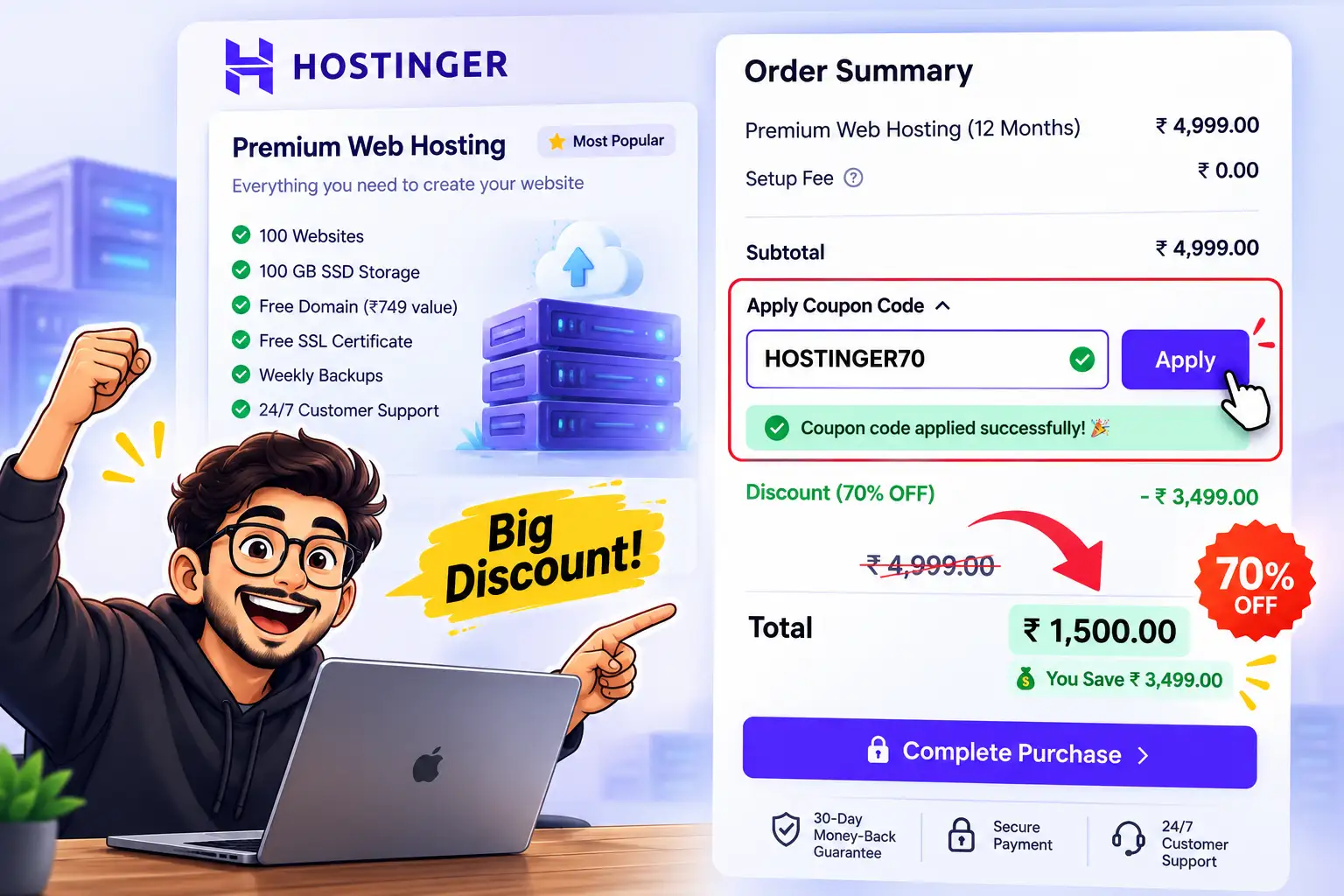
Hostinger Coupon Code Guide: How to Save Money on Hosting (2026)
August 3, 2026 | by anisurrahaman235f@gmail.com
Website Security Checklist for New Website Owners (2026)
August 2, 2026 | by anisurrahaman235f@gmail.com
How to Connect a Domain Name to Hostinger Hosting (2026 Guide)
August 2, 2026 | by anisurrahaman235f@gmail.com